💜 Premium Lavender Tea – A Delicate Floral Infusion
Lavandula angustifolia | Naturally Caffeine-Free | Rasa Organics
Discover the delicate floral character of Rasa Organics Premium Lavender Tea, a beautiful botanical infusion prepared from the fragrant buds of the lavender plant (Lavandula angustifolia).
Known for its distinctive purple blossoms and gentle floral fragrance, lavender has a long-standing place in botanical and culinary traditions. Its dried flower buds are appreciated for their elegant aroma, delicate flavour and versatility in warm beverages, chilled refreshments and creative kitchen preparations.
Every cup offers a distinctive floral experience: gentle, aromatic and naturally free from caffeine when prepared solely from lavender flowers without added tea leaves or other caffeinated ingredients.
Whether enjoyed as a warm floral infusion, incorporated into a refreshing iced drink or used creatively in homemade culinary preparations, lavender brings a refined botanical touch to your everyday kitchen.
At Rasa Organics, we celebrate distinctive natural ingredients and traditional flavours, bringing carefully presented botanical products to customers who appreciate quality and authenticity.
✨ What Makes Lavender Tea Special?
💜 1. Distinctive Floral Aroma
Lavender is widely appreciated for its characteristic floral fragrance. Its aromatic flower buds bring a delicate botanical character to warm and chilled beverages.
🌿 2. Naturally Caffeine-Free
A pure lavender infusion made exclusively from lavender flowers contains no naturally added tea leaves and is caffeine-free. It can be an alternative for people looking for a floral beverage without the caffeine naturally present in black or green tea.
Note: This applies to pure lavender flower infusion without added caffeinated ingredients.
🌸 3. Beautiful Botanical Appearance
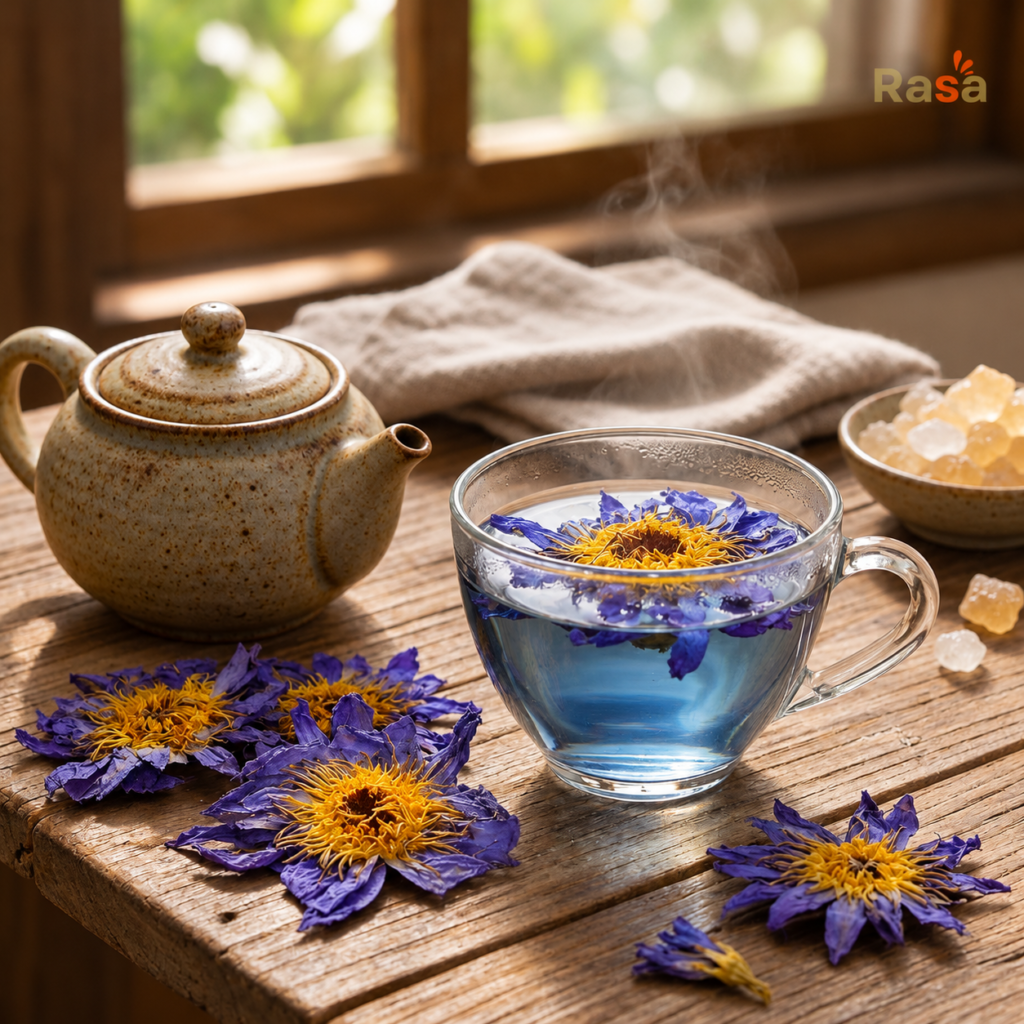
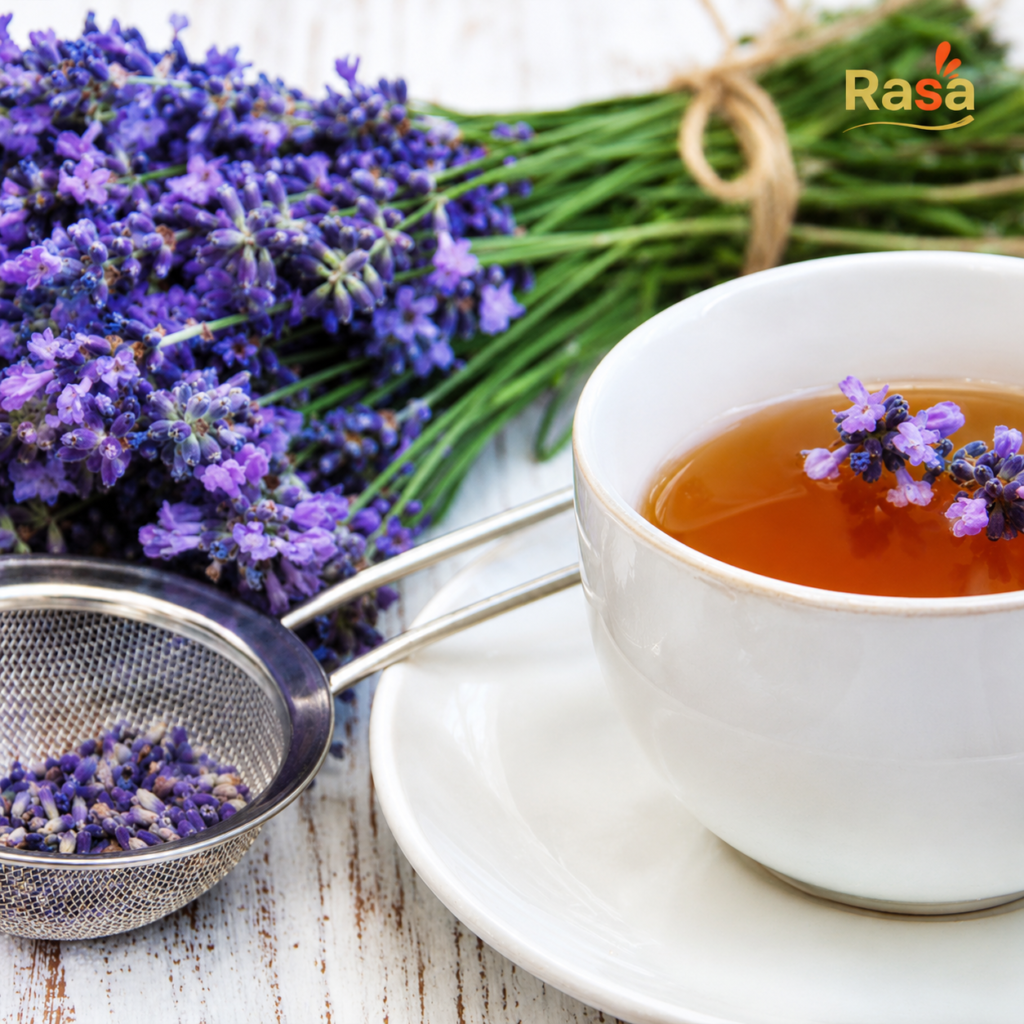
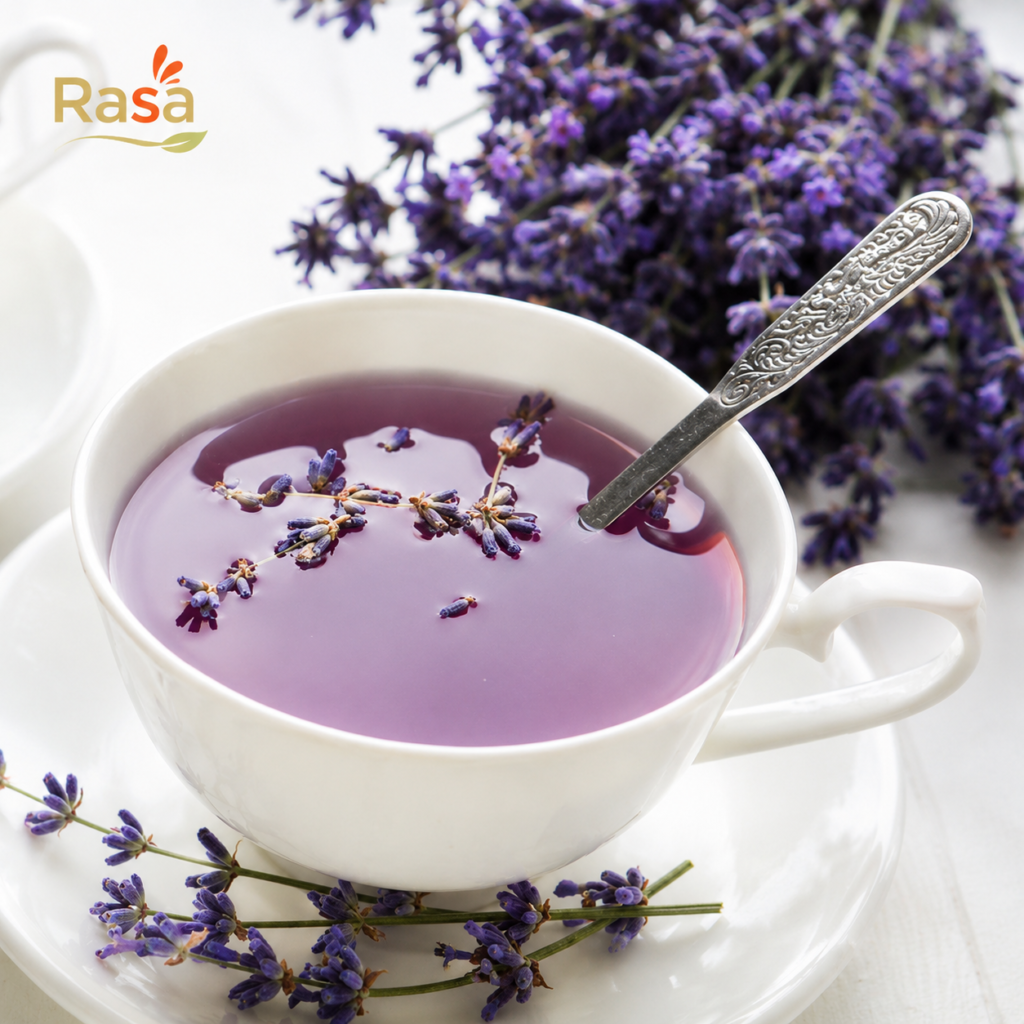
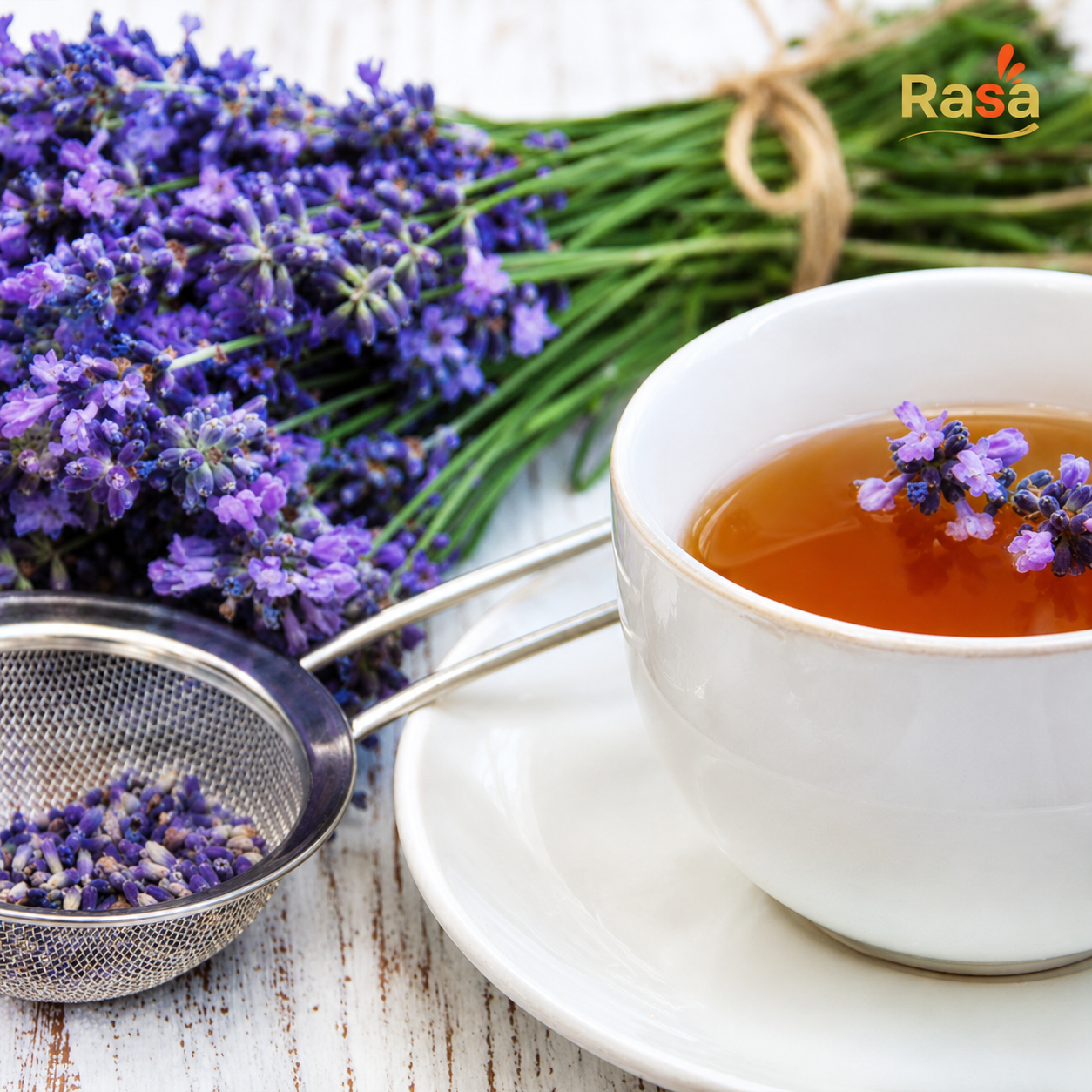
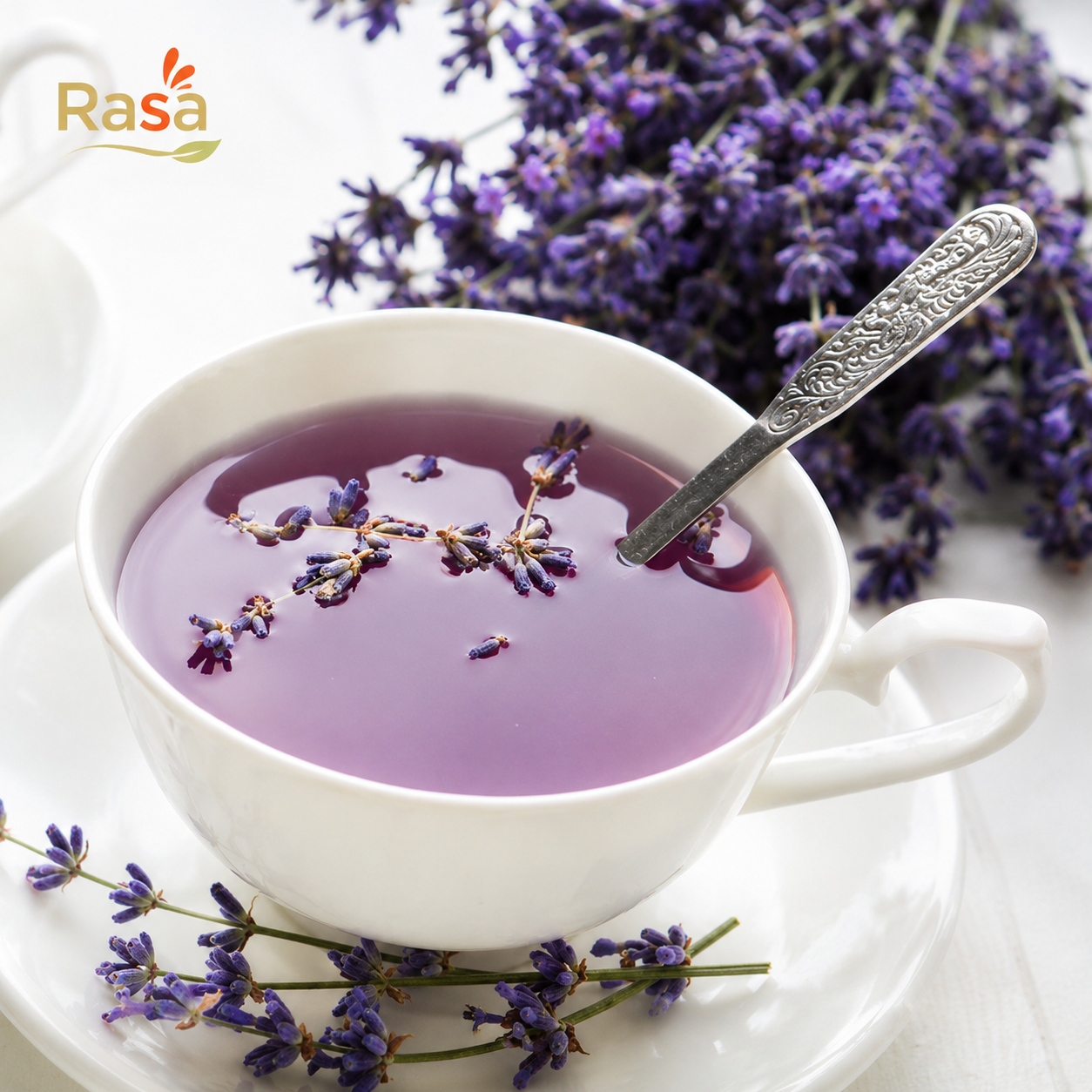
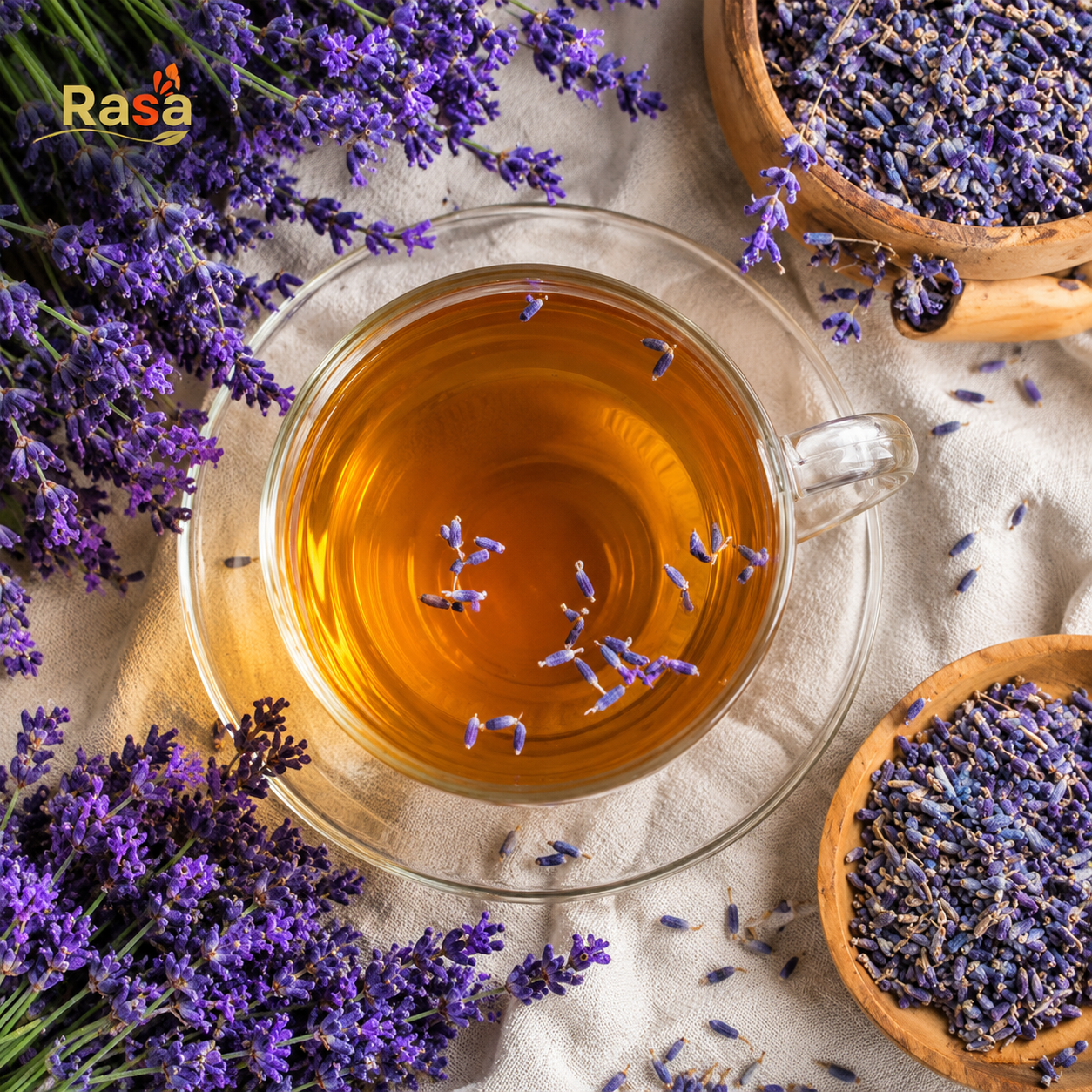
Dried lavender buds have a distinctive purple, violet and muted blue appearance. When used in beverage presentation, they add an elegant floral touch.
🍃 4. Delicate Floral Flavour
Lavender has a distinctive aromatic taste that can be described as floral, gently herbal and slightly sweet-smelling. Its flavour is naturally delicate, so a small amount can be sufficient to create a noticeable floral character.
☕ 5. Versatile Beverage Ingredient
Lavender flowers can be used in:
- Warm herbal infusions
- Iced lavender tea
- Lavender lemonade
- Floral mocktails
- Homemade syrups
- Dessert and bakery preparations
🌱 6. A Traditional Botanical Ingredient
Lavender has a long history of use in aromatic, decorative and culinary traditions. Its fragrant flowers are appreciated in botanical collections, floral preparations and selected food applications.
🌿 Product Information
| Product Detail | Description |
|---|
| Product Name | Premium Lavender Tea |
| Common Name | Lavender Flowers / Lavender Buds |
| Botanical Name | Lavandula angustifolia |
| Plant Family | Lamiaceae |
| Plant Part | Flowers / Flower Buds |
| Product Category | Herbal Infusion / Floral Botanical |
| Product Form | Dried lavender flower buds |
| Appearance | Purple, violet and blue-toned dried buds |
| Aroma | Characteristic floral fragrance |
| Flavour | Delicate, floral and mildly herbal |
| Caffeine | Naturally caffeine-free when pure |
| Preparation | Botanical infusion |
| Ingredients | Lavender flowers only, subject to batch verification |
| Storage | Cool, dry and airtight conditions |
Botanical identity: This description is based on the supplied botanical name Lavandula angustifolia. The actual product should be verified against supplier documentation to ensure the correct species and food-grade suitability.
🌸 Understanding Lavender Flowers
Lavender is a flowering plant belonging to the mint family, Lamiaceae.
The botanical name Lavandula angustifolia refers to English lavender, a species recognised for its fragrant flowers and distinctive botanical character.
Its flower buds are used in a variety of traditional culinary and aromatic preparations.
| Botanical Feature | Description |
|---|
| Plant Type | Aromatic flowering plant |
| Plant Family | Lamiaceae |
| Flower Colour | Purple to violet, depending on variety |
| Flower Structure | Small clustered blossoms |
| Aroma | Distinctive floral fragrance |
| Common Botanical Part | Flower buds |
| Culinary Applications | Infusions, syrups, desserts and floral beverages |
🍵 How to Prepare a Lavender Infusion
A pure lavender infusion is simple to prepare when the flowers are confirmed as food-grade.
Basic preparation:
- Place a small quantity of food-grade dried lavender flowers into a clean cup or teapot.
- Add freshly boiled water.
- Cover and allow the flowers to infuse briefly.
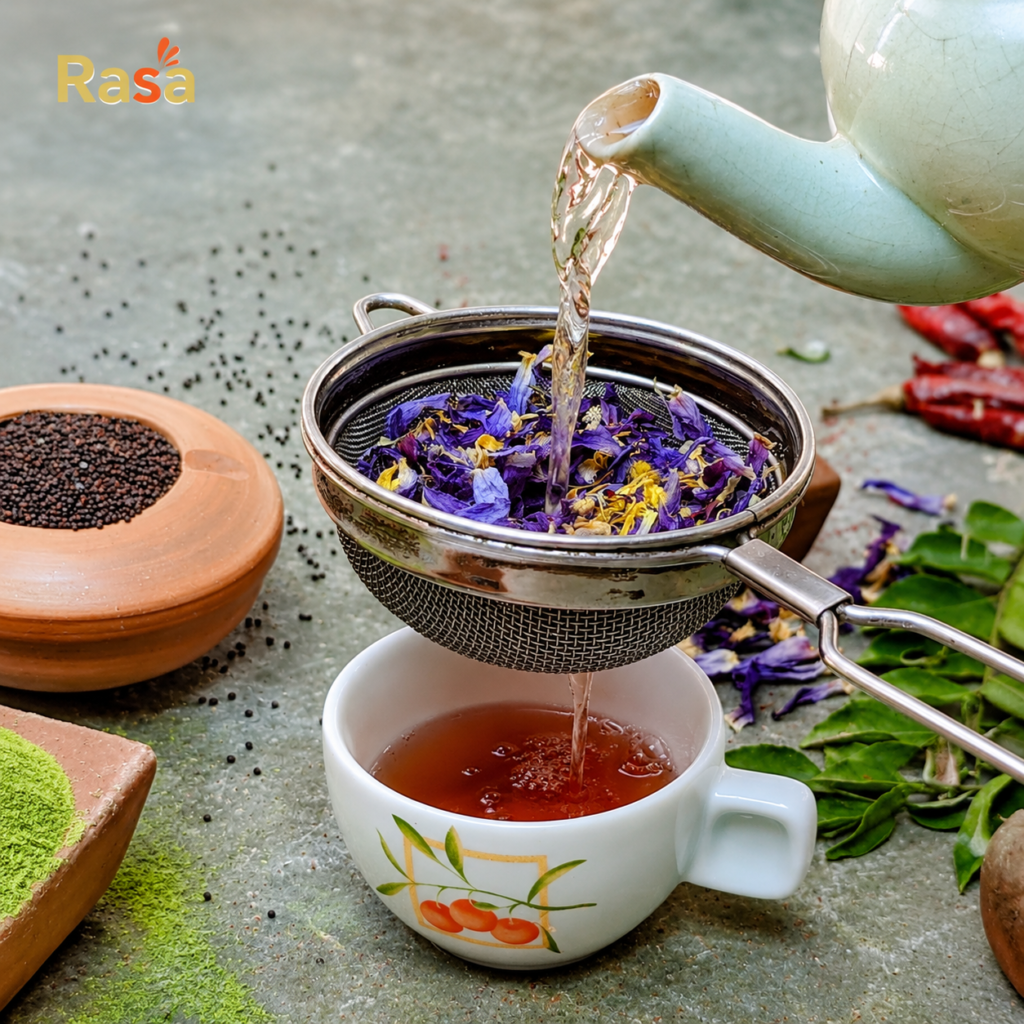
- Strain the flowers using a fine tea strainer.
- Serve warm or allow the infusion to cool for a chilled preparation.
Important: Lavender has a concentrated floral character. Begin with a small culinary quantity and follow the preparation guidance provided on the verified product packaging. Do not use medicinal doses or concentrated preparations without professional advice.
🍹 Delicious Lavender Recipes
Lavender’s delicate floral aroma makes it an interesting ingredient for beverages and selected dessert preparations.
💜 1. Classic Warm Lavender Tea
Ingredients:
| Ingredient | Quantity |
|---|
| Food-grade dried lavender flowers | Small culinary quantity |
| Freshly boiled water | 1 cup |
| Honey | Optional |
| Lemon | Optional |
Preparation:
- Add the lavender flowers to a cup or teapot.
- Pour freshly boiled water over them.
- Cover and allow to infuse briefly.
- Strain into a clean cup.
- Add a little honey or lemon if desired.
Enjoy the delicate floral aroma and gentle taste.
🍋 2. Refreshing Lavender Lemonade
Ingredients:
| Ingredient | Quantity |
|---|
| Prepared lavender infusion | 1 cup |
| Fresh lemon juice | To taste |
| Chilled water | As required |
| Sugar or honey | To taste |
| Ice cubes | As desired |
| Fresh mint | Optional |
Preparation:
- Prepare a mild lavender infusion and allow it to cool.
- Add fresh lemon juice.
- Mix with chilled water.
- Add sweetener according to taste.
- Serve with ice and fresh mint.
🧊 3. Iced Lavender Tea
Ingredients:
| Ingredient | Quantity |
|---|
| Prepared lavender infusion | 1 cup |
| Chilled drinking water | As required |
| Ice cubes | As desired |
| Lemon slices | Optional |
| Honey or sugar | Optional |
Preparation:
- Prepare the lavender infusion.
- Allow it to cool hygienically.
- Pour into a serving glass.
- Add chilled water and ice.
- Garnish with lemon slices.
🥛 4. Lavender Milk
A delicate floral milk beverage for customers who enjoy experimenting with aromatic ingredients.
Ingredients:
| Ingredient | Quantity |
|---|
| Milk | 1 cup |
| Food-grade lavender infusion | A small amount |
| Honey or sugar | To taste |
| Vanilla | Optional |
Preparation:
- Prepare a mild lavender infusion separately.
- Warm the milk gently.
- Add a small amount of the infusion.
- Add sweetener and vanilla if desired.
- Stir and serve warm.
🍯 5. Homemade Lavender Syrup
Ingredients:
| Ingredient | Quantity |
|---|
| Water | 1 cup |
| Sugar | 1 cup |
| Food-grade dried lavender flowers | Small culinary quantity |
Preparation:
- Combine water and sugar in a saucepan.
- Heat gently until the sugar dissolves.
- Remove from heat.
- Add the lavender flowers.
- Allow the mixture to infuse.
- Strain carefully and cool.
- Store in a clean, sealed container under refrigeration.
Use as a flavouring ingredient in homemade lemonade, mocktails and selected desserts. Refrigerate and use promptly.
🍰 6. Lavender Dessert Garnish
Food-grade lavender flowers can be used in selected culinary preparations, including:
- Homemade cakes
- Cookies and biscuits
- Floral sugar
- Dessert syrups
- Panna cotta
- Custards
- Homemade ice cream
Use only food-grade lavender and ensure that the floral flavour does not overpower the other ingredients.
🌿 Culinary and Botanical Characteristics
Lavender flowers are valued for their aromatic character and versatility.
| Characteristic | Description |
|---|
| Floral Aroma | Distinctive lavender fragrance |
| Flavour | Floral, herbal and slightly aromatic |
| Colour | Purple and violet flower buds |
| Beverage Use | Warm and chilled infusions |
| Culinary Use | Syrups, desserts and selected baked goods |
| Caffeine | None naturally present in a pure lavender-only infusion |
| Preparation | Infusion, straining and culinary flavouring |
🥗 Nutritional Profile of Lavender Tea
Lavender tea prepared by steeping dried flowers in water is generally consumed as a light floral infusion rather than as a significant source of calories or macronutrients.
The nutritional composition of the prepared beverage depends on the amount of flowers used, steeping conditions and any added ingredients.
Approximate Nutritional Information
| Nutritional Component | Pure Unsweetened Infusion |
|---|
| Calories | Not established for this product |
| Protein | Not established |
| Total Fat | Not established |
| Carbohydrates | Not established |
| Dietary Fibre | Not established |
| Total Sugars | No added sugar in a pure preparation |
| Caffeine | Naturally absent in a pure lavender-only infusion |
| Sodium | Not established |
Naturally Occurring Botanical Constituents
Lavender flowers contain naturally occurring aromatic plant constituents. Their composition can vary with species, growing conditions, harvesting, drying and storage.
| Botanical Component | General Information |
|---|
| Linalool | Naturally occurring aromatic compound |
| Linalyl Acetate | Naturally occurring aromatic compound |
| Other Volatile Compounds | Composition varies by botanical material |
| Plant Polyphenols | May occur naturally in lavender flowers |
These compounds contribute to the characteristic aroma and botanical profile of lavender. Their presence should not be interpreted as proof of a medical or therapeutic effect.
Nutrition and composition note: No numerical nutrition values or active-compound concentrations are claimed for this Rasa Organics batch. A laboratory analysis would be required for a verified product-specific nutrition declaration.
🌸 Why Choose a Pure Floral Infusion?
Lavender tea offers a distinctive alternative to conventional tea varieties.
It is appreciated for:
- Its naturally caffeine-free character.
- Its delicate floral fragrance.
- Its attractive botanical appearance.
- Its versatility in warm and chilled beverages.
- Its compatibility with lemon, honey and selected fruit flavours.
- Its use in traditional and contemporary culinary preparations.
It is a beverage ingredient for people who enjoy exploring floral flavours and botanical diversity.
⚠️ Important Cautions and Safety Information
Although lavender flowers are used in some food and beverage preparations, not every lavender product is suitable for consumption.
Please observe the following precautions:
- Food-grade suitability: Use only lavender flowers specifically verified and sold for food or beverage use. Ornamental flowers and decorative lavender may have been treated with pesticides or other substances unsuitable for consumption.
- Botanical identification: Confirm that the product is correctly identified as Lavandula angustifolia. Do not assume that every plant sold under the name lavender is interchangeable.
- Avoid essential oil ingestion: Lavender essential oil is a concentrated product and is not interchangeable with dried lavender flowers. Do not add essential oil to beverages unless a qualified professional has specifically confirmed its food-use suitability.
- Pregnancy and breastfeeding: Consult a qualified healthcare professional before consuming lavender preparations, particularly concentrated or regular preparations.
- Medication interactions: People taking sedatives, sleep-related medication or other regular medicines should consult a healthcare professional before use.
- Allergies and sensitivities: Avoid use if you have a known allergy or sensitivity to lavender or related botanical ingredients.
- Medical conditions: People managing a medical condition should seek professional advice before introducing herbal products into their diet.
- Children: Seek appropriate professional advice before offering herbal infusions to young children.
- Moderation: Use only appropriate culinary quantities. Do not prepare concentrated extracts or medicinal doses yourself.
- Product quality: Do not use flowers showing mould, moisture damage, insect infestation or an unusual smell.
- Storage: Protect the dried flowers from humidity, heat and direct sunlight to maintain their quality.
Product classification: This product is presented as a floral herbal infusion ingredient, subject to food-grade verification. It is not a medicine and is not intended to diagnose, treat, cure or prevent any disease.
📦 Storage Instructions
To preserve the delicate aroma and appearance of dried lavender flowers:
- Store in a clean, airtight container.
- Keep away from direct sunlight.
- Protect from heat and humidity.
- Avoid contact with water before preparation.
- Keep away from strong-smelling products.
- Always use a clean, dry spoon.
- Reseal the packaging after every use.
Proper storage helps preserve the natural fragrance and quality of the dried flower buds.
🔍 Quality Selection Guide
When selecting premium dried lavender flowers, consider the following characteristics:
| Quality Parameter | What to Look For |
|---|
| Botanical Identity | Verified Lavandula angustifolia |
| Flower Appearance | Purple or violet dried buds |
| Aroma | Characteristic floral fragrance |
| Cleanliness | Free from visible foreign matter |
| Dryness | Properly dried, without moisture damage |
| Packaging | Clean, sealed and food-safe |
| Intended Use | Verified food-grade botanical material |
❓ Frequently Asked Questions
Q1. What is lavender tea?
Lavender tea is a floral herbal infusion made by steeping the dried or fresh flowers of a lavender plant in hot water. It is a tisane rather than a conventional tea made from Camellia sinensis.
Q2. What is the botanical name of lavender?
The botanical name used for English lavender is Lavandula angustifolia.
Q3. Does lavender tea contain caffeine?
A pure lavender flower infusion is naturally caffeine-free because it does not contain conventional tea leaves.
Q4. What does lavender tea taste like?
It has a delicate floral and mildly herbal flavour. Its aromatic character is distinctive, so it is generally enjoyed as a gentle floral beverage.
Q5. Can lavender tea be served cold?
Yes. A properly prepared and hygienically cooled lavender infusion can be used in iced tea, lemonade and other chilled beverage recipes.
Q6. Can lavender be combined with honey and lemon?
Yes. Honey and lemon are popular culinary additions that complement lavender’s floral flavour.
Q7. Can dried lavender flowers be used in baking?
Food-grade lavender flowers can be used in selected cakes, cookies, syrups and desserts.
Q8. Is lavender tea the same as lavender essential oil?
No. Dried lavender flowers and lavender essential oil are different products. Essential oil is highly concentrated and should not be treated as a beverage ingredient.
Q9. How should lavender flowers be stored?
Keep dried flowers in a sealed, airtight container in a cool, dry place away from sunlight and moisture.
Q10. Is lavender tea suitable for everyone?
Not necessarily. People who are pregnant, breastfeeding, taking medication, managing medical conditions or experiencing botanical allergies should consult a qualified healthcare professional before use.
💜 Experience the Floral Character of Rasa Organics
Bring the delicate fragrance of lavender into your kitchen with Rasa Organics Premium Lavender Tea.
Explore a distinctive floral botanical ingredient for warm infusions, refreshing iced beverages and creative culinary preparations.
🌐 Website: https://www.rasa.pk
📲 WhatsApp: https://wa.me/923284752936
✨ Rasa Organics – Pure • Natural • Authentic
🌿 Healthy sweetness starts with Rasa.pk!





















Reviews
Clear filtersThere are no reviews yet.