Bitter Apple (Tumma / Handal) – Botanical Product Information & Safety Notice
Rasa.pk | Botanical Product Information
🌿 Product Overview
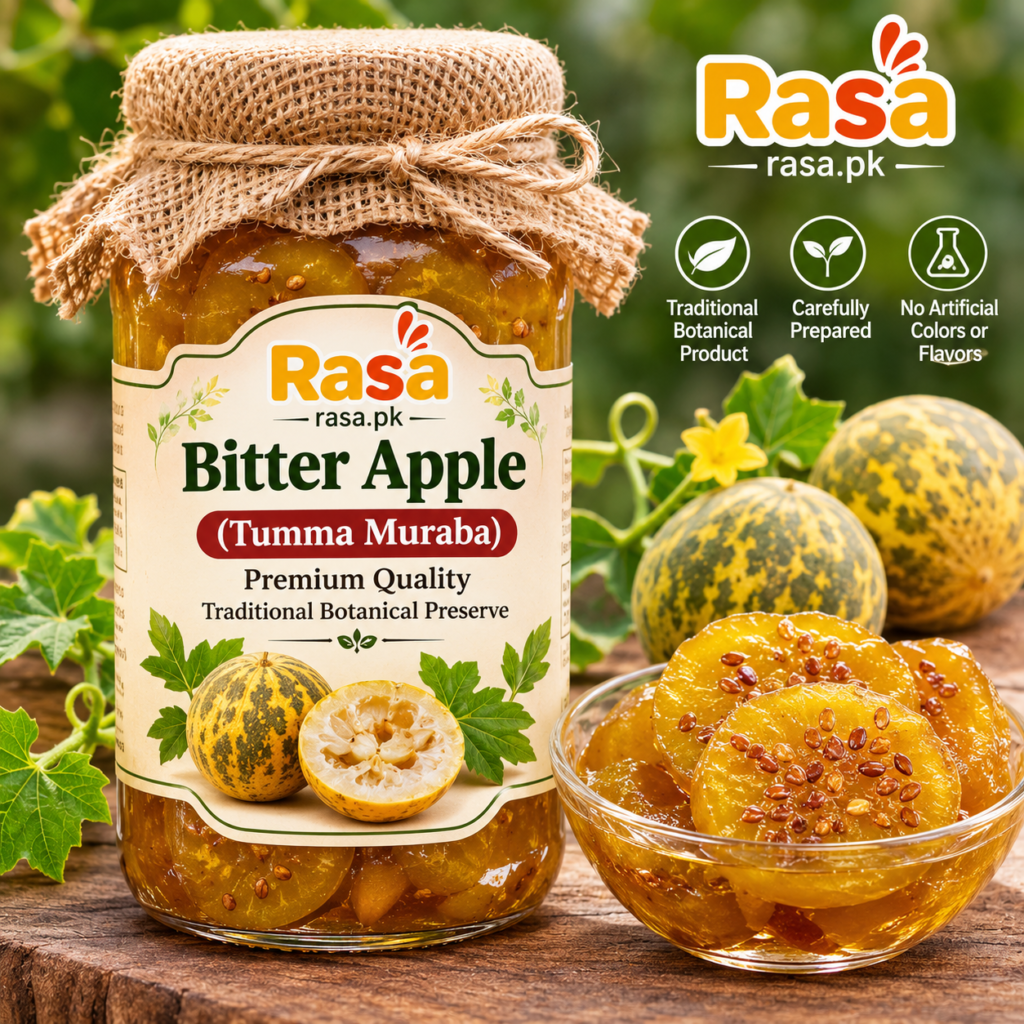
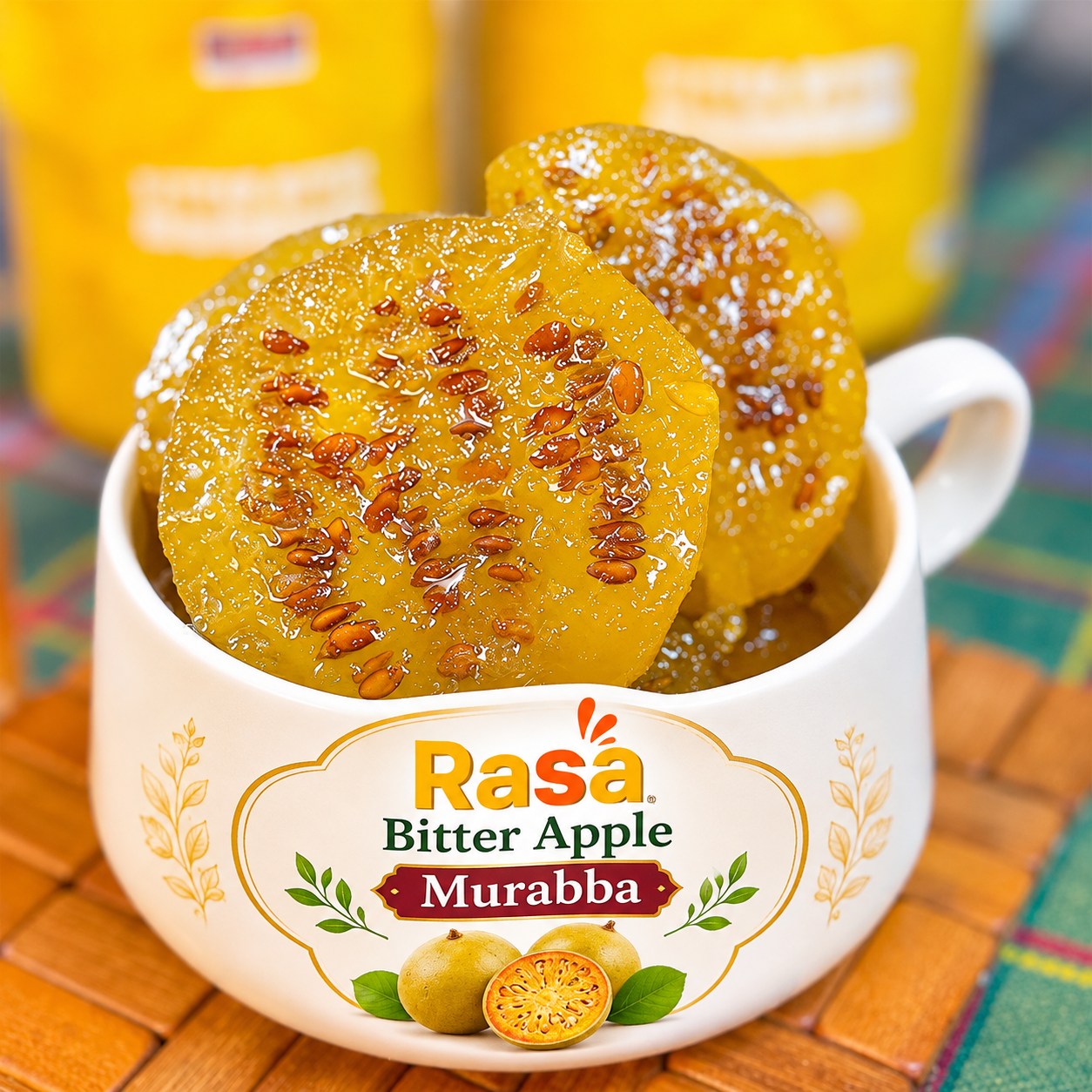
Bitter Apple, traditionally known in parts of South Asia as Tumma, Tummā or Handal (حنظل), is the fruit of Citrullus colocynthis, a desert-growing plant belonging to the Cucurbitaceae family.
The fruit is recognised by its round appearance, firm outer rind and exceptionally bitter interior pulp. It has a long history in traditional botanical literature. However, historical use should not be interpreted as evidence of food safety.
🔬 Botanical Profile
| Specification | Details |
|---|
| Common English Name | Bitter Apple |
| Local Names | Tumma, Handal, Hanzal (حنظل) |
| Botanical Name | Citrullus colocynthis |
| Plant Family | Cucurbitaceae |
| Plant Part | Fruit |
| Natural Characteristics | Round fruit with extremely bitter pulp |
| Botanical Origin | Arid and semi-arid regions |
| Product Category | Botanical material requiring safety verification |
🧪 Natural Composition
The fruit contains naturally occurring compounds known as cucurbitacins. These are biologically active compounds associated with the plant’s characteristic bitterness.
Their presence is an important safety consideration. The concentration can vary with plant material and preparation, so the safety of a finished preserve cannot be determined from its appearance, taste or traditional name.
📋 Ingredients and Product Information
| Ingredient / Component | Status |
|---|
| Bitter Apple (Citrullus colocynthis) | Botanical identity to be verified |
| Sugar or sweetener | Confirm from actual formulation |
| Water | Confirm from actual formulation |
| Additional ingredients | Must be declared from the manufacturer’s recipe |
| Preservatives | Must be declared if used |
| Allergens | Must be assessed from the complete formulation |
The table is an ingredient-verification template, not a confirmed recipe.
📊 Nutritional Information
A reliable nutritional profile for this particular prepared preserve has not been established. Do not publish estimated calories, carbohydrates, sugars, vitamins, minerals or serving-based nutrition figures without laboratory analysis of the finished product.
| Nutritional Parameter | Verified Value |
|---|
| Energy | Not established |
| Total Carbohydrates | Not established |
| Total Sugars | Not established |
| Protein | Not established |
| Total Fat | Not established |
| Dietary Fibre | Not established |
| Sodium | Not established |
| Vitamins and Minerals | Not established |
⚠️ Important Safety Information
This product should not be consumed as an ordinary fruit preserve or food.
- Do not taste, sample or ingest the fruit pulp or preserve.
- Do not use it as a home remedy, herbal preparation or dietary supplement.
- Do not prepare drinks, desserts, teas, sauces or recipes using this material.
- Do not assume that boiling, cooking, soaking, drying or adding sugar removes its toxic compounds.
- Keep the material securely away from children and pets.
- Do not use it during pregnancy or breastfeeding.
- Anyone who has accidentally swallowed it should seek urgent medical attention, even if symptoms have not yet appeared.
- Do not induce vomiting unless directed by a medical professional.
🔍 Quality Assurance and Verification
Before any proposed commercial food use, the complete finished preparation requires:
- Botanical identification by a qualified laboratory.
- Ingredient and manufacturing-process verification.
- Independent assessment of relevant toxic compounds, including cucurbitacins.
- Appropriate food-safety testing.
- Review by qualified food-safety and regulatory professionals.
A claim of natural or organic origin does not establish that a product is safe to eat.
🌱 Storage and Handling
Keep the material in a securely closed, clearly labelled container, away from children, pets, food ingredients and ordinary kitchen products. Follow the handling advice provided by the qualified safety professional responsible for its assessment.
I can expand the nutritional profile and product information for Bitter Apple (Tumma Murabba), but there is an essential safety concern: the plant you identified, Citrullus colocynthis (حنظل), contains toxic cucurbitacins. Its fruit pulp is not considered a safe ordinary food ingredient.
Even when prepared as murabba with sugar or syrup, its safety cannot be assumed. For that reason, I cannot recommend recipes, eating methods, serving quantities or combinations with milk, yoghurt, desserts or other foods.
1. Detailed nutritional profile
The following table distinguishes known botanical constituents from nutritional values that would require testing of your finished product.
| Nutritional component | Information |
|---|
| Energy (kcal) | Not established for the finished murabba |
| Carbohydrates | May come from fruit material and added sweeteners |
| Total sugars | Depends on the actual recipe and sugar concentration |
| Dietary fibre | Plant material contains fibre; finished-product amount unknown |
| Protein | Exact amount not established |
| Total fat | Exact amount not established |
| Saturated fat | Not established |
| Calcium | Product-specific amount unknown |
| Iron | Product-specific amount unknown |
| Magnesium | Product-specific amount unknown |
| Potassium | Product-specific amount unknown |
| Sodium | Product-specific amount unknown |
| Moisture | Depends on preparation and syrup concentration |
| Cucurbitacins | Toxicologically important compounds requiring specialised analysis |
Important: Nutritional content does not indicate safety. A product may contain carbohydrates, minerals or other nutrients and still be poisonous.
2. Botanical composition
| Component | Description | Significance |
|---|
| Cucurbitacins | Naturally occurring bitter triterpenoid compounds | Associated with serious toxicity |
| Plant fibre | Structural plant material | Amount varies by plant part |
| Natural carbohydrates | Plant-derived carbohydrate constituents | Amount not verified |
| Seed oils | Lipids present in the seeds | Cannot be used to infer the nutritional profile of fruit murabba |
| Phenolic compounds | Naturally occurring plant constituents | Do not establish health benefits or food safety |
| Added sugar | Possible ingredient in a traditional preserve | Exact quantity requires formulation records |
The historical use of specially processed seeds as food in some regions does not establish the safety of the fruit pulp or its preserve.
3. Recipe and consumption safety
For this particular plant, the following preparations should not be recommended without independent evidence establishing the finished product’s safety:
Tumma Murabba eaten directly
Tumma Murabba with milk or yoghurt
Tumma Murabba in desserts, halwa or kheer
Tumma Murabba mixed with honey
Tumma Murabba in herbal drinks or teas
Tumma Murabba consumed in small daily quantities
Cooking, soaking, sweetening or preserving the fruit is not proof that its toxic compounds have been eliminated.
















Reviews
Clear filtersThere are no reviews yet.