🌿 Premium Raw Basil Seeds (Tukhm-e-Balanga)
Clean • Carefully Selected • Naturally Gel-Forming • Rasa Organics
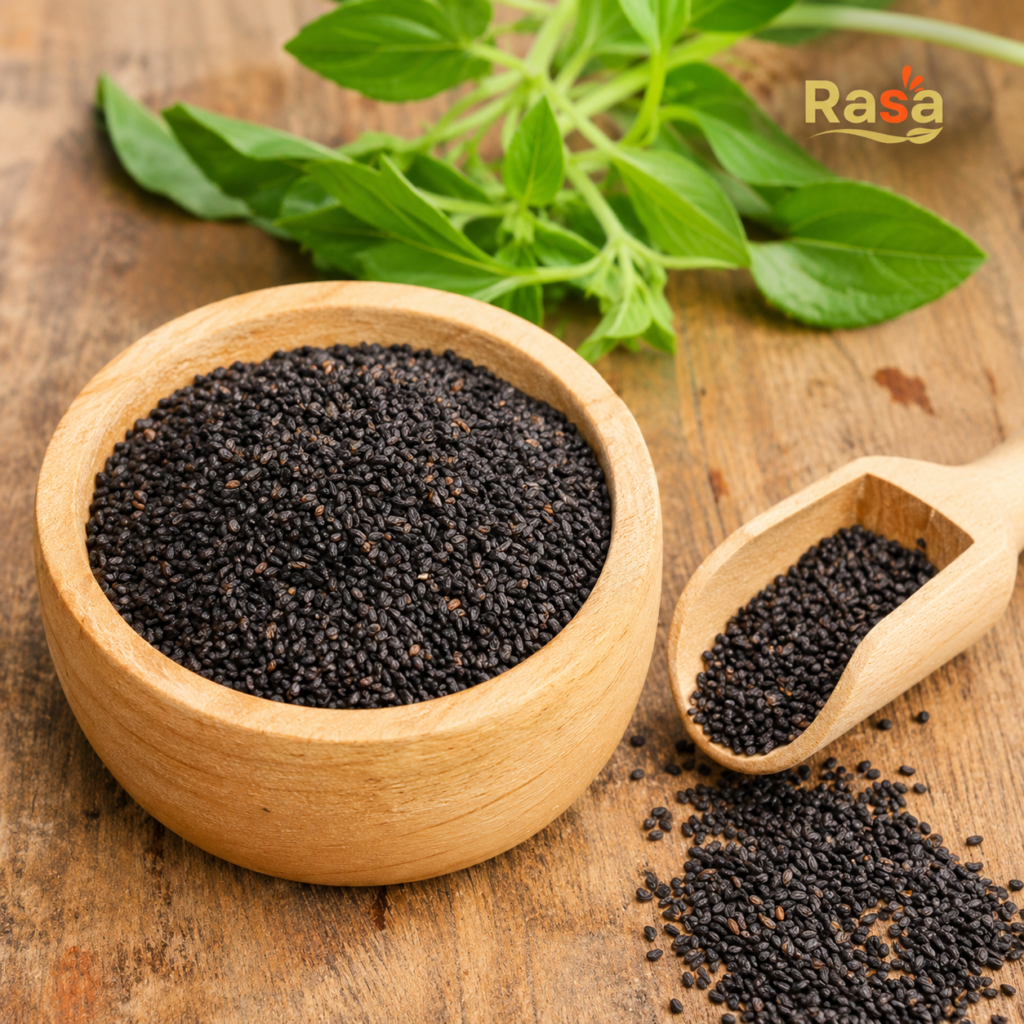
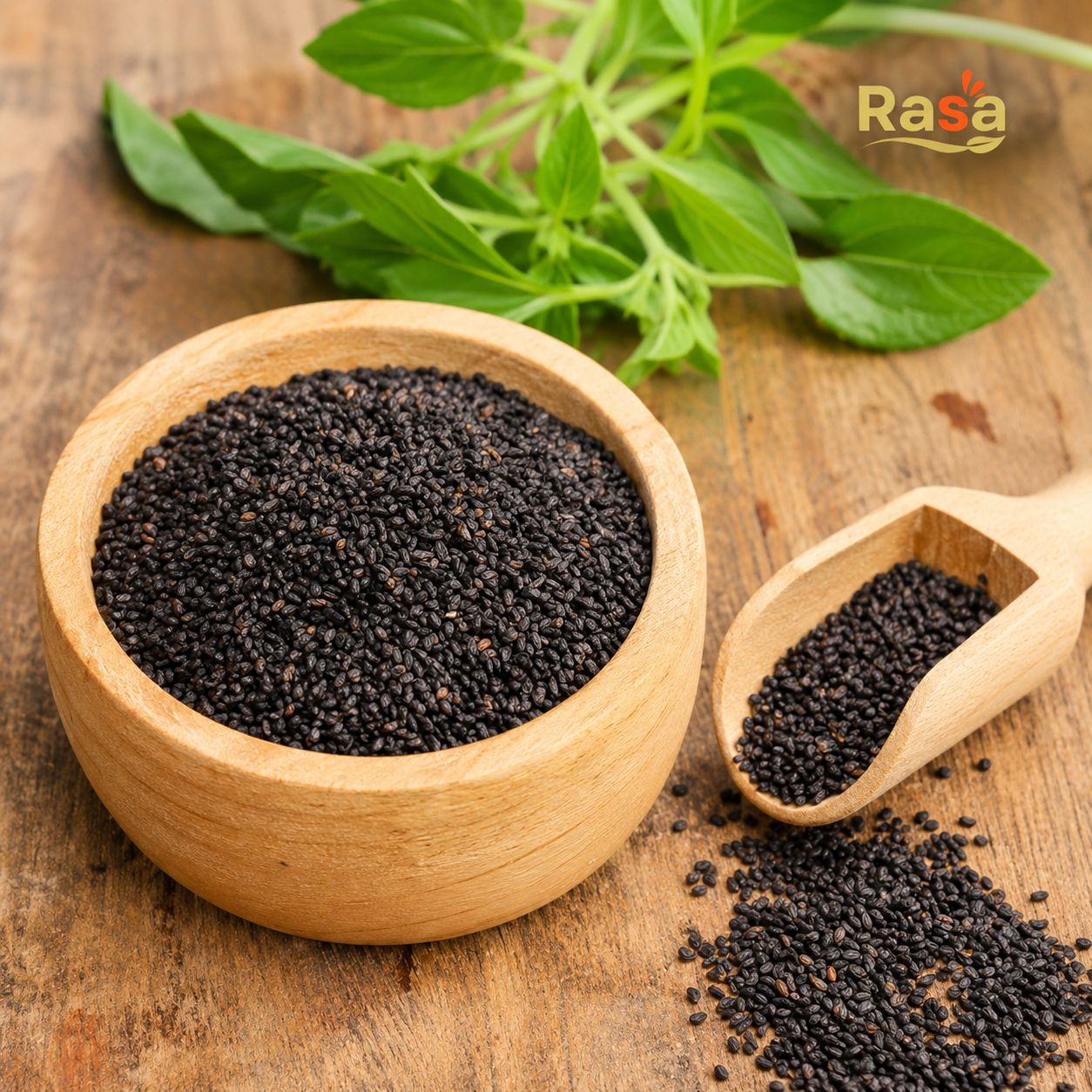
Discover the refreshing culinary versatility of Rasa Organics Premium Raw Basil Seeds, traditionally known as Tukhm-e-Balanga (تخم بالنگا).
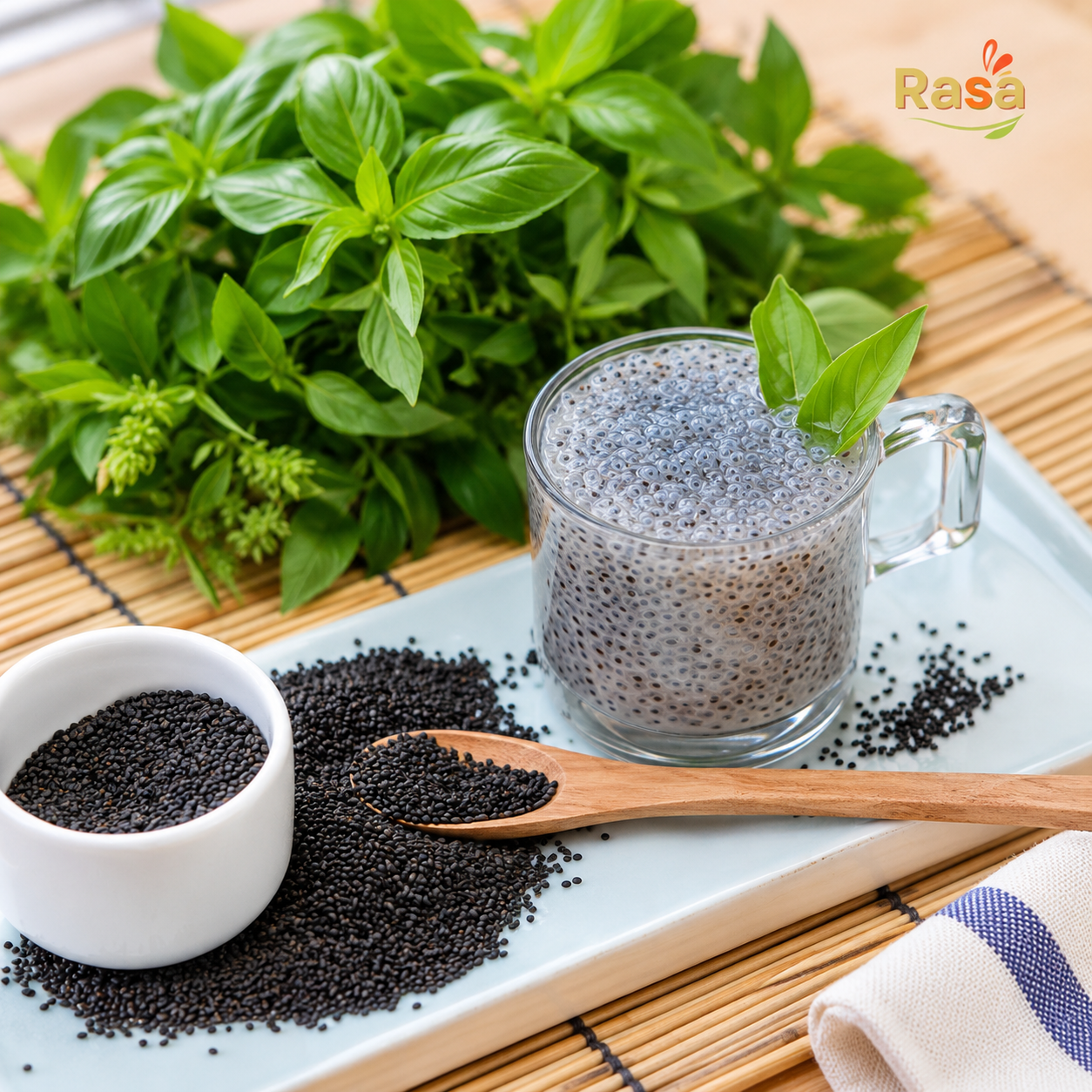
These tiny, naturally dark seeds are appreciated for their distinctive ability to absorb water and develop a soft, translucent gel-like coating. When properly soaked, they create an attractive texture that makes them a popular ingredient in traditional sherbets, falooda, refreshing lemonades, smoothies and a variety of dessert preparations.
Whether you are preparing a traditional summer drink, experimenting with homemade refreshments or adding a distinctive texture to your favourite recipes, basil seeds offer a simple and versatile ingredient for your kitchen.
At Rasa Organics, we bring together carefully selected ingredients and traditional food culture to make everyday culinary experiences more enjoyable.
✨ What Makes Basil Seeds Special?
💧 1. Naturally Gel-Forming Texture
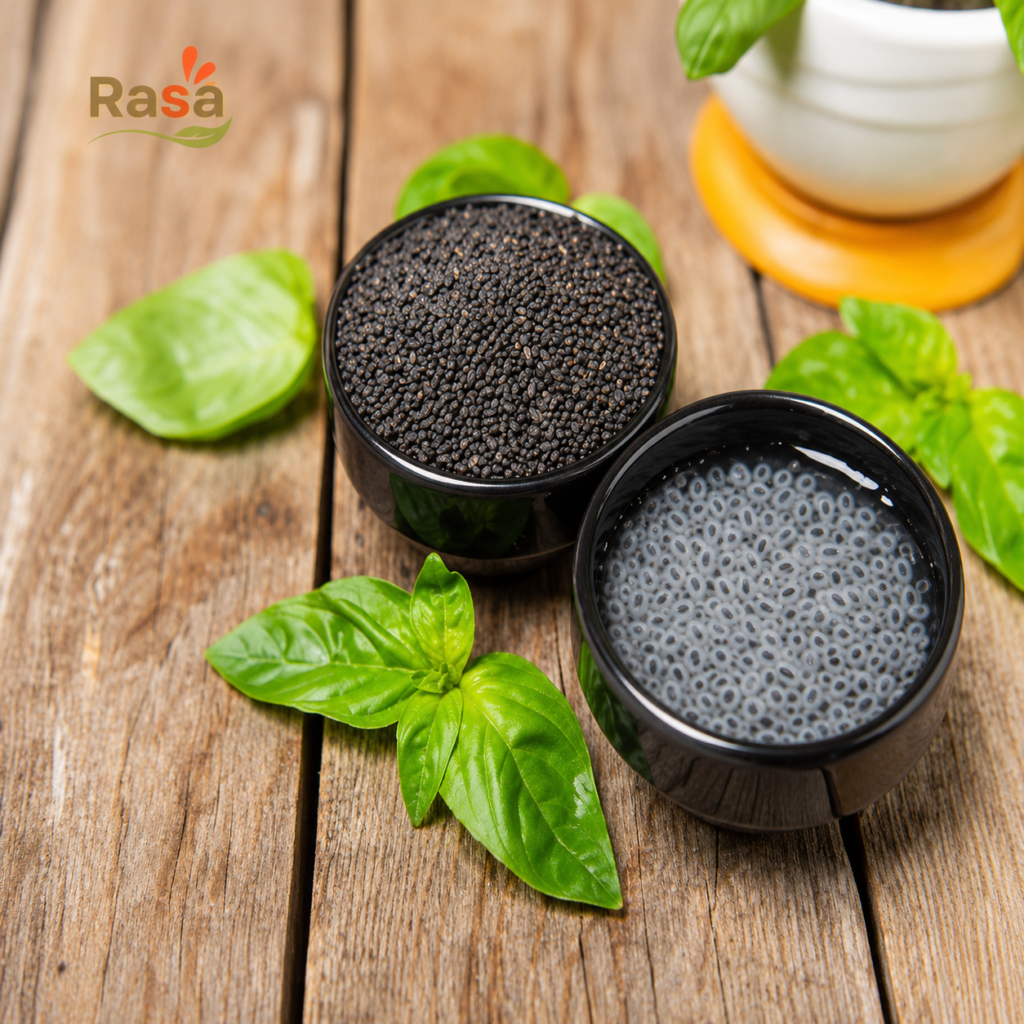
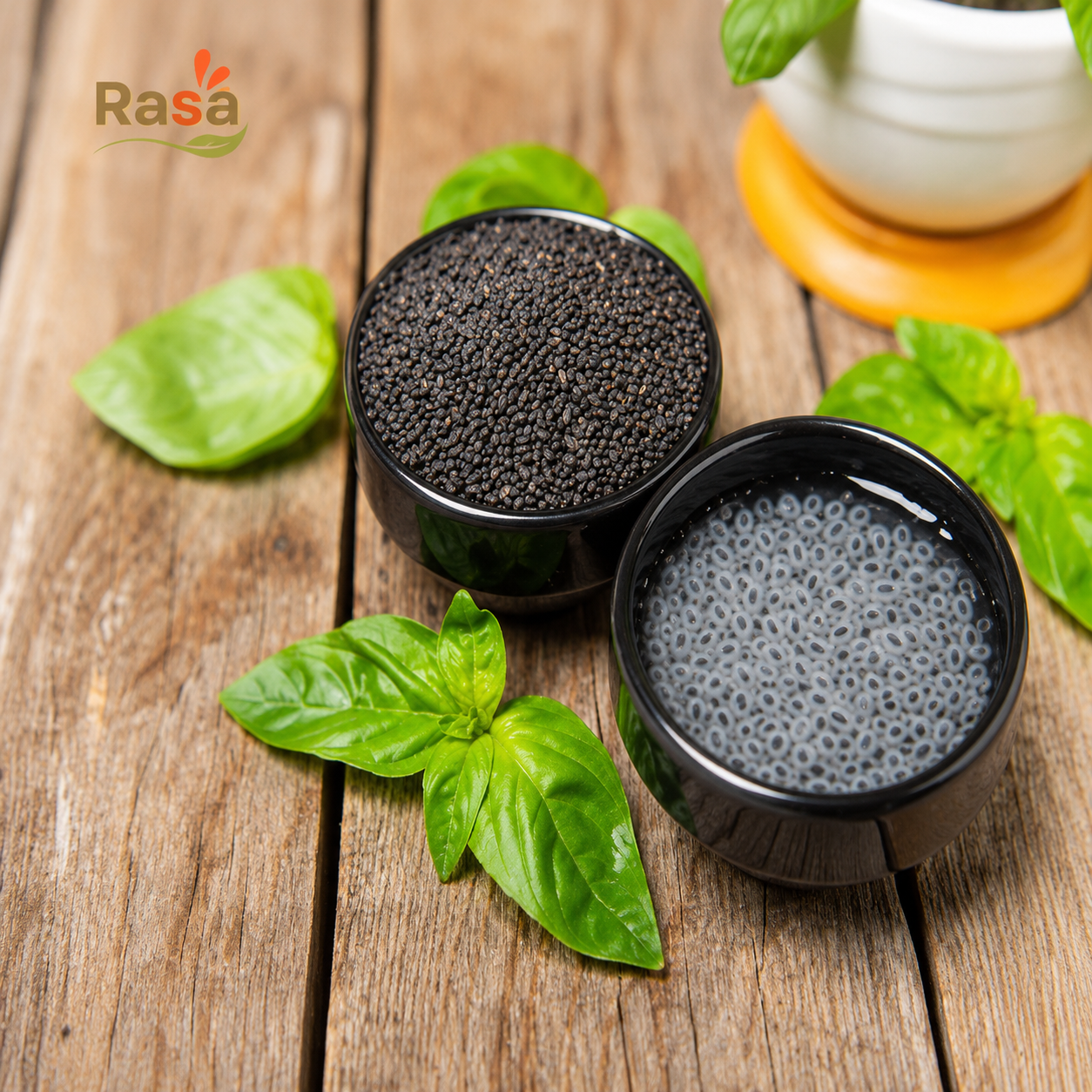
One of the most distinctive characteristics of basil seeds is their ability to absorb water and develop a gelatinous outer coating. This transformation gives soaked seeds their characteristic appearance and soft, pleasant texture.
🌿 2. A Traditional Refreshment Ingredient
Basil seeds have a long-standing place in traditional South Asian and regional food preparations, particularly in sherbets, falooda and chilled beverages.
🍃 3. Naturally Occurring Soluble Fibre
Basil seeds contain dietary fibre, including water-absorbing components that contribute to their characteristic gel formation when soaked.
🥤 4. Versatile Culinary Applications
They can be incorporated into:
- Traditional sherbets
- Falooda and milk-based desserts
- Lemonades and fruit drinks
- Smoothies and chilled beverages
- Homemade dessert bowls
- Puddings and refreshing recipes
⚫ 5. Distinctive Natural Appearance
The tiny dark seeds develop a visually appealing translucent coating after soaking, making them an interesting ingredient for beverage and dessert presentation.
🌱 6. Simple Botanical Ingredient
Basil seeds are obtained from basil plants. Their botanical identity and food-grade suitability should be confirmed through appropriate supplier documentation.
🌱 Product Information
| Product Detail | Description |
|---|
| Product Name | Premium Raw Basil Seeds |
| Traditional Name | Tukhm-e-Balanga |
| Urdu Name | تخم بالنگا |
| Common Name | Basil Seeds / Sabja Seeds |
| Botanical Identity | Ocimum basilicum L. — subject to supplier verification |
| Plant Family | Lamiaceae |
| Plant Part | Seeds |
| Product Category | Edible Botanical Seeds |
| Product Form | Raw, dried seeds |
| Appearance | Small, naturally dark seeds |
| Texture Before Soaking | Dry and firm |
| Texture After Soaking | Soft, gel-coated and hydrated |
| Flavour | Mild and relatively neutral |
| Culinary Applications | Sherbets, falooda, lemonades, smoothies and desserts |
| Storage | Cool, dry and airtight conditions |
Botanical identification note: The name Tukhm-e-Balanga can be used differently in regional markets. Confirm the exact plant species with your supplier before publishing the botanical name or making species-specific claims.
💧 Understanding the Natural Gel-Forming Process
Basil seeds have a distinctive water-absorbing outer layer.
When placed in water, they gradually develop a translucent coating around their dark centres. This produces the characteristic swollen appearance associated with soaked basil seeds.
| Stage | Appearance |
|---|
| Dry Seeds | Small, dark, firm seeds |
| Initial Hydration | Seeds begin absorbing water |
| Gel Formation | A translucent coating develops |
| Fully Hydrated | Seeds become swollen with a soft gel-like exterior |
This natural transformation is the reason basil seeds are widely used in traditional drinks and dessert preparations.
Important: Always allow the seeds to hydrate completely before consumption. Never swallow dry basil seeds directly.
🥗 Nutritional Profile of Basil Seeds
Basil seeds are a plant-derived food ingredient containing naturally occurring dietary fibre, fats, protein and other food components.
Their nutritional composition can vary depending on the basil species, growing conditions, seed maturity, cleaning and processing methods.
General Nutritional Composition
| Nutritional Component | General Description |
|---|
| Dietary Fibre | Naturally present; includes water-absorbing fibre |
| Soluble Fibre | Contributes to the characteristic gel formation |
| Protein | Naturally occurring plant protein |
| Total Fat | Naturally occurring seed oils |
| Carbohydrates | Present in the overall seed composition |
| Minerals | May include naturally occurring mineral elements |
| Plant Compounds | Naturally occurring botanical constituents |
Vitamins and Minerals
Basil seeds may contain naturally occurring minerals and other micronutrients. However, their exact concentrations depend on the seed variety and product batch.
| Nutrient Category | Product Information |
|---|
| Calcium | Naturally occurring mineral; batch quantity not established |
| Magnesium | Naturally occurring mineral; batch quantity not established |
| Iron | Naturally occurring mineral; batch quantity not established |
| Potassium | Naturally occurring mineral; batch quantity not established |
| Phosphorus | Naturally occurring mineral; batch quantity not established |
| Zinc | Naturally occurring mineral; batch quantity not established |
| Vitamins | Exact vitamin profile not established for this batch |
Nutrition declaration: We do not publish invented nutritional figures. A verified nutrition panel, including energy, protein, total fat, carbohydrates, dietary fibre, sugars and mineral values per 100g, should be prepared from a laboratory analysis of the actual Rasa Organics product batch.
🍹 Delicious Ways to Use Basil Seeds
Basil seeds are particularly popular in refreshing drinks and traditional dessert preparations. Their gel-like texture adds a distinctive visual and culinary element.
Preparation principle: Use only food-grade seeds. Place the required quantity in a generous amount of clean drinking water, allow them to hydrate completely until the gel coating is fully developed, and check that no dry or hard centres remain. Follow the product’s verified preparation instructions and do not consume them dry.
🥤 1. Traditional Basil Seed Lemonade
A refreshing combination of citrus and hydrated basil seeds.
Ingredients:
- Fully hydrated basil seeds
- Fresh lemon juice
- Chilled drinking water
- Sugar or another preferred sweetener
- Ice cubes
- Mint leaves
Preparation:
- Prepare and fully hydrate the basil seeds separately.
- Mix lemon juice with chilled drinking water.
- Add sweetener according to taste.
- Add the hydrated seeds.
- Garnish with mint and serve chilled.
🥛 2. Traditional Falooda
A classic dessert-style beverage with layers of flavour and texture.
Ingredients:
- Fully hydrated basil seeds
- Chilled milk
- Falooda vermicelli
- Rose syrup
- Ice cream, if desired
- Chopped nuts
Preparation:
- Prepare the basil seeds separately and ensure they are fully hydrated.
- Cook the vermicelli according to its package instructions and cool.
- Add rose syrup to a serving glass.
- Layer the vermicelli, milk and hydrated seeds.
- Finish with your preferred toppings.
🍓 3. Fruit and Basil Seed Cooler
Ingredients:
- Fully hydrated basil seeds
- Fresh strawberry or seasonal fruit
- Chilled water
- Lemon juice
- Mint leaves
- Sweetener, if desired
Preparation:
- Blend the fruit with chilled water.
- Add lemon juice.
- Stir in fully hydrated basil seeds.
- Garnish with mint.
- Serve immediately.
🥭 4. Mango Basil Seed Smoothie
Ingredients:
- Ripe mango
- Chilled milk or yoghurt
- Fully hydrated basil seeds
- Ice cubes
- Sweetener, if required
Preparation:
- Blend mango with milk or yoghurt.
- Add ice and blend until smooth.
- Pour into a glass.
- Add fully hydrated basil seeds and stir gently.
🍧 5. Chilled Dessert Bowl
Ingredients:
- Fully hydrated basil seeds
- Chilled milk or yoghurt
- Seasonal fruit
- Chopped nuts
- A little honey, if desired
Preparation:
- Place the milk or yoghurt in a bowl.
- Add the hydrated seeds.
- Top with fruit and nuts.
- Serve chilled.
🍊 6. Orange and Basil Seed Sherbet
Ingredients:
- Fresh orange juice
- Fully hydrated basil seeds
- Chilled drinking water
- Lemon juice
- Ice cubes
Preparation:
- Combine orange juice and chilled water.
- Add a little lemon juice.
- Stir in fully hydrated basil seeds.
- Add ice and serve chilled.
🌿 Traditional Culinary Heritage
Tukhm-e-Balanga has a place in traditional regional food culture, particularly in refreshing drinks and summer preparations.
Its popularity comes largely from its distinctive hydration behaviour and the texture it brings to beverages.
It is commonly associated with:
- Traditional sherbets
- Falooda preparations
- Chilled milk drinks
- Lemon-based refreshments
- Fruit beverages
- Homemade desserts
At Rasa Organics, we appreciate the culinary traditions behind familiar ingredients and their place in modern kitchens.
⚠️ Important Safety Information and Precautions
Basil seeds should be handled and prepared carefully because they expand considerably when exposed to water.
Please observe the following precautions:
- Never consume dry basil seeds directly. They should be fully hydrated before consumption because dry seeds expand on contact with moisture.
- Hydrate completely. Allow sufficient time for the gel coating to develop. Check that the seeds are uniformly hydrated and do not have hard, dry centres.
- Use sufficient water. Do not attempt to hydrate seeds in an insufficient quantity of liquid.
- Swallowing difficulties: People with difficulty swallowing, oesophageal conditions or a history of choking should avoid use unless a healthcare professional confirms suitability.
- Children: Keep dry seeds away from young children. Seek professional guidance before offering them to children.
- Allergies: Avoid use if you have a known allergy to basil or related ingredients.
- Pregnancy and breastfeeding: Consult a qualified healthcare professional before use, particularly when considering regular or concentrated consumption.
- Medication and medical conditions: If you take regular medication or have a medical condition, consult a qualified healthcare professional before introducing basil seeds into your diet.
- Digestive sensitivity: Dietary fibre can affect individuals differently. People with digestive sensitivities should seek professional dietary advice.
- Food quality: Use only clean, food-grade seeds intended for human consumption. Do not use seeds that show mould, insect infestation, moisture damage or an unusual smell.
- Storage after soaking: Prepare hydrated seeds hygienically, refrigerate them promptly and avoid keeping them at room temperature for extended periods.
- Do not determine medicinal dosage yourself. If you are considering basil seeds for a specific health-related purpose, consult a qualified healthcare professional or appropriately trained herbal practitioner.
Product classification: This is a botanical food ingredient intended for culinary applications, subject to food-grade verification. It is not presented as a medicine and is not intended to diagnose, treat, cure or prevent any disease.
📦 Storage Instructions
To maintain the quality of raw basil seeds:
- Store in a clean, dry and airtight container.
- Keep away from direct sunlight.
- Protect from humidity and moisture.
- Avoid storing near heat sources.
- Always use a clean, dry spoon.
- Close the packaging securely after use.
- Check the seeds for unusual odour, insects or visible mould before preparation.
After hydration: Keep hydrated seeds in a clean, covered container under refrigeration and use promptly. Do not store hydrated seeds for prolonged periods.
🔍 Quality and Product Selection
When selecting basil seeds for culinary use, the following characteristics are important:
| Quality Parameter | What to Look For |
|---|
| Appearance | Characteristic dark seed colour |
| Cleanliness | Free from visible foreign matter |
| Uniformity | Reasonably consistent seed appearance |
| Dryness | Properly dried, without moisture damage |
| Aroma | No unusual or rancid smell |
| Hydration | Characteristic gel formation when soaked |
| Packaging | Clean, sealed, food-safe packaging |
| Identification | Confirmed botanical identity |
❓ Frequently Asked Questions
Q1. What are Tukhm-e-Balanga seeds?
Tukhm-e-Balanga is a traditional name used for basil seeds in regional markets. They are commonly associated with Ocimum basilicum, although the exact botanical identity should be confirmed with the supplier.
Q2. Are basil seeds and chia seeds the same?
No. Basil seeds and chia seeds are different seeds from different plant species. They have different appearances and hydration characteristics and should not be marketed as interchangeable products.
Q3. Why do basil seeds develop a gel coating?
Their outer layer absorbs water and forms a translucent, gelatinous coating, giving soaked seeds their distinctive appearance.
Q4. Can basil seeds be used in falooda?
Yes. Fully hydrated, food-grade basil seeds are traditionally used in falooda and other chilled dessert preparations.
Q5. Can basil seeds be added to lemonade?
Yes. Fully hydrated seeds can be incorporated into homemade lemonade and other chilled beverages.
Q6. Do basil seeds have a sweet taste?
Basil seeds generally have a mild and relatively neutral flavour. The sweetness in drinks and desserts usually comes from added ingredients such as fruit, sugar, honey or syrups.
Q7. Can basil seeds be swallowed dry?
No. Never swallow dry basil seeds directly. They expand on contact with water and should be fully hydrated before consumption.
Q8. How should raw basil seeds be stored?
Store them in a clean, airtight container in a cool, dry place away from direct sunlight and moisture.
Q9. What is the nutritional value of basil seeds?
Basil seeds contain naturally occurring dietary fibre, protein, fats and other food components. Exact nutritional quantities require analysis of the specific product batch.
Q10. Are basil seeds suitable for everyone?
Not necessarily. People with swallowing difficulties, allergies, medical conditions or regular medication use should consult a qualified healthcare professional before use.
🌿 Why Choose Rasa Organics?
At Rasa Organics, we value ingredients that connect traditional food culture with everyday culinary creativity.
We aim to offer:
- Carefully selected pantry ingredients.
- Clear product information.
- Convenient online shopping.
- Thoughtful product presentation.
- A growing selection of natural food products.
Explore the traditional culinary character of Tukhm-e-Balanga and bring a distinctive ingredient to your favourite refreshing recipes.
✨ Rasa Organics – Pure • Natural • Authentic
🌐 Website: https://www.rasa.pk
📲 WhatsApp: https://wa.me/923284752936
Healthy sweetness starts with Rasa.pk!





















Reviews
Clear filtersThere are no reviews yet.