🌿 Gul-e-Gaozaban – Borage / Starflower
Dried Borago officinalis Flowers
Rasa Organics | Botanical Product Information
🌸 Botanical Introduction
Gul-e-Gaozaban is a traditional name used in South Asian botanical and herbal contexts. The product described here is identified as Borage (Borago officinalis), also commonly known as Starflower.
Borage is an annual flowering plant belonging to the Boraginaceae family. It is recognised for its distinctive star-shaped flowers, which are commonly blue or violet, although variations in flower colour can occur.
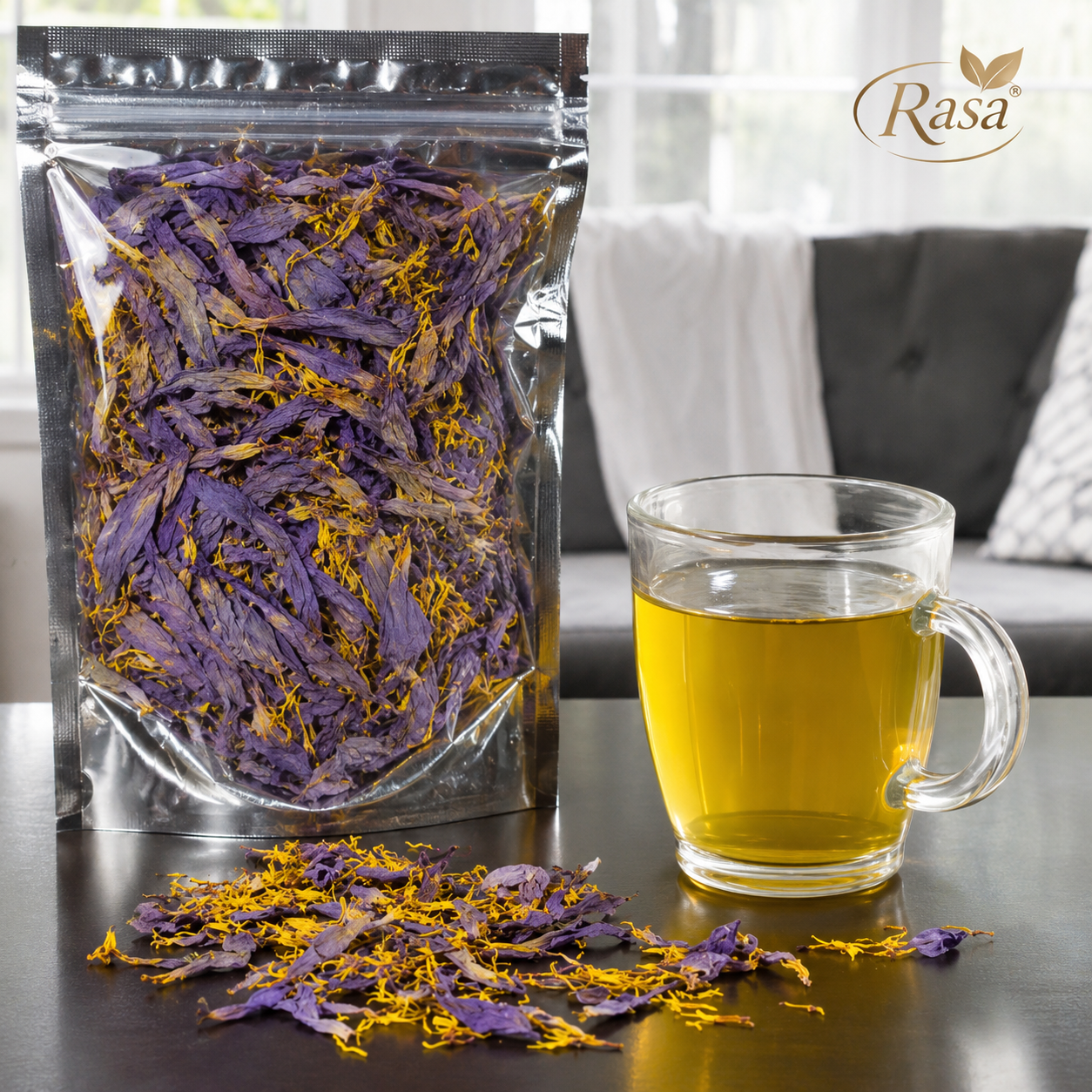
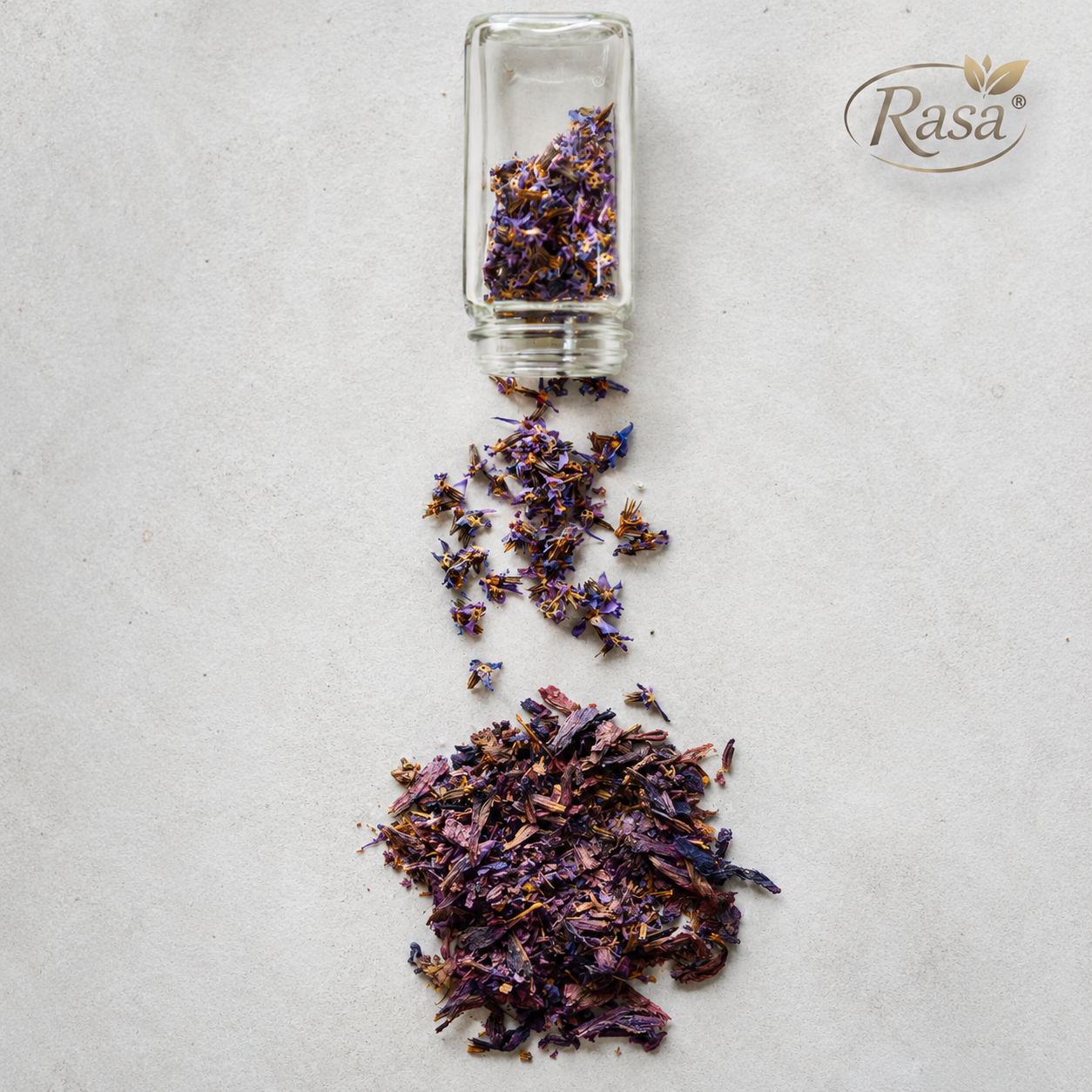
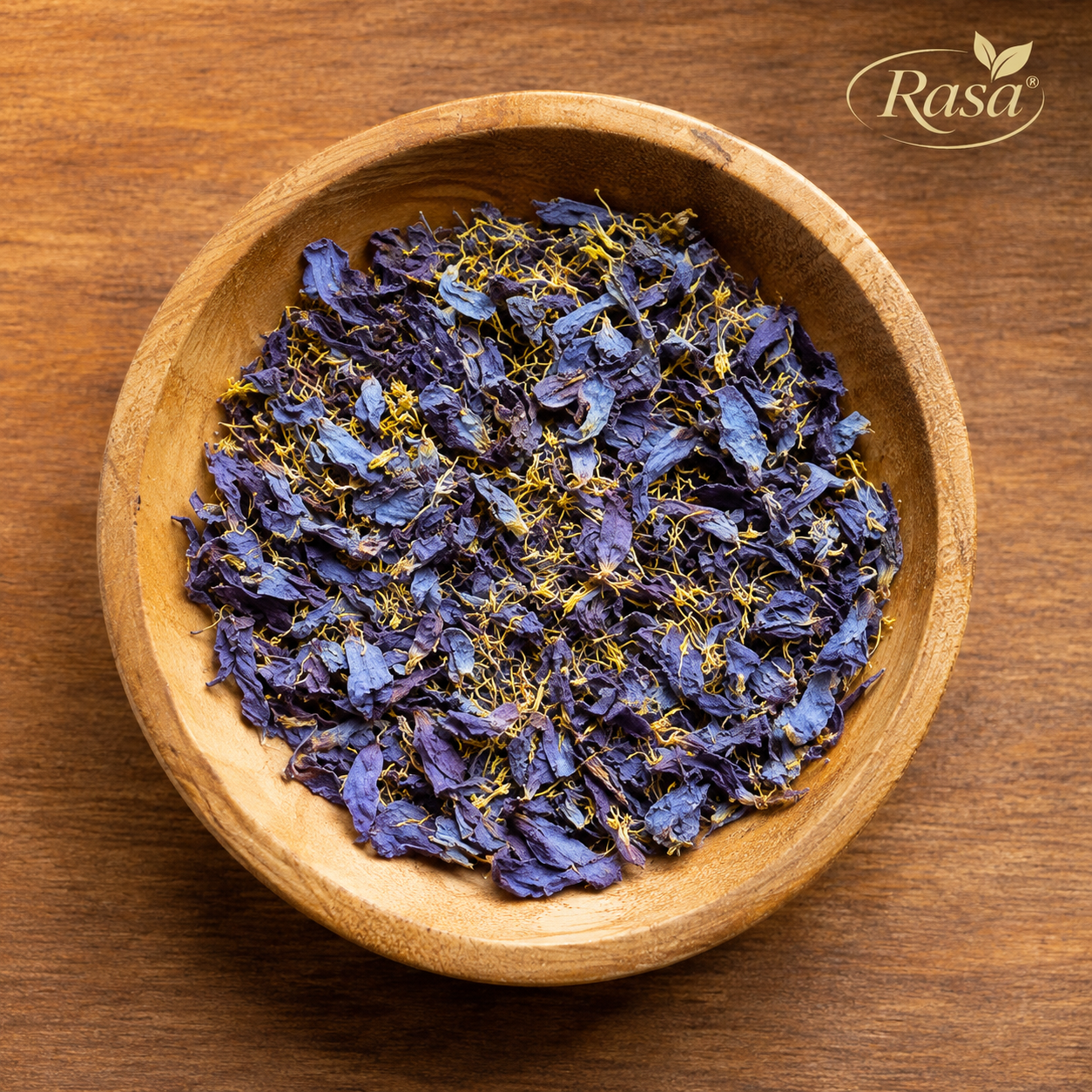
The dried flowers have a delicate appearance, with shades of purple, blue, violet and occasional brown or golden botanical details depending on drying and storage conditions.
At Rasa.pk, accurate botanical identification and responsible product information are important parts of presenting traditional botanical materials.
🌱 1. Botanical Identification
| Characteristic | Description |
|---|
| Product name | Gul-e-Gaozaban |
| English name | Borage / Starflower |
| Botanical name | Borago officinalis L. |
| Plant family | Boraginaceae |
| Plant type | Annual flowering herb |
| Product part | Flowers |
| Product form | Dried botanical flowers |
| Natural appearance | Blue, violet and purple floral material |
| Common botanical description | Star-shaped flowers |
| Product category | Dried botanical material |
Botanical identity note: The name Gaozaban is used for different plants in traditional markets. This product should be identified and sold under Borago officinalis only when its species has been verified. It should not be assumed to be interchangeable with other plants sold under the same local name.
🌼 2. Appearance & Botanical Characteristics
Borage is recognised by its distinctive flowers and characteristic plant structure.
The flowers are generally star-shaped and may display:
- Blue or violet petals.
- Delicate floral structures.
- Darker central details.
- Fine botanical textures.
- Natural colour variation after drying.
Dried flower material can vary in size, shape and colour according to the harvest, drying process and storage conditions.
🌿 3. Botanical Background
Borage is native to the Mediterranean region and is now cultivated in different parts of the world.
The plant has a long history in botanical literature and traditional plant-use records. Its flowers and other plant parts have been described in historical botanical sources.
Historical use does not, however, establish that a particular dried flower batch is safe for consumption.
🧾 4. Product Composition & Ingredients
| Component | Description |
|---|
| Main botanical material | Dried Borago officinalis flowers |
| Added colour | Not declared unless present |
| Added flavouring | Not declared unless present |
| Added preservatives | Not declared unless present |
| Other ingredients | None declared unless included in the actual formulation |
The final ingredient declaration must accurately reflect the material supplied and its processing history.
🔬 5. Botanical Constituents & Food-Safety Information
Borage contains naturally occurring plant constituents, including pyrrolizidine alkaloids (PAs).
Certain unsaturated pyrrolizidine alkaloids are associated with liver toxicity and other serious safety concerns.
Research published in 2025 examined PA levels in borage leaves, flowers and microgreens. It identified a particular concern regarding PA levels in the flowers. The actual concentration can vary with growing conditions and plant material.
For this reason, the dried flowers should not be assumed suitable for tea, food, supplements or direct consumption without appropriate assessment.
⚠️ 6. Important Safety Notice
This product is presented for botanical identification and information only. Its suitability for human consumption has not been established.
- Do not consume or prepare as tea.
- Do not use in food, drinks or homemade preparations.
- Do not recommend a serving quantity or dosage.
- Keep away from children and pets.
- Avoid use during pregnancy and breastfeeding.
- Do not use as a substitute for medical treatment.
- Seek advice from a qualified food-safety professional before considering any food-related application.
A qualified laboratory should assess the material for relevant pyrrolizidine alkaloids using a validated analytical method. A qualified toxicologist or food-safety professional should review the results and intended use before any food-market claim is made.
📦 7. Quality & Storage Considerations
For botanical material, appropriate handling and storage are important.
- Keep in a clean, dry, sealed container.
- Protect from direct sunlight and moisture.
- Store in a cool, dry location.
- Avoid contact with contaminants and other plant materials.
- Keep packaging clearly labelled with botanical identity.
- Maintain supplier, harvest and batch information.
- Do not use material showing mould, dampness, insect activity or unusual odour.
🧪 8. Recommended Quality Documentation
| Quality parameter | Recommended assessment |
|---|
| Botanical identity | Verified identification of Borago officinalis |
| Plant part | Confirmation that the material consists of flowers |
| Foreign matter | Inspection and assessment |
| Moisture | Appropriate moisture analysis |
| Microbiology | Relevant microbiological testing |
| Heavy metals | Testing where applicable |
| Pesticide residues | Testing where applicable |
| Pyrrolizidine alkaloids | Validated PA and PA-N-oxide analysis |
| Batch traceability | Supplier and batch documentation |
❓ 9. Frequently Asked Questions
What is Gul-e-Gaozaban?
Gul-e-Gaozaban is a traditional botanical name. This product is identified as borage, Borago officinalis, commonly known as Starflower.
What is the botanical name of Borage?
Its botanical name is Borago officinalis L.
What family does Borage belong to?
It belongs to the Boraginaceae family.
What do dried Borage flowers look like?
They generally contain blue, violet or purple floral material, with natural variation caused by harvesting and drying.
Is Borage the same as every plant sold as Gaozaban?
No. Traditional market names can refer to different botanical species. The botanical identity must be verified.
Can these flowers be used to make tea?
Their safety for consumption has not been established. Borage flowers can contain pyrrolizidine alkaloids, so they should not be used to prepare tea without appropriate safety assessment.
Does drying remove pyrrolizidine alkaloids?
Drying should not be assumed to remove these compounds. Appropriate laboratory testing is needed.
Is a standard nutrition panel enough to confirm safety?
No. A nutrition panel measures nutritional components; it does not establish the absence or acceptable level of pyrrolizidine alkaloids.
🌿 Rasa Organics – Responsible Botanical Information
At Rasa.pk, we believe that accurate product identification, transparent information and responsible quality assessment are essential when presenting botanical materials.
Rasa.pk – Pure • Natural • Authentic
🌐 Website: https://www.rasa.pk
Product status: Botanical identity and safety assessment required before any food or beverage use is proposed.





















Reviews
Clear filtersThere are no reviews yet.