🌹Premium Dried Blue Lotus Flowers
Egyptian Blue Water Lily | Nymphaea caerulea | Rasa Organics
A Rare Botanical Flower with Timeless Natural Beauty
🌿 Pure • Natural • Authentic
Discover the distinctive beauty of Blue Lotus, an elegant aquatic flower admired for its striking blue-violet petals, delicate floral structure and fascinating botanical history.
Known as Egyptian Blue Lotus, Blue Water Lily and Sacred Blue Lily, this remarkable flower belongs to the Nymphaeaceae family, commonly known as the water-lily family.
At Rasa Organics, we appreciate the diversity and natural beauty of botanical ingredients. Our Premium Dried Blue Lotus Flowers are presented with a focus on their botanical identity, natural appearance and careful product handling.
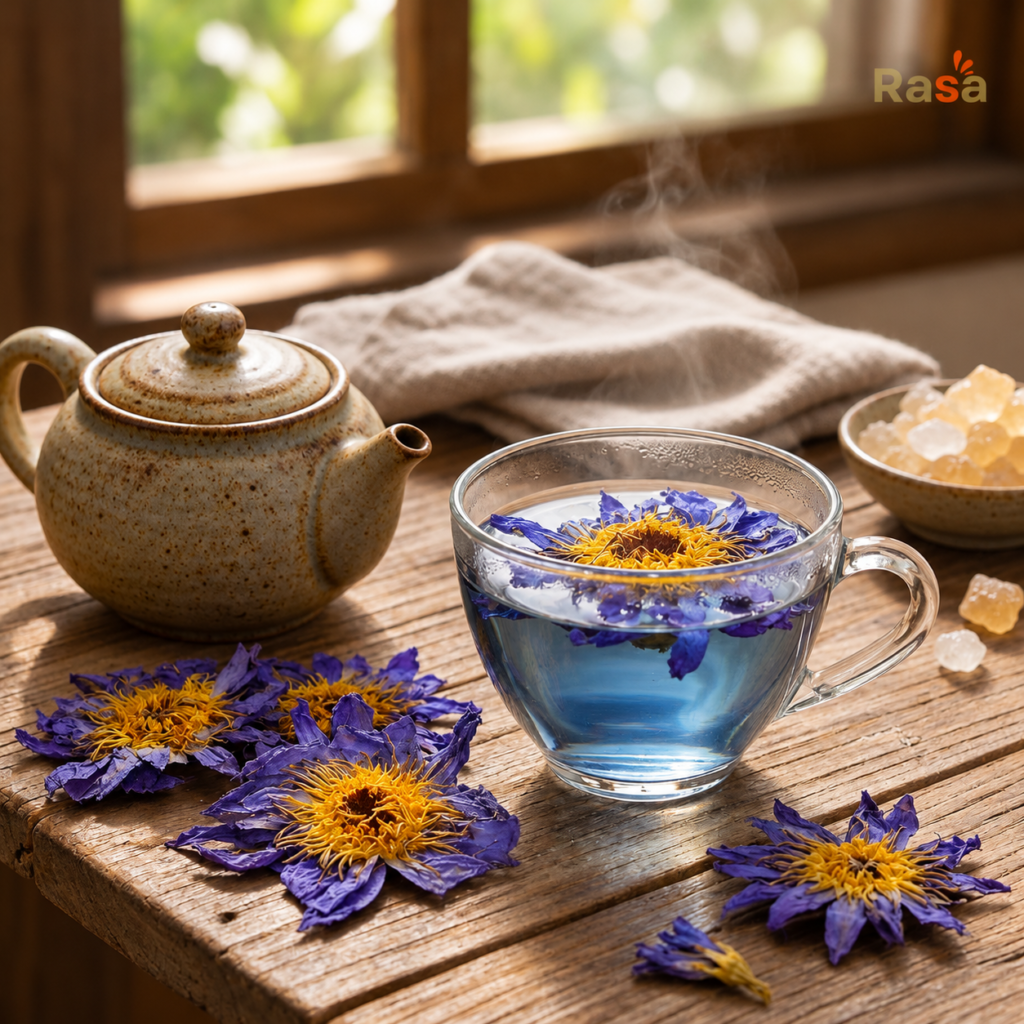
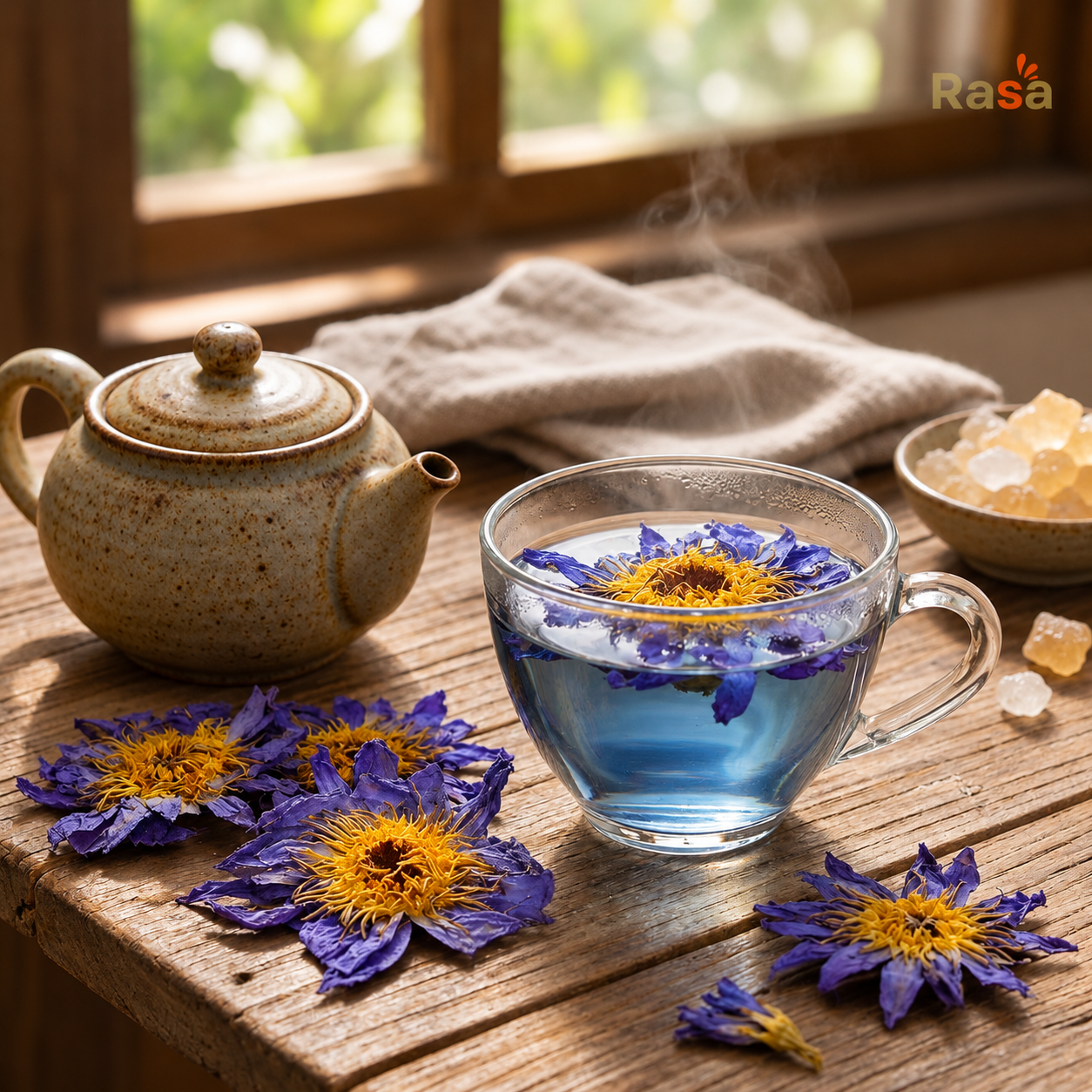
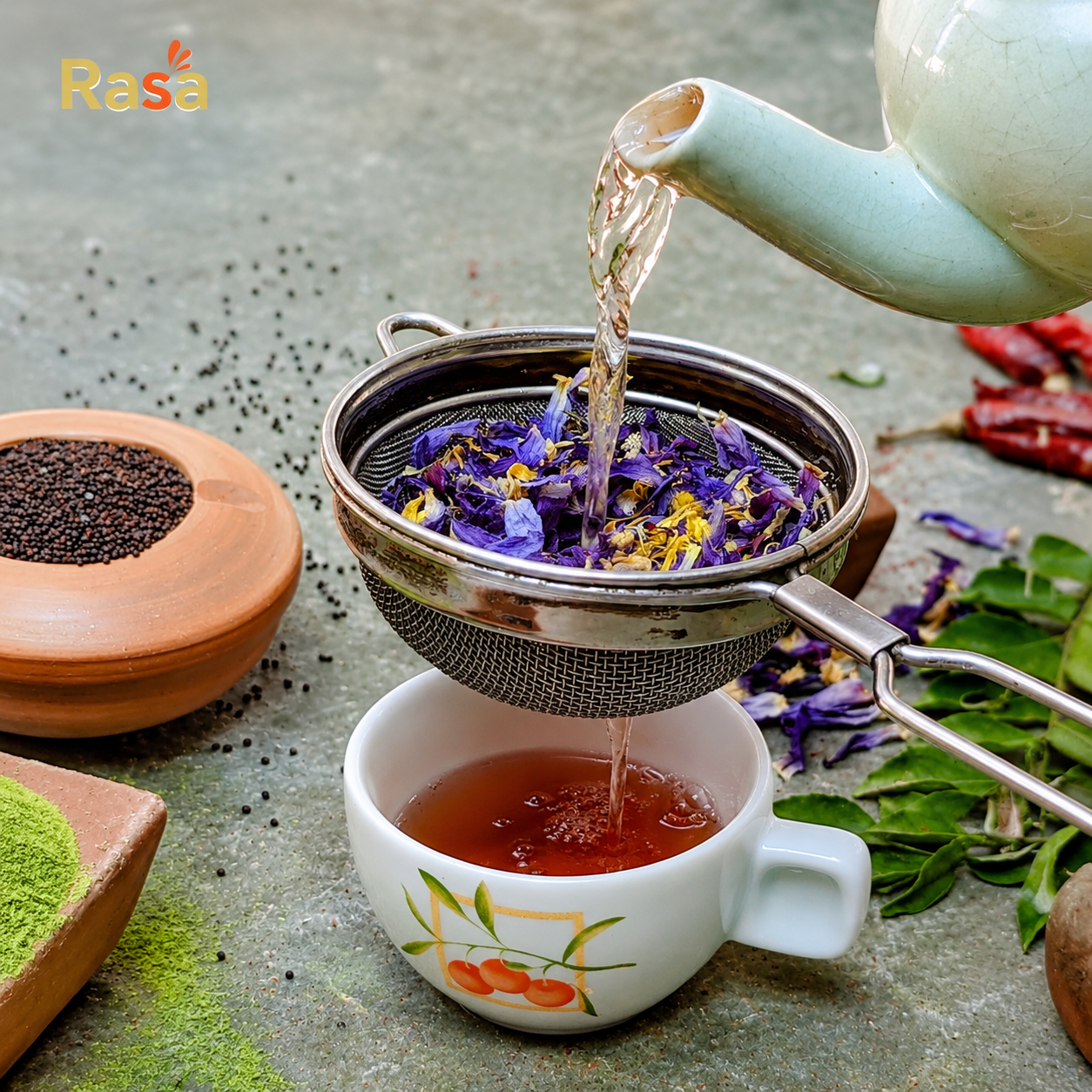
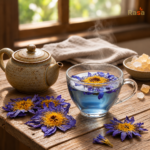
The dried flowers display beautiful shades of blue, violet, purple and occasional golden-yellow floral structures. Their distinctive appearance makes them an interesting addition to botanical collections and decorative floral displays.
✨ A distinctive flower. An elegant botanical appearance. A remarkable natural heritage.
🌸 1. PRODUCT HIGHLIGHTS
🪷 Distinctive Blue Water Lily
A beautiful aquatic flowering plant recognised for its blue and violet floral appearance.
🌿 Botanical Identity
Associated with Nymphaea caerulea, commonly known as Egyptian Blue Lotus.
💜 Natural Floral Appearance
Dried flowers may display blue, violet, purple and yellow tones, depending on the plant material and drying process.
✨ Distinctive Botanical Character
A naturally interesting flower with a unique structure and recognisable appearance.
🌱 Carefully Presented Dried Flowers
Dried botanical material selected for its appearance and product presentation.
🎀 Premium Botanical Collection
A distinctive addition to a collection of dried flowers and botanical specimens.
🔬 2. BOTANICAL IDENTIFICATION
| Characteristic | Description |
|---|
| Product name | Blue Lotus Flowers |
| Common name | Egyptian Blue Lotus |
| Alternative name | Blue Water Lily |
| Botanical name | Nymphaea caerulea |
| Botanical family | Nymphaeaceae |
| Genus | Nymphaea |
| Plant type | Aquatic flowering perennial |
| Plant part | Flower |
| Product form | Dried flowers |
| Natural colours | Blue, violet, purple and yellow |
| Botanical origin | Native to parts of Africa, including the Nile region |
| Product category | Dried botanical flower |
| Processing | Drying and sorting |
Taxonomic note: Some botanical authorities recognise Nymphaea caerulea under the name Nymphaea nouchali var. caerulea. The exact identification of the supplied material should be confirmed by the supplier.
🪷 3. UNDERSTANDING THE BLUE LOTUS FLOWER
Blue Lotus is an aquatic flowering plant belonging to the water-lily family.
Its natural habitat includes freshwater environments such as ponds and lakes. The plant develops floating leaves and distinctive flowers that may rise above the water surface.
The flowers are recognised by their layered petals and attractive blue or bluish-violet appearance.
The plant has a long association with historical botanical and cultural traditions, particularly in ancient Egyptian art and symbolism.
Its distinctive appearance has made it an interesting subject in botanical collections and historical floral studies.
💜 4. APPEARANCE & NATURAL CHARACTER
Colour
Dried Blue Lotus flowers may display:
- Deep blue.
- Blue-violet.
- Purple.
- Muted lavender.
- Yellow or golden floral structures.
Natural colour variation is expected because drying, flower maturity and storage conditions can affect the final appearance.
Texture
The dried flowers may have delicate, thin and slightly crinkled petals.
Floral Structure
The flower is characterised by multiple layers of petals surrounding a central floral structure.
Natural Variation
Individual flowers may vary in size, shape, colour intensity and degree of petal separation.
These differences are natural characteristics of dried botanical material.
🏺 5. HISTORICAL & CULTURAL BACKGROUND
The Egyptian Blue Lotus has a notable place in historical depictions of ancient Egyptian life and symbolism.
Blue water-lily flowers appear in historical artwork and decorative motifs, where they are associated with floral beauty, water landscapes and symbolic traditions.
The flower is therefore of interest to:
- Botanical collectors.
- Students of plant history.
- Floral researchers.
- Historical plant enthusiasts.
- Decorative botanical collections.
Historical associations should not be interpreted as evidence of medical effectiveness or product safety.
🌿 6. NATURALLY OCCURRING BOTANICAL CONSTITUENTS
Blue Lotus contains naturally occurring plant compounds, including alkaloids that have attracted scientific attention.
| Botanical constituent | General information |
|---|
| Aporphine-related alkaloids | Naturally occurring alkaloid compounds |
| Nuciferine | An alkaloid reported in Blue Lotus |
| Other plant constituents | Composition may vary with plant material and processing |
| Natural pigments | Contribute to flower colour |
| Aromatic constituents | Contribute to the natural floral character |
The concentration and composition of these constituents can vary. No quantitative constituent claim should be made without laboratory analysis of the actual batch.
⚠️ 7. IMPORTANT SAFETY INFORMATION
Blue Lotus should not be treated as an ordinary food flower.
Published toxicology information identifies psychoactive constituents in Nymphaea caerulea. Reported effects following exposure have included sedation, altered perception and changes in mental status.
For this reason, this product should not be promoted with drinking recipes, consumption instructions, serving suggestions or dosage recommendations.
Please observe the following precautions:
- Do not consume or prepare as tea unless its safety and suitability for human consumption have been independently established by qualified professionals and relevant authorities.
- Do not use concentrated extracts or preparations.
- Do not combine with alcohol, sedatives or other psychoactive substances.
- Do not drive or operate machinery after exposure.
- Keep away from children and pets.
- Pregnant or breastfeeding individuals should avoid exposure.
- People taking prescription medicines should consult their healthcare professional about potential interactions.
- Avoid contact or use if you have a known sensitivity to the plant.
- Seek medical assistance if unexpected symptoms occur after exposure.
Important: Consulting an herbalist alone does not establish that this botanical is safe to consume. A qualified healthcare professional and appropriate product-safety assessment are necessary.
🧪 8. PRODUCT QUALITY & VERIFICATION
A premium dried botanical product should be supported by appropriate identification and quality documentation.
| Quality parameter | Recommended verification |
|---|
| Botanical identity | Confirm Nymphaea caerulea |
| Plant part | Confirm flower material |
| Country of origin | Supplier documentation |
| Organic status | Valid organic certification |
| Pesticide residues | Appropriate laboratory testing |
| Heavy metals | Appropriate laboratory testing |
| Microbiological quality | Relevant testing |
| Foreign matter | Physical inspection |
| Moisture | Laboratory analysis |
| Alkaloid profile | Appropriate analytical testing |
| Intended use | Written supplier and regulatory confirmation |
Organic status: The term certified organic should only be used when valid certification and traceability documentation are available. Naturally dried does not automatically mean certified organic.
📊 9. NUTRITIONAL INFORMATION
Blue Lotus flowers are not being presented here as a conventional food product. A standard nutrition panel or edible serving information should not be invented.
A laboratory nutrition analysis would be required to establish reliable numerical values. A nutrition panel would not, by itself, establish that the flower is safe to consume.
📦 10. STORAGE INSTRUCTIONS
To preserve the appearance and condition of dried botanical flowers:
- Keep in a clean, dry, airtight container.
- Protect from direct sunlight.
- Avoid moisture and humidity.
- Store away from strong odours.
- Keep packaging properly sealed.
- Keep out of reach of children and pets.
- Follow the storage instructions printed on the product packaging.
❓ 11. FREQUENTLY ASKED QUESTIONS
Q1. What is Blue Lotus?
Blue Lotus is the common name for an aquatic flowering plant commonly identified as Nymphaea caerulea.
Q2. What family does Blue Lotus belong to?
It belongs to the Nymphaeaceae family, commonly known as the water-lily family.
Q3. Is Blue Lotus the same as an ordinary lotus?
No. Blue Lotus is a water lily belonging to the genus Nymphaea. It should not automatically be identified with true lotus species from the genus Nelumbo.
Q4. Why does Blue Lotus have different colours after drying?
Drying, flower maturity, storage conditions and natural botanical variation can influence the final colour.
Q5. Is Blue Lotus suitable for tea?
Its safety for consumption should not be assumed. This product should not be prepared as a beverage without independent safety verification and appropriate professional clearance.
Q6. Is this product certified organic?
Certification should be confirmed through valid supplier documentation before making a certified-organic claim.
Q7. How should dried Blue Lotus flowers be stored?
Keep them in an airtight container in a cool, dry place away from sunlight and moisture.
🌿 12. THE RASA ORGANICS APPROACH
At Rasa Organics, we value natural botanical diversity, responsible sourcing and transparent product information.
Our aim is to present botanical products with accurate identification, clear descriptions and responsible handling information.
Premium Dried Blue Lotus Flowers offer a distinctive opportunity to appreciate the natural structure, colour and botanical heritage of an unusual aquatic flower.
🪷 RASA ORGANICS
Pure • Natural • Authentic



















Reviews
Clear filtersThere are no reviews yet.