🌹 Premium Iranian Rose Petal Tea
Imported Dried Rose Petals | Delicate Floral Aroma | Rasa Organics
A Beautiful Floral Experience in Every Cup
🌿 Pure • Natural • Authentic
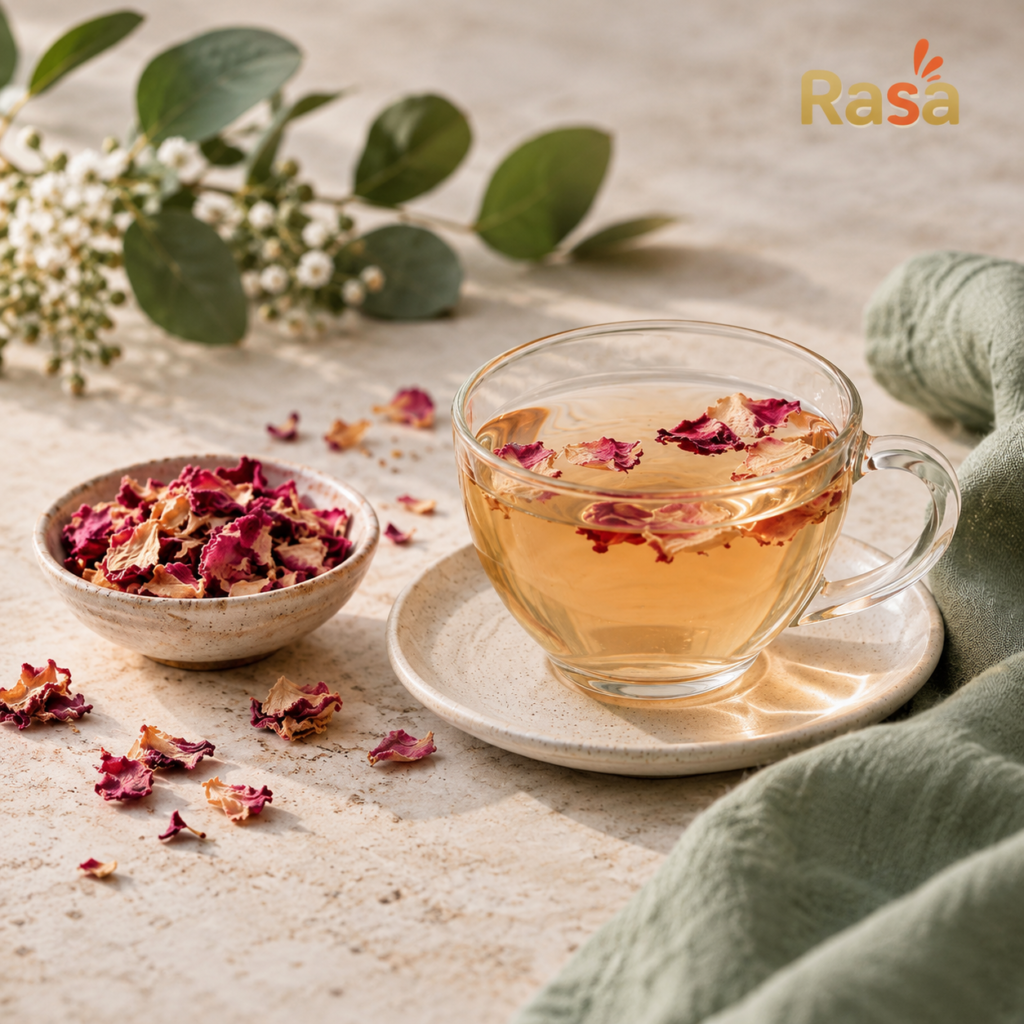
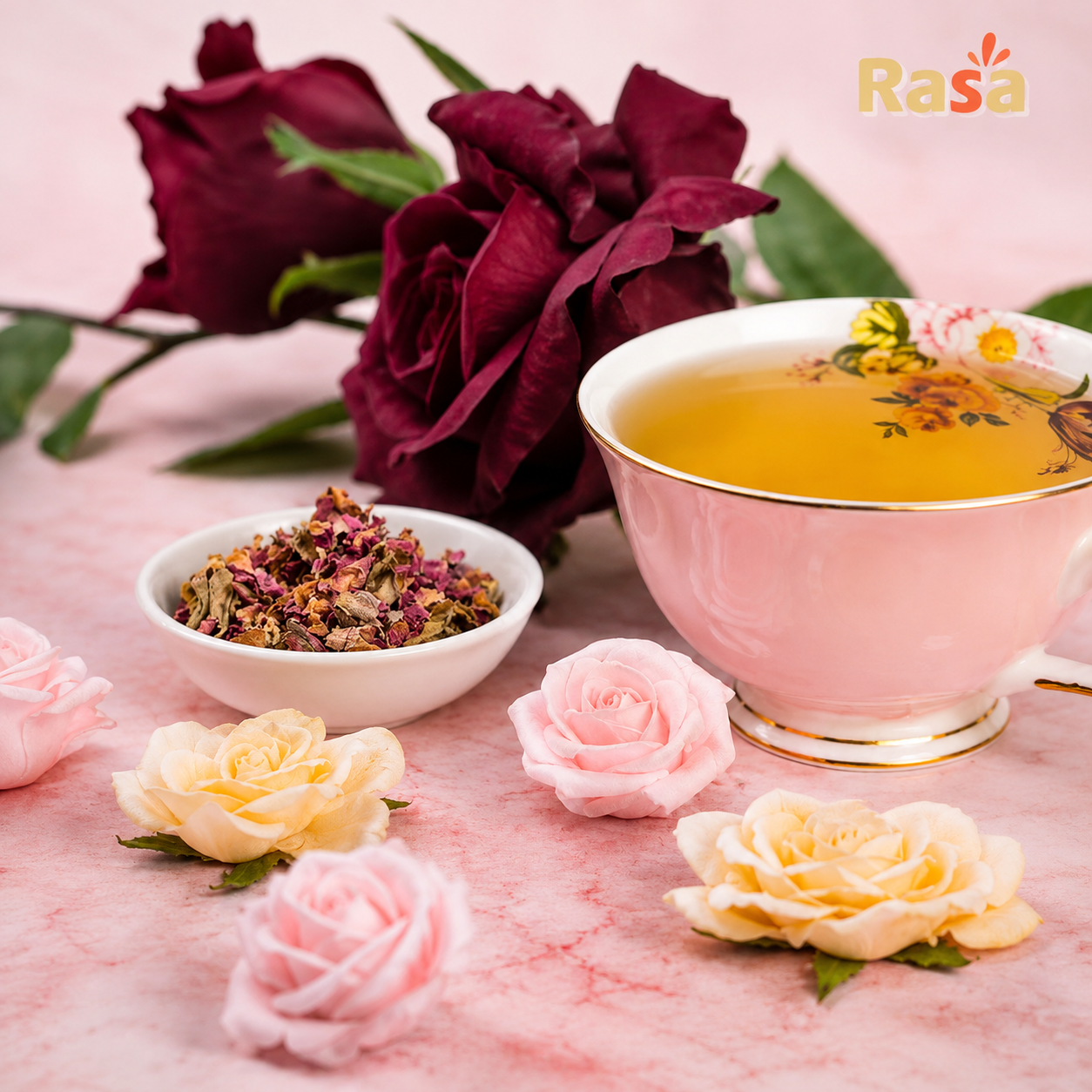
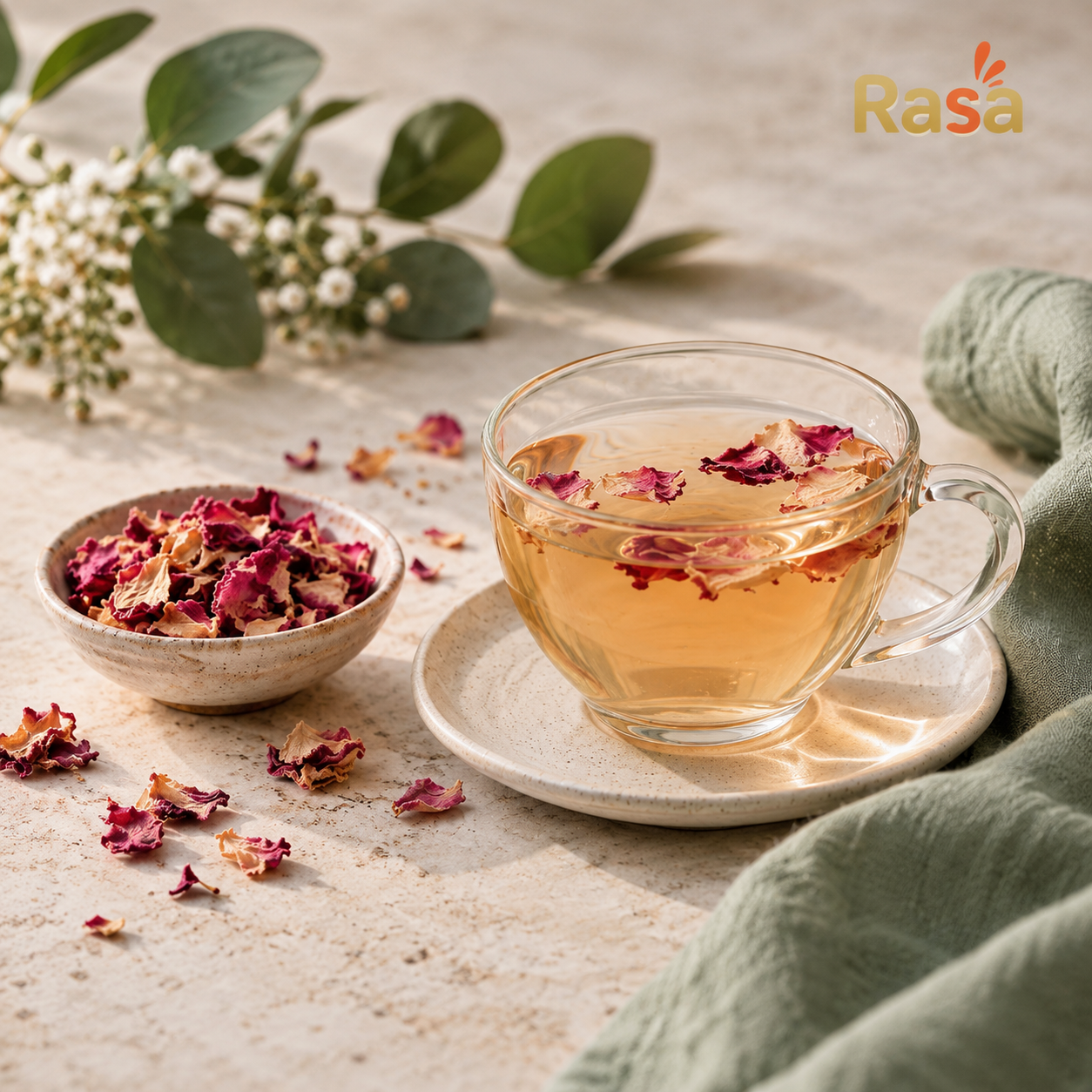
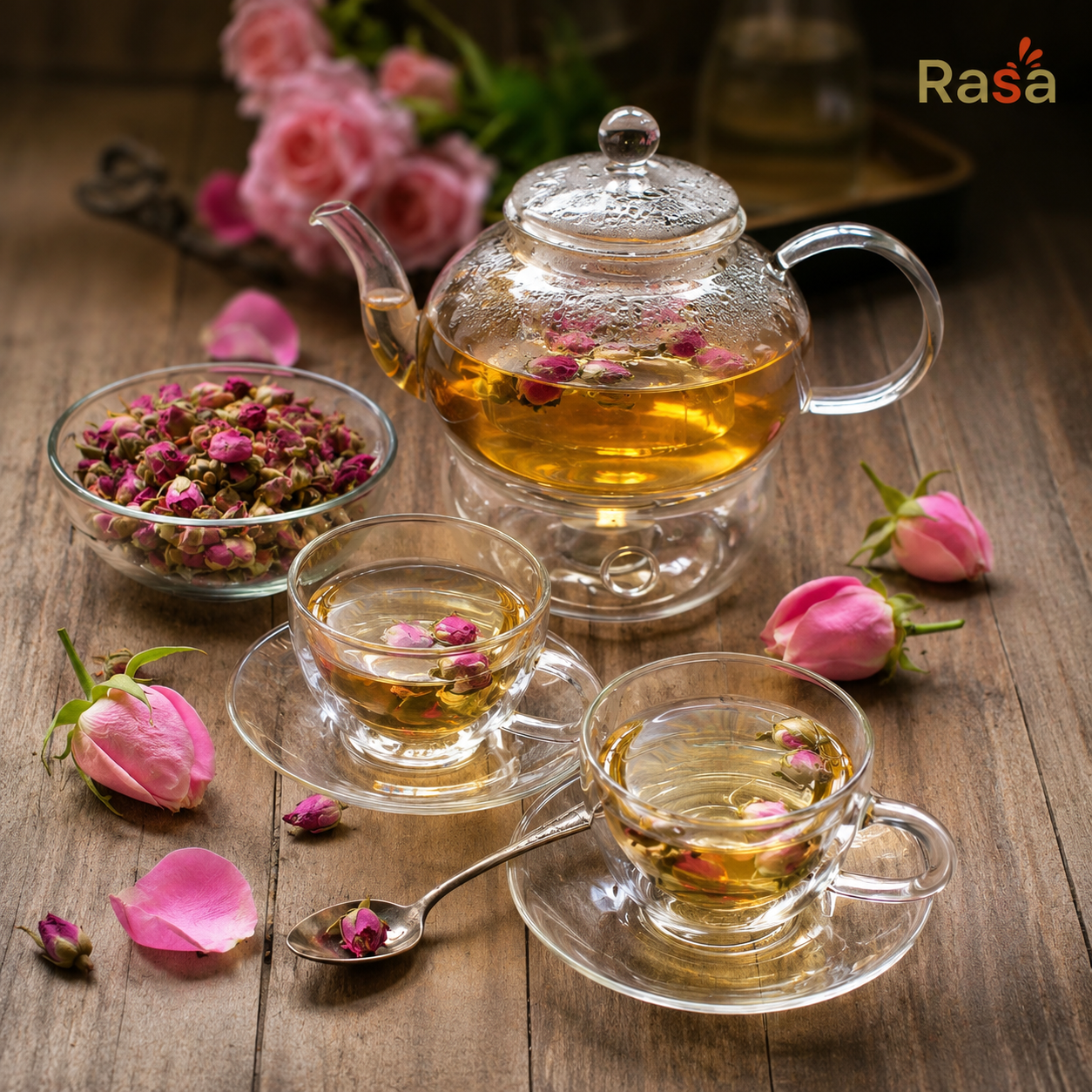
Discover the delicate beauty of premium Iranian Rose Petal Tea, a refined floral infusion prepared from carefully selected and naturally dried rose petals.
Known for their beautiful floral character, elegant appearance and gentle fragrance, Iranian roses have a distinguished place in the world of traditional floral ingredients. Their delicate petals bring a naturally aromatic and visually beautiful touch to tea preparations, special beverages and creative culinary presentations.
At Rasa Organics, we appreciate the natural character of botanical ingredients. Our Premium Iranian Rose Petal Tea is presented for those who enjoy delicate floral flavours, elegant tea experiences and the timeless charm of rose.
Whether enjoyed as a warm floral infusion, served as a refreshing iced tea or incorporated into selected culinary creations, dried rose petals offer a distinctive sensory experience.
✨ A delicate floral aroma. A beautiful natural appearance. An elegant tea experience.
🌸 1. PRODUCT HIGHLIGHTS
🌹 Premium Iranian Origin
Selected Iranian rose petals, with country-of-origin information supported by supplier documentation.
🌿 Naturally Dried Floral Material
Carefully dried petals that retain their characteristic botanical appearance and fragrance.
✨ Delicate Floral Aroma
A gentle, recognisable rose fragrance that creates an elegant floral tea experience.
🍃 Beautiful Natural Colour
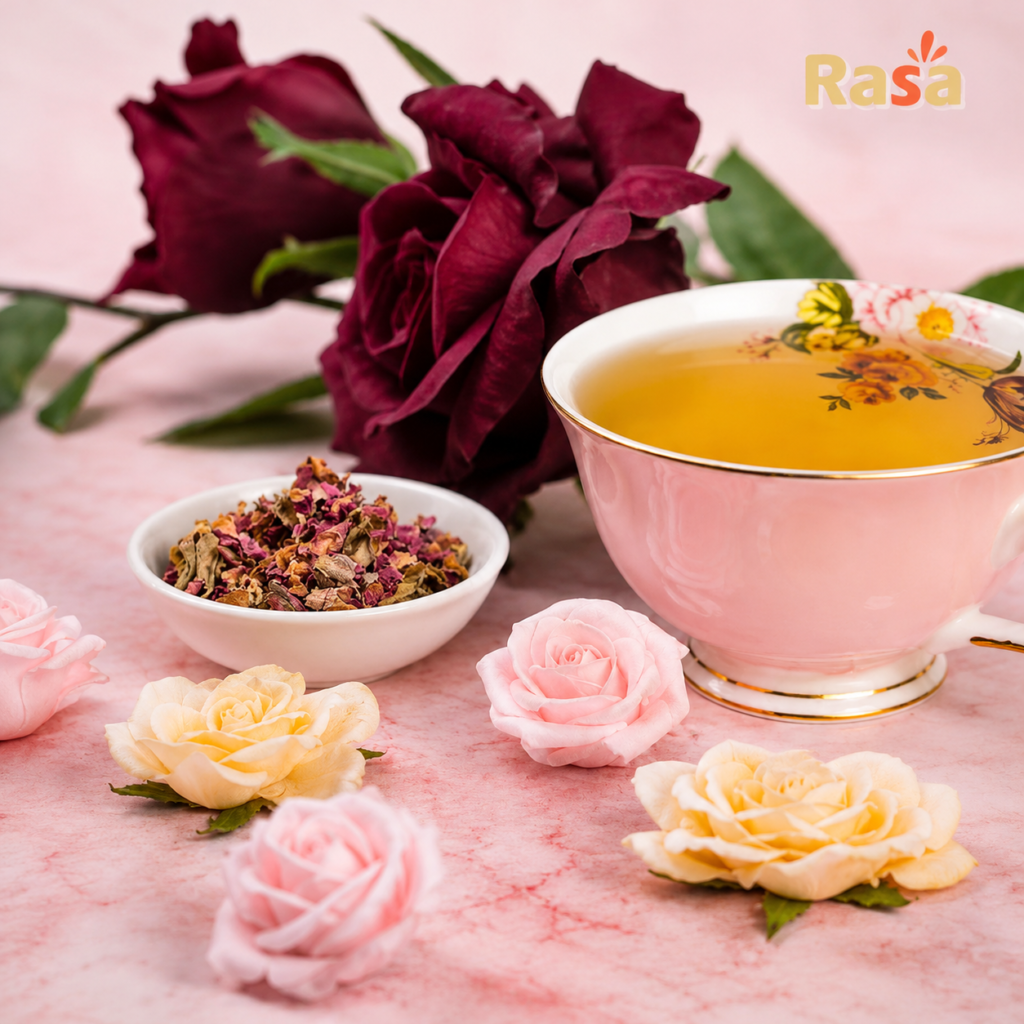
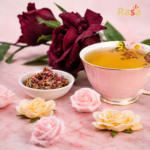
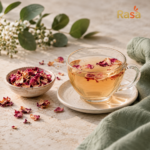
Dried petals may display shades of pink, rose, burgundy and muted red depending on the rose variety and drying process.
☕ Versatile Tea Ingredient
Suitable for floral tea preparations and creative beverage applications when supplied and verified as food-grade.
🎀 Elegant Presentation
A beautiful choice for floral tea collections, thoughtful gifts and premium botanical ingredient selections.
🌹 2. GETTING TO KNOW IRANIAN ROSE PETALS
Roses belong to the botanical genus Rosa, a diverse group of flowering plants belonging to the Rosaceae family.
Different rose varieties are cultivated around the world for their fragrance, appearance and uses in perfumery, cosmetics, culinary preparations and traditional floral products.
Iran has a long-standing association with rose cultivation and rose-based products, particularly in regions known for their traditional rose-growing and rose-water production.
The petals are carefully separated from the flowers and dried under suitable conditions to produce a lightweight botanical ingredient.
Their natural fragrance and appearance make them a distinctive addition to floral tea collections.
Botanical & Product Identification
| Characteristic | Description |
|---|
| Product name | Premium Iranian Rose Petal Tea |
| Common name | Rose Petals |
| Botanical genus | Rosa |
| Botanical family | Rosaceae |
| Country of origin | Iran, subject to supplier verification |
| Product part | Flower petals |
| Product form | Dried petals |
| Natural colour | Pink, red, burgundy and rose shades |
| Aroma | Delicate, floral and characteristic of rose |
| Taste | Mild, floral and gently aromatic |
| Product category | Floral tea ingredient |
| Processing | Dried botanical petals |
| Organic status | Subject to certification verification |
Botanical identification note: The exact Rosa species or cultivar should be confirmed through supplier documentation. Not every rose variety grown for ornamental purposes is suitable for food or tea use.
🌷 3. APPEARANCE, AROMA & FLAVOUR PROFILE
Natural Appearance
Premium dried rose petals are appreciated for their delicate structure and attractive natural colours.
Depending on the rose variety and drying conditions, the petals may feature:
- Soft pink shades.
- Deep rose and burgundy tones.
- Natural red colour variations.
- Delicate, lightweight textures.
- Slight differences in petal size and shape.
Natural variations are expected in botanical materials.
Aroma
Rose petals are recognised for their characteristic floral fragrance.
Their aroma can be described as:
- Delicate.
- Floral.
- Softly sweet-smelling.
- Fresh and aromatic.
- Naturally recognisable as rose.
Flavour
When prepared as a suitable food-grade infusion, rose petals generally produce a gentle floral flavour.
The taste may vary according to the rose cultivar, quantity used, water temperature and infusion time.
A well-balanced floral infusion is appreciated for its subtle character rather than an overpowering flavour.
☕ 4. HOW TO ENJOY ROSE PETAL TEA
The following preparations are intended only for rose petals that have been confirmed as food-grade and suitable for beverage use.
🌹 Classic Rose Petal Infusion
A simple preparation that allows the natural floral character of rose petals to take centre stage.
Ingredients:
| Ingredient | Quantity |
|---|
| Food-grade dried rose petals | 1 teaspoon |
| Hot drinking water | 1 cup |
| Honey | Optional |
| Lemon | Optional |
Preparation:
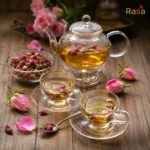
- Place the dried rose petals in a clean teapot or infuser.
- Add freshly heated drinking water.
- Cover and allow the petals to infuse for approximately 5–7 minutes.
- Strain into a cup.
- Add honey or a little lemon if desired.
Adjust the infusion strength according to personal taste.
🧊 Rose Iced Tea
A refreshing floral beverage for warmer days.
Ingredients:
| Ingredient | Quantity |
|---|
| Food-grade dried rose petals | 1–2 teaspoons |
| Drinking water | 2 cups |
| Ice cubes | As required |
| Lemon slices | Optional |
| Honey | Optional |
Preparation:
- Prepare a floral infusion using hot water.
- Allow it to cool.
- Strain the petals.
- Refrigerate until chilled.
- Serve over ice.
- Garnish with a lemon slice if desired.
🍯 Rose & Honey Floral Tea
A simple combination for those who appreciate a gently sweet floral drink.
Ingredients:
| Ingredient | Quantity |
|---|
| Food-grade dried rose petals | 1 teaspoon |
| Drinking water | 1 cup |
| Honey | To taste |
Preparation:
- Prepare the rose infusion.
- Strain into a cup.
- Allow it to cool slightly.
- Add honey and stir.
🥛 Rose Milk
A delicate floral milk beverage.
Ingredients:
| Ingredient | Quantity |
|---|
| Milk | 1 cup |
| Food-grade rose petal infusion | 2–3 tablespoons |
| Honey or sugar | To taste |
| Cardamom | Optional |
Preparation:
- Prepare and strain a mild rose infusion.
- Warm the milk separately.
- Combine the milk and infusion.
- Add a little honey or sugar if desired.
- Serve warm or chilled.
🍰 Other Culinary Applications
When the petals are confirmed as food-grade, they may also be considered for:
- Floral dessert garnishing.
- Rose-flavoured milk.
- Homemade floral syrups.
- Cake and cupcake decoration.
- Rice pudding presentation.
- Traditional sweet dishes.
- Decorative confectionery.
- Floral beverage blends.
Use only food-grade petals for these applications. Ornamental or cosmetic-grade rose petals should not be used in food.
🌿 5. NATURAL BOTANICAL CHARACTER & TRADITION
Rose petals have been appreciated across different cultures for their fragrance, appearance and culinary versatility.
They are traditionally associated with:
- Floral infusions.
- Fragrant beverages.
- Traditional sweet preparations.
- Decorative culinary presentations.
- Rose-water and fragrance production.
- Botanical and floral collections.
Their appeal comes from their distinctive fragrance and versatility as a floral ingredient.
These traditional associations are descriptive and do not establish medical or therapeutic effects.
🔬 6. NATURALLY OCCURRING PLANT COMPOUNDS
Rose petals contain naturally occurring plant constituents. Their composition varies according to the species, cultivar, growing environment, maturity and drying method.
| Plant constituent | General description |
|---|
| Natural aromatic compounds | Contribute to the characteristic rose fragrance |
| Flavonoids | A group of naturally occurring plant compounds |
| Anthocyanins | Natural pigments associated with red and pink colours |
| Phenolic compounds | Naturally occurring compounds found in plant tissues |
| Organic acids | Present in varying amounts depending on the plant material |
| Natural pigments | Contribute to the appearance of dried petals |
The exact composition of this product cannot be determined from its appearance. Quantitative claims require appropriate laboratory analysis.
📊 7. NUTRITION PROFILE
Rose petals are primarily used as a floral ingredient rather than as a major source of dietary energy or macronutrients.
The nutritional composition of dried rose petals varies with the species, cultivar, drying process and moisture content.
Nutritional Information
| Nutritional parameter | Product information |
|---|
| Energy | Laboratory value required |
| Protein | Laboratory value required |
| Total fat | Laboratory value required |
| Carbohydrates | Laboratory value required |
| Total sugars | Laboratory value required |
| Dietary fibre | Laboratory value required |
| Moisture | Depends on drying process |
| Ash | Laboratory value required |
| Calcium | Batch-specific value required |
| Iron | Batch-specific value required |
| Potassium | Batch-specific value required |
| Magnesium | Batch-specific value required |
| Sodium | Batch-specific value required |
Nutrition declaration: Exact numerical values should be added only after laboratory testing of the actual dried rose petal product. Values for fresh rose flowers or rose extracts should not be presented as the nutrition profile of this dried product.
🧾 8. INGREDIENTS & PRODUCT COMPOSITION
| Ingredient | Description |
|---|
| Dried rose petals | Main botanical ingredient |
| Added sugar | Not declared unless present |
| Added flavouring | Not declared unless present |
| Added colour | Not declared unless present |
| Added preservatives | Not declared unless present |
| Other ingredients | None declared unless included in the actual formulation |
Ingredient statement: If the product consists entirely of dried rose petals, the ingredient declaration should read: 100% dried rose petals.
This statement should be used only after verifying the actual formulation and processing records.
🌱 9. WHAT MAKES A QUALITY DRIED ROSE PETAL PRODUCT?
The quality of dried rose petals depends on several important factors.
Selection
Suitable rose varieties should be selected for their intended food use. Ornamental flowers treated with unsuitable pesticides or chemicals should not be used for tea.
Harvesting
Flowers should be harvested at an appropriate stage of maturity and handled hygienically.
Drying
Appropriate drying conditions help preserve the natural structure, appearance and characteristic aroma of the petals.
Sorting
The dried material should be inspected for unwanted stems, foreign matter, insects and other contaminants.
Packaging
The petals should be protected from moisture, excessive heat, light and external odours.
🔍 10. RECOMMENDED QUALITY CONTROL
| Quality parameter | Recommended assessment |
|---|
| Botanical identity | Verification of rose species or cultivar |
| Country of origin | Supplier and import documentation |
| Food-grade suitability | Confirmation of intended food use |
| Organic status | Valid organic certification and traceability |
| Pesticide residues | Appropriate residue testing |
| Heavy metals | Testing where applicable |
| Microbiological quality | Relevant microbiological testing |
| Moisture | Appropriate moisture analysis |
| Foreign matter | Visual and physical inspection |
| Packaging | Suitable food-contact packaging |
Important: Organic certification and food-grade suitability are separate matters. A product should not be described as certified organic or suitable for tea unless the relevant documentation supports those claims.
⚠️ 11. CAUTIONS & RESPONSIBLE USE
Although rose petals are commonly used as culinary ingredients, the safety of a particular product depends on botanical identity, cultivation, pesticide exposure, processing and storage.
Please observe the following precautions:
- Use only petals specifically confirmed as food-grade.
- Do not consume ornamental or decorative rose petals unless their food suitability is verified.
- Do not use petals treated with pesticides or chemicals not approved for food crops.
- Check the ingredient list for added colours, fragrances or preservatives.
- People with known rose or flower allergies should avoid the product.
- If you experience an allergic reaction or unusual discomfort, discontinue use and seek appropriate medical advice.
- Pregnant or breastfeeding individuals should seek professional advice before using concentrated botanical preparations.
- Do not treat rose tea as a substitute for prescribed treatment.
- Keep away from children and pets.
- Store away from moisture and direct sunlight.
For concentrated extracts or therapeutic-style preparations: Consult a qualified healthcare professional rather than relying on an assumed dosage or traditional recipe.
📦 12. STORAGE INSTRUCTIONS
To maintain the quality and fragrance of dried rose petals:
- Store in a clean, airtight container.
- Keep in a cool and dry location.
- Protect from direct sunlight.
- Avoid exposure to moisture.
- Use clean, dry utensils when handling.
- Keep away from strong-smelling products.
- Reseal the packaging after every use.
- Follow the expiry and storage instructions on the actual product label.
🎁 13. PRODUCT PRESENTATION & GIFTING
Premium Iranian Rose Petal Tea is an elegant addition to a floral tea collection.
Its attractive dried petals and characteristic fragrance make it suitable for presentation in:
- Premium tea gift boxes.
- Floral tea collections.
- Special occasion hampers.
- Botanical ingredient collections.
- Elegant kitchen and pantry displays.
- Floral beverage selections.
Its natural appearance also makes it attractive for product photography and premium gifting presentations.
❓ 14. FREQUENTLY ASKED QUESTIONS
Q1. What is Rose Petal Tea?
Rose Petal Tea is a floral infusion prepared from dried rose petals that are specifically suitable for food and beverage use.
Q2. What is the botanical name of rose?
Rose belongs to the botanical genus Rosa and the family Rosaceae. The exact species or cultivar should be confirmed by the supplier.
Q3. Where does this product come from?
This product is described as imported from Iran. Its country of origin should be supported by supplier and import documentation.
Q4. Is this product organically dried?
The petals are described as organically dried. A certified organic claim should be made only when supported by valid organic certification and traceability records.
Q5. What does rose petal tea taste like?
It has a delicate floral flavour and a characteristic rose aroma. The exact taste depends on the rose variety and infusion strength.
Q6. Can rose petals be mixed with other teas?
Food-grade rose petals can be used in suitable floral tea blends, subject to ingredient compatibility and food-safety requirements.
Q7. Can rose petals be used in desserts?
Yes, if the petals are confirmed as food-grade. They may be used for decorative garnishing and suitable culinary preparations.
Q8. How should dried rose petals be stored?
Keep them in a sealed container in a cool, dry place away from direct sunlight and moisture.
Q9. Do dried rose petals contain added ingredients?
The ingredient declaration should reflect the actual product. If it consists only of dried rose petals, no other ingredients should be listed.
Q10. Are all rose petals suitable for making tea?
No. Only correctly identified, hygienically processed, food-grade rose petals should be used in beverages.
🌹 15. THE RASA ORGANICS PROMISE
At Rasa Organics, we appreciate the beauty of natural ingredients and the craftsmanship behind carefully selected botanical products.
Our approach is centred on product transparency, responsible sourcing, accurate descriptions and quality-conscious presentation.
Premium Iranian Rose Petal Tea represents the delicate charm of floral ingredients: beautiful in appearance, distinctive in fragrance and versatile in suitable culinary applications.
Bring a touch of floral elegance to your tea collection with Rasa Organics.
🌿 RASA ORGANICS
Pure • Natural • Authentic



















Reviews
Clear filtersThere are no reviews yet.