🌿 Premium Fenugreek Seeds (Methray / Methra / Methi Dana)
Rasa Organics | Pure • Natural • Authentic
Distinctive Aroma. Traditional Flavour. Naturally Versatile.
Discover the distinctive character of Premium Fenugreek Seeds, locally known as Methray, Methra or Methi Dana (میتھی دانہ) – a traditional kitchen ingredient appreciated for its characteristic aroma, earthy flavour and versatility in South Asian cooking.
At Rasa.pk, we celebrate the ingredients that bring authenticity and character to everyday food. Our Premium Fenugreek Seeds are carefully selected for their appearance, natural aroma and culinary quality, making them a valuable addition to traditional Pakistani kitchens and speciality spice collections.
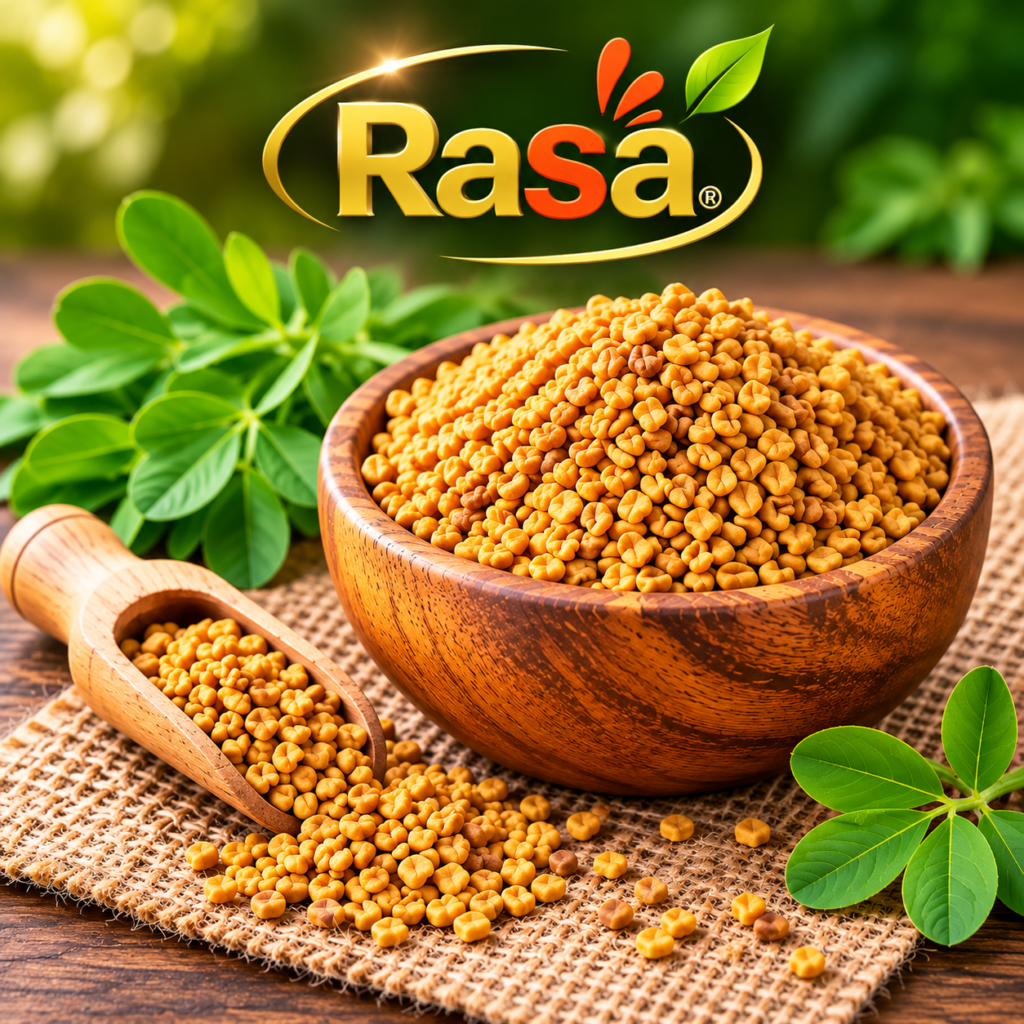
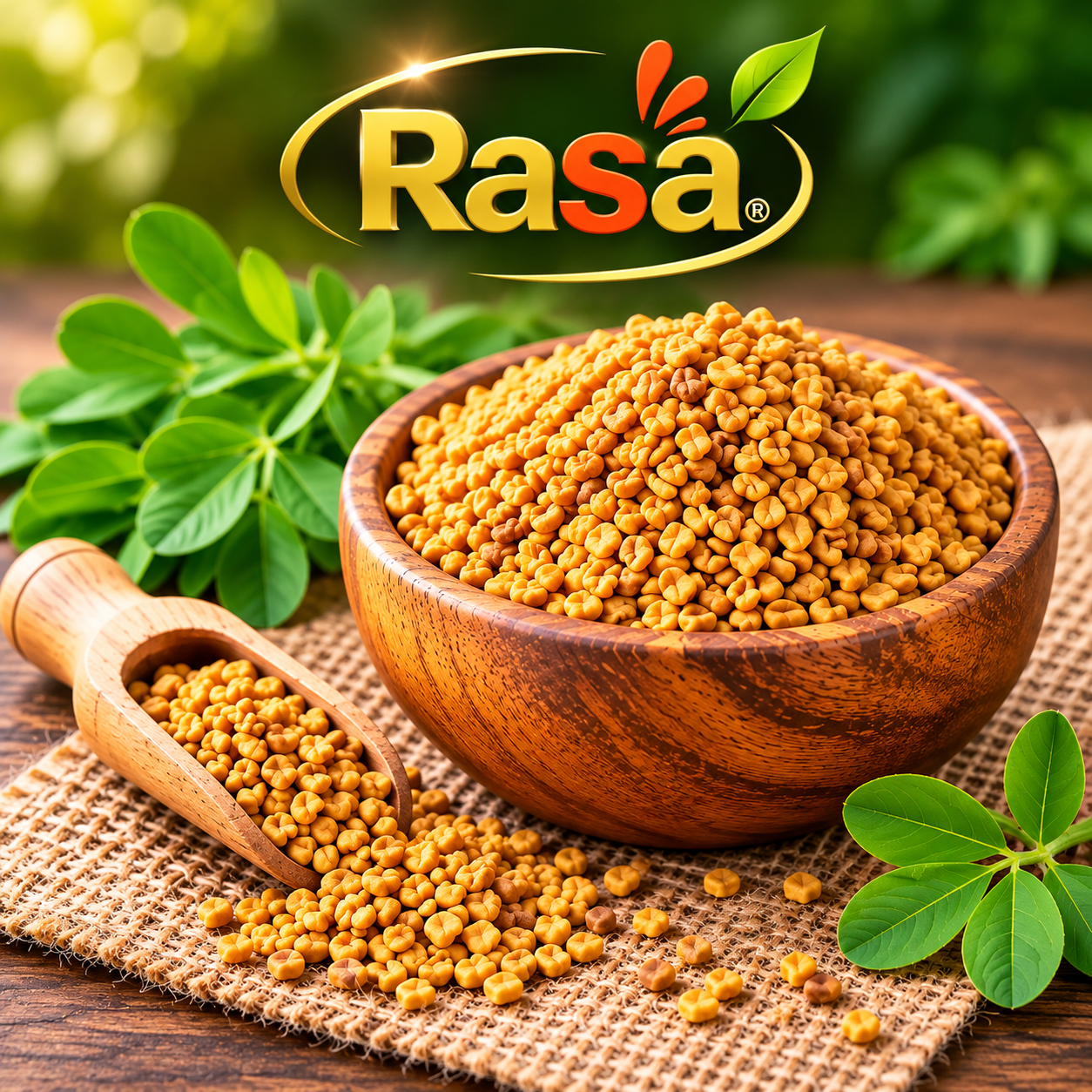
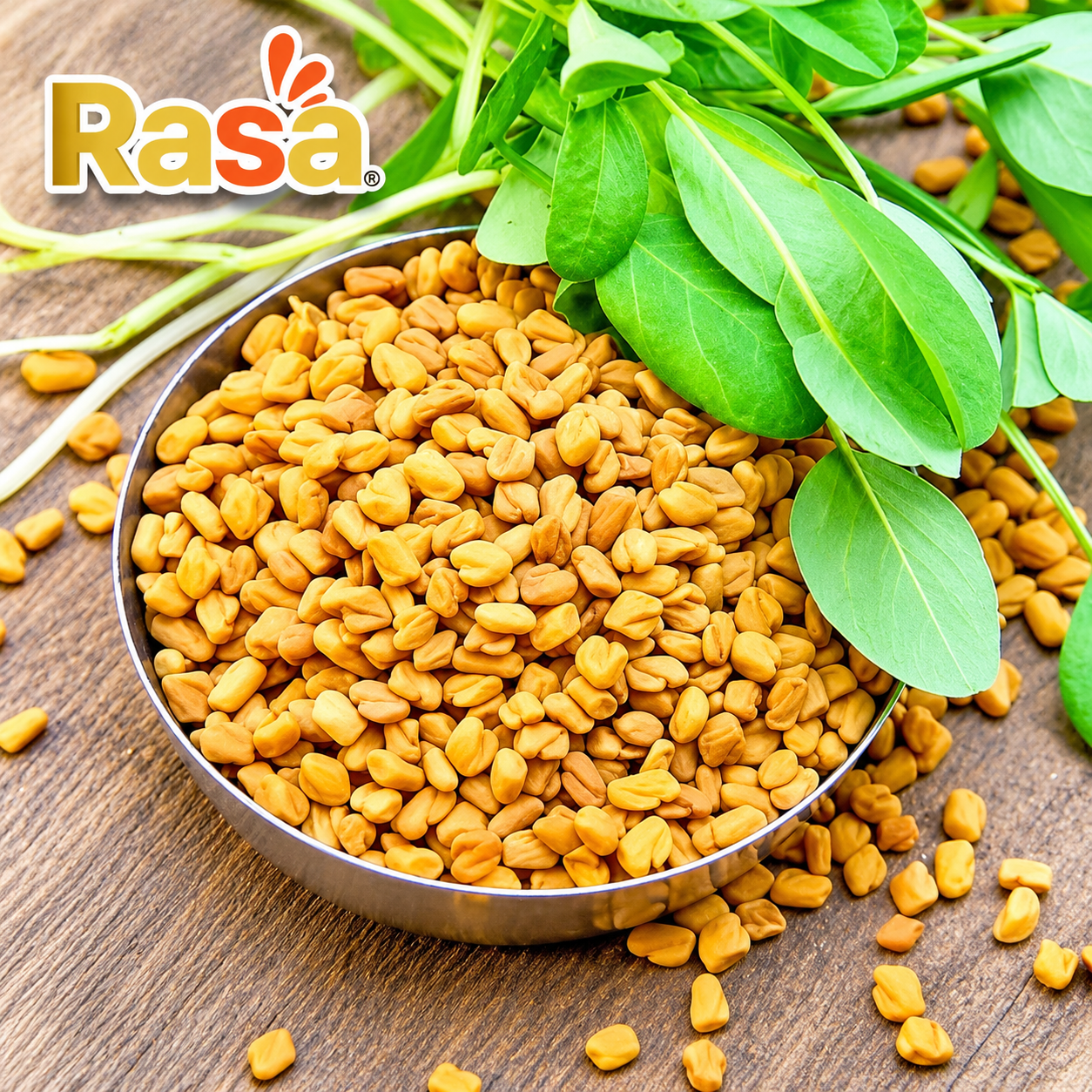
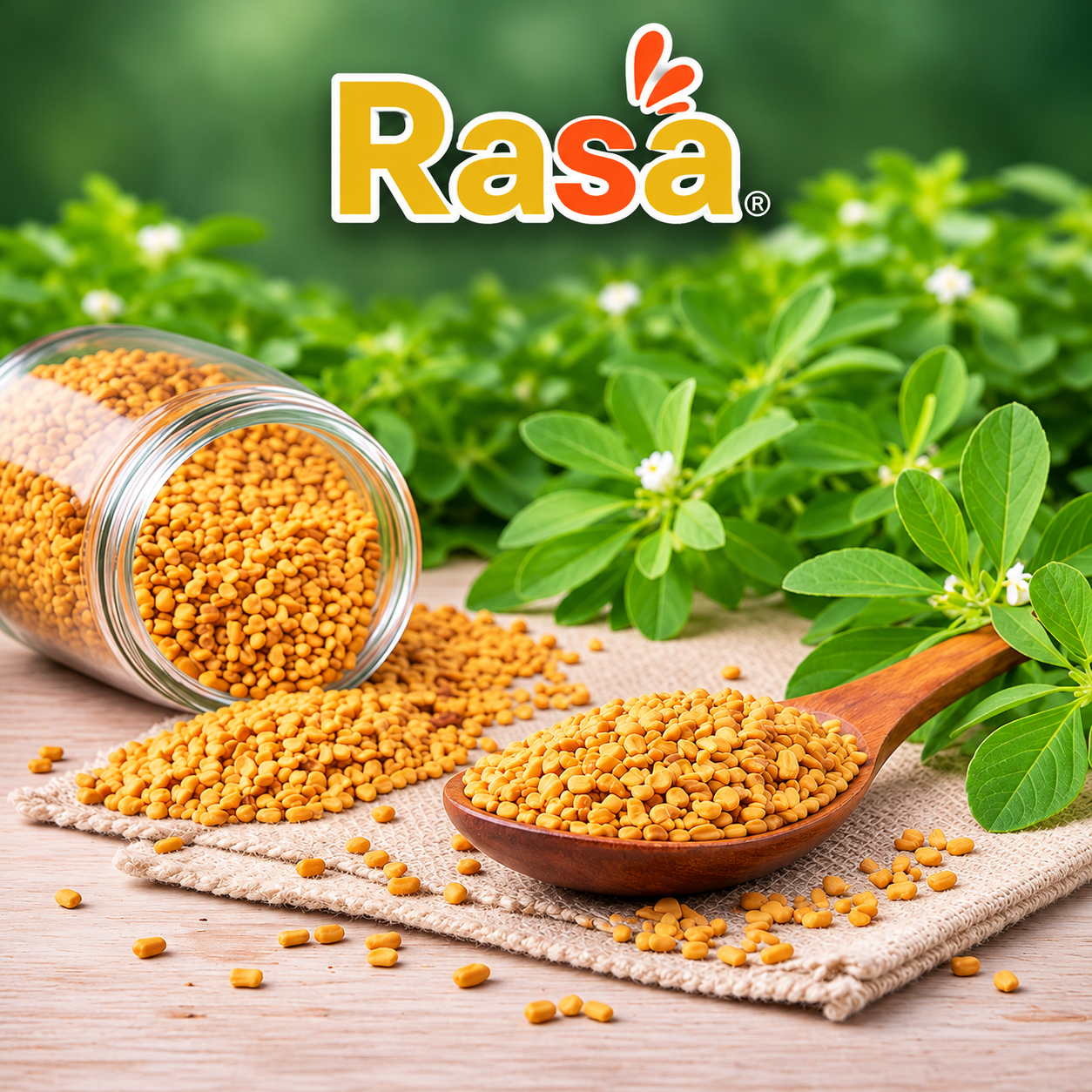
These small, golden-brown to yellowish seeds have a distinctive flavour profile: mildly bitter, earthy and slightly sweet, with a warm aroma that becomes more pronounced when lightly roasted. They are widely used in spice blends, pickles, chutneys, curries, lentil dishes and traditional recipes.
Whether you are preparing homemade achar, seasoning vegetables, making a traditional spice blend or exploring regional cooking, fenugreek seeds offer a characteristic flavour that is difficult to replicate.
A small seed with a distinctive culinary identity – bringing traditional flavour to the Rasa kitchen.
🌟 1. PRODUCT HIGHLIGHTS
🌿 Carefully Selected Seeds
Selected for their characteristic appearance, aroma and suitability for culinary use.
🌾 Distinctive Natural Flavour
A combination of earthy, mildly bitter and gently sweet notes.
🍃 Traditional Kitchen Ingredient
A familiar ingredient in Pakistani, Indian, Middle Eastern and other regional cuisines.
🍲 Versatile Culinary Uses
Suitable for pickles, curries, lentils, spice blends, vegetable dishes and traditional recipes.
✨ Naturally Aromatic
Light roasting releases a warm, distinctive fragrance.
🥄 Whole Seed Form
Whole seeds provide flexibility for soaking, roasting, grinding and seasoning.
🌱 Traditional Food Heritage
An ingredient with a long history in household cooking and regional spice traditions.
🌱 2. GETTING TO KNOW FENUGREEK
Fenugreek is an annual herb belonging to the legume family, Fabaceae. Its seeds are widely used as a culinary spice, while its fresh leaves are also used as a vegetable and flavouring ingredient.
The botanical name of fenugreek is Trigonella foenum-graecum.
In Pakistan, the seeds are commonly called:
- Methray
- Methra
- Methi Dana
- Fenugreek Seeds
- میتھی دانہ
The seeds are small, angular and generally golden-yellow to yellowish-brown. They have a firm structure and a characteristic aroma.
Fenugreek seeds are particularly appreciated for their ability to contribute depth and complexity to savoury dishes.
Botanical Identification
| Characteristic | Description |
|---|
| Common English name | Fenugreek |
| Local name | Methray / Methra / Methi Dana |
| Urdu name | میتھی دانہ |
| Botanical name | Trigonella foenum-graecum |
| Plant family | Fabaceae |
| Plant type | Annual herb |
| Product part | Seeds |
| Seed appearance | Small, angular and hard |
| Natural colour | Golden-yellow to yellowish-brown |
| Aroma | Distinctive, warm and aromatic |
| Flavour | Earthy, mildly bitter and slightly sweet |
| Culinary category | Whole spice and food ingredient |
✨ 3. THE DISTINCTIVE CHARACTER OF METHRAY
A. Characteristic Aroma
Fenugreek seeds have a recognisable aroma that becomes more noticeable when the seeds are lightly roasted or incorporated into warm cooking preparations.
B. Earthy and Complex Flavour
Their flavour is distinctive, combining mild bitterness with earthy and gently sweet notes.
This flavour makes fenugreek useful in dishes that require depth and balance.
C. A Versatile Kitchen Ingredient
Fenugreek seeds are used in many traditional preparations, including:
- Achar and pickles
- Curry spice blends
- Vegetable dishes
- Lentil preparations
- Chutneys
- Homemade masalas
- Traditional bread and savoury recipes
D. A Recognised Ingredient in Traditional Cooking
Fenugreek is an established ingredient in South Asian culinary traditions and is often used alongside cumin, mustard seeds, coriander, fennel and other spices.
🍽️ 4. CULINARY USES OF FENUGREEK SEEDS
Fenugreek seeds can be used whole, lightly roasted, soaked or ground, depending on the recipe.
| Culinary application | How it is used |
|---|
| Pickles (Achar) | Adds characteristic flavour and aroma |
| Curries | Used in tempering and spice combinations |
| Lentil dishes | Adds earthy flavour |
| Vegetable dishes | Complements selected vegetables |
| Spice blends | Ground or combined with other spices |
| Chutneys | Adds a distinctive savoury note |
| Homemade masala | Used in whole or powdered form |
| Paratha and bread | Can be incorporated into suitable savoury dough recipes |
| Regional dishes | Used in traditional food preparations |
Flavour tip: Fenugreek has a naturally strong and slightly bitter taste. Begin with a small culinary quantity and adjust according to the recipe.
👩🍳 5. TRADITIONAL RECIPES & COOKING IDEAS
🍲 Recipe 1 – Traditional Fenugreek Aloo
Ingredients
| Ingredient | Suggested quantity |
|---|
| Potatoes | 3 medium |
| Fenugreek seeds | ¼ teaspoon |
| Cumin seeds | ½ teaspoon |
| Onion | 1 medium |
| Tomato | 1 medium |
| Turmeric powder | ¼ teaspoon |
| Red chilli powder | To taste |
| Salt | To taste |
| Cooking oil | As required |
| Fresh coriander | For garnish |
Preparation
- Heat oil in a cooking pan.
- Add fenugreek and cumin seeds.
- Allow them to release their aroma without burning.
- Add chopped onion and cook until softened.
- Add tomato, turmeric, chilli powder and salt.
- Add diced potatoes and mix thoroughly.
- Add a little water, cover and cook until the potatoes are tender.
- Garnish with fresh coriander and serve.
🥒 Recipe 2 – Homemade Achar Spice Mix
Ingredients
| Ingredient | Suggested quantity |
|---|
| Fenugreek seeds | 2 tablespoons |
| Mustard seeds | 2 tablespoons |
| Fennel seeds | 2 tablespoons |
| Nigella seeds | 1 teaspoon |
| Turmeric powder | 1 teaspoon |
| Red chilli powder | 1 tablespoon |
| Salt | According to recipe |
Preparation
- Lightly dry-roast the whole spices separately.
- Allow them to cool.
- Coarsely grind the fenugreek, mustard and fennel seeds.
- Combine with the remaining ingredients.
- Use as part of a properly formulated pickle recipe.
Food-safety note: A spice blend alone does not preserve pickles safely. Use a tested pickle recipe with appropriate acidity, salt concentration, hygiene and storage instructions.
🍛 Recipe 3 – Fenugreek-Spiced Lentils
Ingredients
| Ingredient | Suggested quantity |
|---|
| Red or yellow lentils | 1 cup |
| Fenugreek seeds | ⅛–¼ teaspoon |
| Cumin seeds | ½ teaspoon |
| Garlic | 2 cloves |
| Onion | 1 small |
| Tomato | 1 medium |
| Turmeric | ¼ teaspoon |
| Salt | To taste |
| Cooking oil | As required |
Preparation
- Wash and cook the lentils until soft.
- Heat oil in a separate pan.
- Add fenugreek seeds and cumin.
- Add garlic and onion.
- Add tomato, turmeric and salt.
- Cook until the mixture is aromatic.
- Pour the seasoning over the cooked lentils.
- Simmer briefly and serve hot.
🫓 Recipe 4 – Fenugreek-Spiced Paratha
Ingredients
| Ingredient | Suggested quantity |
|---|
| Whole-wheat flour | 2 cups |
| Finely crushed fenugreek seeds | ¼ teaspoon |
| Salt | To taste |
| Water | As required |
| Cooking oil or ghee | As required |
Preparation
- Combine flour, crushed fenugreek and salt.
- Add water gradually and knead into a soft dough.
- Rest the dough briefly.
- Roll into parathas.
- Cook on a hot tawa using a little oil or ghee.
- Serve warm with yogurt, vegetables or your preferred accompaniment.
🥘 Recipe 5 – Homemade Fenugreek Spice Blend
Ingredients
- 2 tablespoons coriander seeds
- 1 tablespoon cumin seeds
- ½ teaspoon fenugreek seeds
- ½ teaspoon black peppercorns
- 2 dried red chillies
- ½ teaspoon fennel seeds
Preparation
Lightly roast the whole spices individually, allow them to cool and grind into a coarse or fine powder according to your preferred cooking style.
Store in a clean, airtight spice jar.
📊 6. NUTRITION PROFILE OF FENUGREEK SEEDS
Fenugreek seeds contain carbohydrates, plant-based protein, dietary fibre, fats and naturally occurring minerals.
They also contain characteristic plant compounds, including saponins, flavonoids and other naturally occurring constituents.
The nutritional composition of fenugreek seeds varies with seed variety, growing conditions, processing and storage.
A. General Nutritional Composition of Dried Fenugreek Seeds
The following figures are approximate reference values for raw dried fenugreek seeds, not a laboratory analysis of the Rasa.pk batch.
| Nutritional component | Approximate amount per 100 g |
|---|
| Energy | 323 kcal |
| Protein | 23.0 g |
| Total fat | 6.4 g |
| Total carbohydrates | 58.4 g |
| Dietary fibre | 24.6 g |
| Calcium | 176 mg |
| Iron | 33.5 mg |
| Magnesium | 191 mg |
| Phosphorus | 296 mg |
| Potassium | 770 mg |
| Zinc | 2.5 mg |
| Manganese | 1.2 mg |
Nutrition disclaimer: These are general reference figures and may vary between food-composition databases and actual batches. They should not be presented as certified Rasa.pk laboratory results. For a commercial nutrition declaration, arrange analysis of the finished product.
B. Naturally Occurring Plant Components
| Component | General description |
|---|
| Dietary fibre | Includes soluble and insoluble fibre |
| Galactomannan | A naturally occurring soluble polysaccharide |
| Saponins | Naturally occurring plant compounds |
| Flavonoids | Plant-derived polyphenolic compounds |
| Alkaloids | Naturally occurring plant constituents |
| Proteins | Plant-based protein components |
| Minerals | Includes naturally occurring iron, magnesium and potassium |
| Mucilage | Fibre-rich material that can form a viscous texture when hydrated |
These are descriptions of naturally occurring seed constituents, not claims of disease prevention or treatment.
🌿 7. UNDERSTANDING THE SEED’S NATURAL FIBRE
One interesting feature of fenugreek seeds is their fibre composition.
They contain soluble and insoluble fibre. A portion of the soluble fibre includes galactomannan, which can form a thicker consistency when mixed with water.
This contributes to the characteristic texture of hydrated fenugreek seeds and is one reason they are used in different traditional food preparations.
🧾 8. INGREDIENTS & PRODUCT COMPOSITION
| Ingredient | Product role |
|---|
| Whole fenugreek seeds | Main ingredient |
| Added flavouring | None, unless declared |
| Added colour | None, unless declared |
| Added preservatives | None, unless declared |
| Other ingredients | None, unless included in the actual formulation |
Product identity: This is a whole-seed product. Any statement regarding the absence of additives or preservatives should be confirmed against the actual processing and packaging records.
🥄 9. PREPARATION & WAYS TO USE
Fenugreek seeds can be incorporated into food in several ways:
Whole seeds: Add small amounts to tempering, curries and pickles.
Lightly roasted: Roast gently to develop their aroma. Avoid burning, as excessive roasting can intensify bitterness.
Ground seeds: Grind into powder for spice blends and selected recipes.
Soaked seeds: Soaking softens the seeds and changes their texture. Use them as an ingredient in suitable food preparations.
Mixed spice preparations: Combine with cumin, coriander, mustard, fennel and other spices according to the recipe.
📦 10. PRODUCT SPECIFICATIONS
| Specification | Details |
|---|
| Brand | Rasa Organics |
| Product name | Premium Fenugreek Seeds |
| Local names | Methray / Methra / Methi Dana |
| Urdu name | میتھی دانہ |
| Botanical name | Trigonella foenum-graecum |
| Plant family | Fabaceae |
| Product category | Whole spices and seeds |
| Product form | Whole dried seeds |
| Colour | Golden-yellow to yellowish-brown |
| Aroma | Characteristic and aromatic |
| Flavour | Earthy, mildly bitter and slightly sweet |
| Main use | Culinary and spice preparation |
| Net weight | According to selected variation |
| Country of origin | Declare actual origin |
| Organic status | Use only when supported by certification |
| Packaging | According to actual product |
| Storage | Cool, dry and protected from moisture |
| Shelf life | Based on product and packaging validation |
🌱 11. QUALITY & SELECTION STANDARDS
The quality of whole spices depends on careful sourcing, handling and storage.
Important quality considerations include:
- Correct botanical identification.
- Appropriate seed maturity.
- Characteristic natural colour and aroma.
- Clean seeds with minimal foreign matter.
- Protection from moisture.
- Suitable food-grade packaging.
- Hygienic handling and processing.
- Appropriate storage conditions.
- Testing for relevant contaminants where required.
For a premium retail product, supplier verification and suitable quality-control testing help maintain consistency.
⚠️ 12. CAUTIONS & STORAGE INSTRUCTIONS
Fenugreek seeds are a strong-flavoured culinary ingredient. Use them as part of normal food preparation rather than treating them as a medicinal product.
Culinary use: Start with a small quantity in recipes because fenugreek has a pronounced flavour and can become bitter when overused.
Allergies: Fenugreek belongs to the legume family. People with known allergies to legumes, including chickpeas or peanuts, should be cautious and seek suitable professional advice if unsure.
Pregnancy: Avoid consuming concentrated or medicinal quantities during pregnancy unless advised by a qualified healthcare professional. Ordinary food use and concentrated preparations are not equivalent.
Breastfeeding: Seek professional advice before using concentrated fenugreek preparations.
Medication considerations: People taking blood-glucose-lowering medicines or anticoagulant/antiplatelet medicines should consult a healthcare professional before using fenugreek in concentrated or supplemental quantities.
Digestive sensitivity: Large quantities may cause digestive discomfort in some people.
Storage:
- Keep in a clean, airtight container.
- Store in a cool, dry and shaded place.
- Protect from moisture and direct sunlight.
- Keep away from strong-smelling substances.
- Use a clean, dry spoon when handling.
- Discard if mould, insects, unusual moisture or an abnormal smell is observed.
Important: This product is a culinary spice, not a medicine. No medicinal dosage or therapeutic use is recommended.
❓ 13. FREQUENTLY ASKED QUESTIONS
1. What are fenugreek seeds called in Pakistan?
They are commonly known as Methray, Methra or Methi Dana (میتھی دانہ).
2. What is the botanical name of fenugreek?
The botanical name is Trigonella foenum-graecum.
3. What do fenugreek seeds taste like?
They have a distinctive earthy flavour with mild bitterness and subtle sweetness.
4. How are fenugreek seeds used in cooking?
They are commonly used in pickles, curries, lentils, vegetable dishes and spice blends.
5. Can fenugreek seeds be roasted?
Yes. Light roasting can enhance their aroma. Avoid excessive roasting because it can make the flavour unpleasantly bitter.
6. Can fenugreek seeds be ground?
Yes. They can be ground into powder and incorporated into suitable spice blends and recipes.
7. Can fenugreek seeds be soaked?
Yes. Soaking softens the seeds and changes their texture. They can then be incorporated into appropriate food preparations.
8. Are fenugreek seeds the same as fresh methi leaves?
No. Both come from the same plant, but the seeds and leaves have different textures, flavours and culinary applications.
9. How should fenugreek seeds be stored?
Store them in an airtight container in a cool, dry place away from sunlight and moisture.
10. What is the nutritional composition of fenugreek seeds?
They contain carbohydrates, plant protein, dietary fibre, fats and naturally occurring minerals. Exact values vary with the batch.
11. Are fenugreek seeds suitable for vegetarian cooking?
Yes. Whole fenugreek seeds are a plant-based ingredient commonly used in vegetarian and vegan recipes.
12. Are these seeds organically certified?
Organic status should be confirmed through the relevant sourcing and certification documents. Check the product packaging for verified information.
❤️ THE RASA ORGANICS EXPERIENCE
At Rasa.pk, we believe that great food begins with distinctive ingredients, thoughtful selection and respect for traditional culinary practices.
Fenugreek seeds are a familiar part of South Asian kitchens, valued for their characteristic aroma and the depth they bring to everyday recipes.
From homemade achar to traditional curries and carefully prepared spice blends, Methray offers a distinctive flavour that makes it an essential ingredient in many kitchens.
Bring home the traditional character of fenugreek with Rasa Organics.
Rasa.pk
Pure • Natural • Authentic
🌐 Website: https://www.rasa.pk
Organic claims, ingredient declarations, nutritional values, country of origin and quality statements should reflect the actual product and verified documentation.




















Reviews
Clear filtersThere are no reviews yet.