🌺 Premium Organic Mace (Javitri) – Exquisite Aroma, Warm Flavour & Authentic Spice Quality
Discover the distinctive fragrance and refined culinary character of Rasa.pk Premium Organic Mace (Javitri). Carefully selected for its attractive natural colour, delicate lacy texture and rich aromatic profile, mace is one of the most distinctive and prized spices used in traditional and international cuisines.
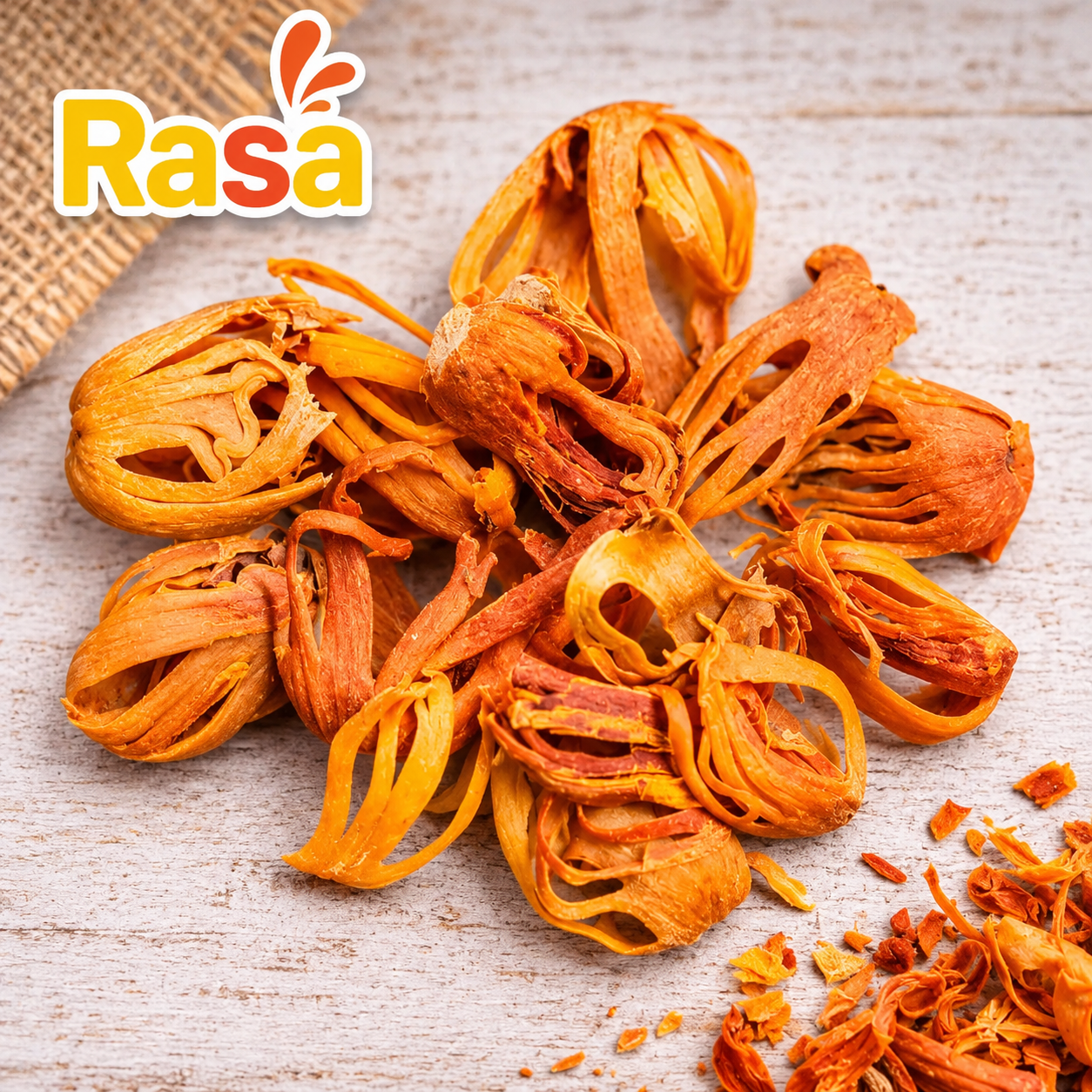
Known as Javitri (جاوتری) in Urdu, mace is the dried, reddish-orange outer covering of the nutmeg seed. It comes from the tropical evergreen tree Myristica fragrans, the same tree that produces nutmeg (Jaifil).
Although mace and nutmeg come from the same fruit, they offer different culinary experiences. Mace has a delicate, warm, slightly sweet, woody and subtly peppery flavour with a distinctive aromatic character. Its refined fragrance makes it especially popular in premium spice blends, traditional rice dishes, desserts, sauces and festive cooking.
At Rasa.pk, we appreciate the importance of authentic ingredients, natural aromas and carefully selected spices. Our Premium Mace is an excellent choice for home cooks, professional chefs, bakers and spice enthusiasts who appreciate the finer details of traditional cooking.
From aromatic Pakistani biryani and pulao to traditional korma, garam masala, kheer, desserts, soups and homemade seasoning blends, mace brings an elegant aromatic touch to your favourite recipes.
Rasa.pk – Pure • Natural • Authentic
🌿 Product Highlights
- Premium-quality whole dried mace (Javitri).
- Naturally attractive reddish-orange to golden-orange colour.
- Distinctive warm, sweet-spicy and slightly woody aroma.
- Delicate, lacy and naturally structured appearance.
- Carefully selected for culinary applications.
- Suitable for traditional Pakistani and international cuisines.
- Ideal for biryani, pulao, korma and aromatic curries.
- Excellent for garam masala and premium spice blends.
- Suitable for desserts, kheer, sauces and selected beverages.
- Can be used whole, broken into pieces or ground.
- No artificial colours or added preservatives, if verified.
- Carefully packed to help preserve natural fragrance and flavour.
🌺 Discover the Natural Origin of Mace
Mace is obtained from the dried aril surrounding the nutmeg seed. It comes from the fruit of the tropical evergreen tree Myristica fragrans, which belongs to the Myristicaceae family.
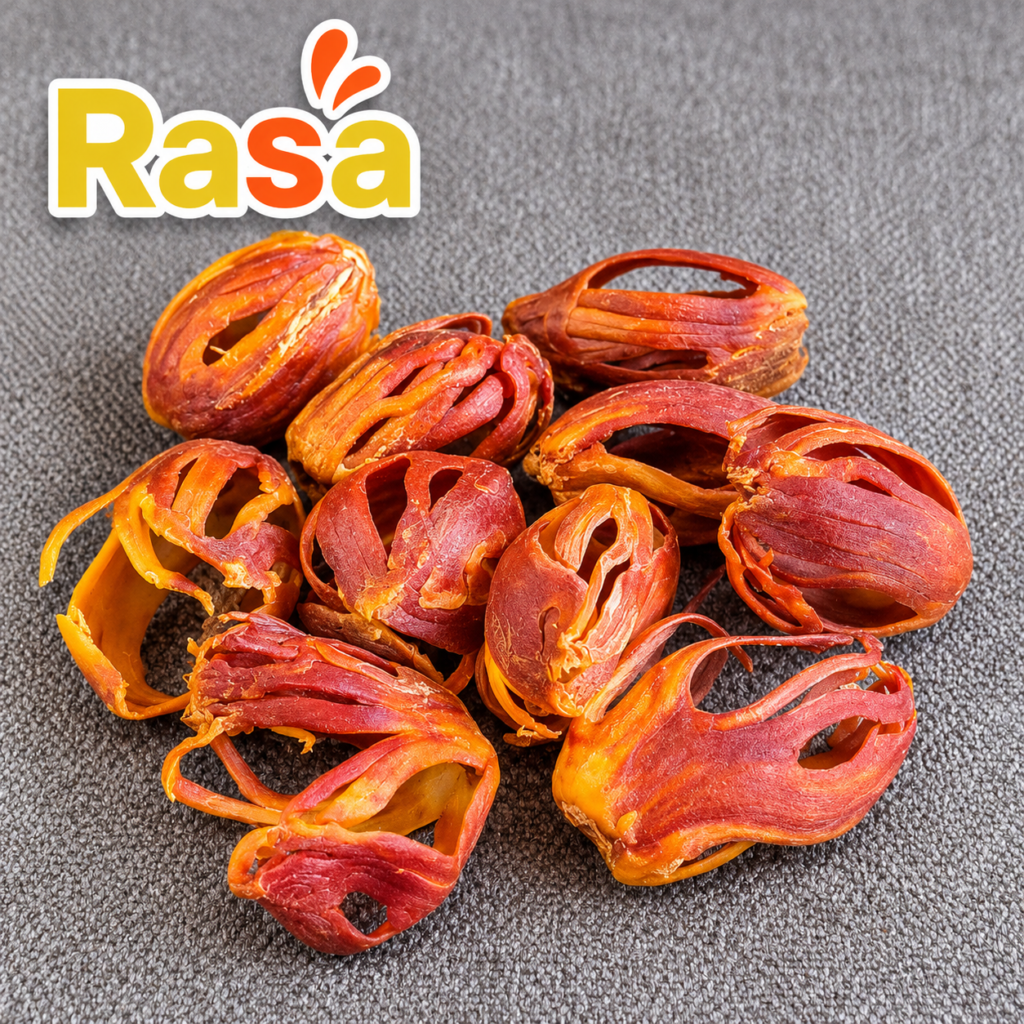
When the fruit matures and opens, it reveals a hard nutmeg seed surrounded by a bright reddish, lace-like covering. This outer covering is separated, dried and prepared as the aromatic spice known as mace.
During drying, its colour generally changes from bright reddish-orange to orange, golden-orange or reddish-brown, depending on the variety and processing conditions.
Mace is particularly appreciated for its delicate flavour and complex aroma. It is often used in smaller quantities than many other spices because its fragrance can be quite pronounced.
Its naturally occurring aromatic compounds contribute to its characteristic warm, sweet, woody and slightly spicy fragrance.
⭐ Why Choose Rasa.pk Premium Mace?
1. Distinctive Natural Aroma
Mace is recognised for its elegant fragrance, combining warm, sweet, woody and subtly spicy aromatic notes. It adds a refined character to traditional spice preparations.
2. Authentic Traditional Flavour
Its delicate flavour complements rice dishes, meat preparations, sauces, desserts and selected savoury recipes.
3. Beautiful Natural Appearance
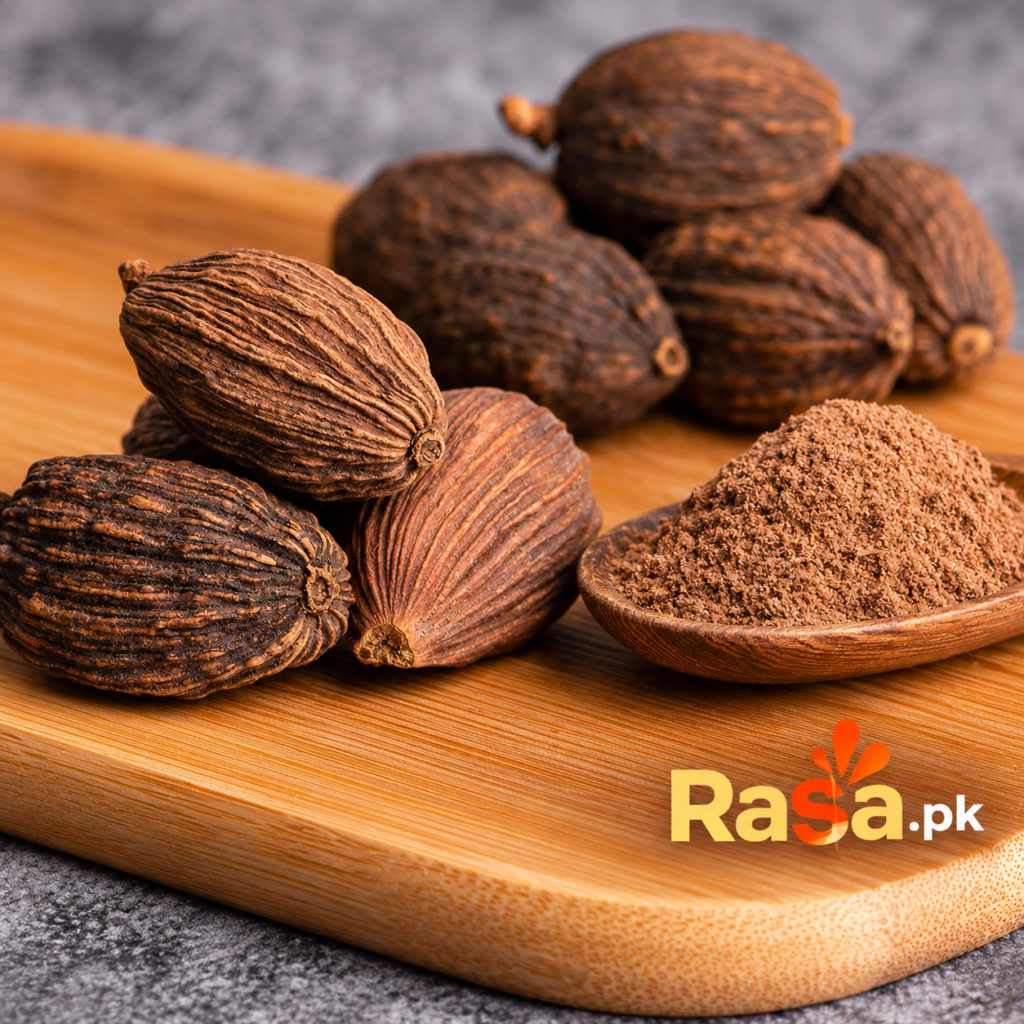
Whole mace has a distinctive lace-like structure and attractive reddish-orange colour, making it a visually recognisable premium spice.
4. Excellent for Premium Spice Blends
Mace is valued in selected garam masala formulations and traditional aromatic spice combinations.
5. Versatile Culinary Ingredient
It can be used in biryani, pulao, korma, curries, soups, desserts, custards and baked goods.
6. Suitable for Fresh Grinding
Whole mace can be lightly crushed or ground when required, allowing its characteristic aroma to be released during preparation.
7. A Traditional Kitchen Favourite
Mace has a long history of culinary use in South Asian, Middle Eastern and European cooking.
🍽️ Culinary Uses – Bring a Refined Aroma to Your Kitchen
Mace is a versatile aromatic spice that can transform the fragrance and character of selected recipes.
🍚 1. Biryani and Pulao
Add a small piece of whole mace to the aromatic spice mixture while preparing biryani or pulao. It complements cardamom, cinnamon, cloves and other whole spices.
🍛 2. Traditional Pakistani Korma
Mace can be incorporated into selected korma preparations alongside cardamom, cinnamon, cloves and other aromatic spices.
🥘 3. Curries and Meat Dishes
Use a small culinary quantity in selected chicken, beef, lamb and vegetable preparations to add warmth and aromatic depth.
🧂 4. Homemade Garam Masala
Mace is a popular ingredient in premium garam masala formulations. It pairs particularly well with nutmeg, green cardamom, black cardamom, cinnamon and cloves.
🍮 5. Traditional Desserts
A tiny culinary pinch of ground mace can add an aromatic touch to kheer, halwa, custards, milk puddings and selected traditional sweets.
🍰 6. Baking and Confectionery
Mace works well in cakes, biscuits, cookies, pastries, fruit cakes and selected sweet preparations.
🥣 7. Soups and Creamy Sauces
It can be used in small amounts in creamy soups, white sauces, vegetable preparations and savoury gravies.
☕ 8. Aromatic Beverage Blends
Mace can be combined with cinnamon, cardamom and cloves in selected traditional spice-based milk and beverage recipes.
🍖 9. Marinades
Ground mace can be combined with yoghurt, ginger, garlic, black pepper and other seasonings for selected meat and chicken marinades.
👨🍳 Delicious Recipes Using Rasa.pk Premium Mace
Recipe 1: Traditional Aromatic Pakistani Biryani
Ingredients
| Ingredient | Quantity |
|---|
| Basmati Rice | 2 cups |
| Chicken | 500g |
| Onion | 2 medium |
| Tomatoes | 2 medium |
| Yoghurt | ½ cup |
| Ginger-Garlic Paste | 1 tablespoon |
| Whole Mace | 1 small piece |
| Green Cardamom | 3 pods |
| Cinnamon | 1 small stick |
| Cloves | 3–4 |
| Black Peppercorns | ½ teaspoon |
| Red Chilli Powder | To taste |
| Salt | To taste |
| Cooking Oil | As required |
| Fresh Coriander | For garnish |
Preparation
- Wash and soak the basmati rice.
- Heat oil in a cooking pot and fry the sliced onions until golden.
- Add ginger-garlic paste and chicken.
- Add tomatoes, yoghurt, chilli powder and salt.
- Add the whole mace, cardamom, cinnamon, cloves and black pepper.
- Cook until the chicken is tender and the gravy develops its aroma.
- Separately boil the rice until partially cooked.
- Layer the rice over the prepared chicken mixture.
- Cover and cook on low heat until the rice is completely cooked.
- Garnish with fresh coriander and serve.
Recipe 2: Homemade Premium Garam Masala
Ingredients
| Ingredient | Quantity |
|---|
| Cumin Seeds | 2 tablespoons |
| Coriander Seeds | 2 tablespoons |
| Black Peppercorns | 1 tablespoon |
| Green Cardamom | 1 tablespoon |
| Black Cardamom | 2 pods |
| Cinnamon | 2 small sticks |
| Cloves | 1 teaspoon |
| Whole Mace | 1 small piece |
| Nutmeg | A tiny pinch |
| Bay Leaves | 2 |
Preparation
- Place the whole spices in a dry pan.
- Lightly toast over low heat until aromatic.
- Allow the spices to cool completely.
- Grind into a fine powder.
- Sieve if required.
- Store in a clean, dry and airtight container.
Use a suitable culinary quantity in curries, korma, pulao and other savoury preparations.
Recipe 3: Aromatic Pakistani Kheer
Ingredients
| Ingredient | Quantity |
|---|
| Full-Cream Milk | 1 litre |
| Rice | ¼ cup |
| Sugar | ½ cup or to taste |
| Green Cardamom | 3 pods |
| Ground Mace | A tiny culinary pinch |
| Almonds | 1 tablespoon |
| Pistachios | 1 tablespoon |
| Raisins | Optional |
Preparation
- Wash and soak the rice for approximately 20 minutes.
- Heat milk in a heavy-bottomed pot.
- Add the rice and cook over low heat.
- Stir regularly until the rice becomes soft.
- Add sugar and crushed cardamom.
- Add a tiny pinch of ground mace.
- Continue cooking until the kheer reaches the desired consistency.
- Garnish with almonds and pistachios.
- Serve warm or chilled.
Recipe 4: Aromatic Creamy White Sauce
Ingredients
| Ingredient | Quantity |
|---|
| Butter | 2 tablespoons |
| All-Purpose Flour | 2 tablespoons |
| Milk | 1 cup |
| Black Pepper | To taste |
| Salt | To taste |
| Ground Mace | A tiny pinch |
| Grated Cheese | Optional |
Preparation
- Melt butter in a saucepan.
- Add flour and stir gently.
- Gradually add milk while stirring to prevent lumps.
- Cook until the sauce thickens.
- Add salt and black pepper.
- Finish with a tiny pinch of ground mace.
- Add cheese if desired.
- Serve with pasta, vegetables or suitable savoury dishes.
Recipe 5: Homemade Aromatic Dessert Spice Blend
Ingredients
| Ingredient | Quantity |
|---|
| Cinnamon Powder | 2 teaspoons |
| Green Cardamom Powder | 1 teaspoon |
| Ground Mace | ¼ teaspoon |
| Nutmeg Powder | ¼ teaspoon |
| Clove Powder | A small pinch |
Preparation
Combine all ingredients in a clean, dry bowl. Mix thoroughly and transfer to an airtight container.
Use small culinary quantities in cakes, cookies, kheer, custards, puddings and other desserts.
📊 Nutritional Profile of Mace
Mace is an aromatic spice containing naturally occurring carbohydrates, dietary fibre, fats, small amounts of protein and various minerals.
Because mace is generally used in small quantities, its contribution to the nutritional value of an ordinary meal is limited.
Approximate nutritional composition per 100g of dried mace
| Nutrient | Approximate Amount |
|---|
| Energy | 475 kcal |
| Total Carbohydrates | 50.0 g |
| Dietary Fibre | 20.2 g |
| Protein | 6.7 g |
| Total Fat | 32.4 g |
| Saturated Fat | 21.8 g |
| Potassium | 463 mg |
| Calcium | 252 mg |
| Iron | 13.9 mg |
| Magnesium | 163 mg |
| Phosphorus | 110 mg |
| Sodium | 80 mg |
| Zinc | 2.3 mg |
| Manganese | 1.5 mg |
These are indicative reference estimates for dried mace. They are not laboratory-tested values for Rasa.pk’s specific product. Nutritional composition can vary according to origin, variety, drying and processing. Obtain laboratory analysis for an accurate commercial nutrition declaration.
🌿 Natural Aromatic Components of Mace
Mace contains naturally occurring volatile aromatic compounds that contribute to its characteristic fragrance and flavour.
| Natural Component | Description |
|---|
| Myristicin | Naturally occurring aromatic compound |
| Sabinene | Contributes to the characteristic spice fragrance |
| Pinene | Naturally occurring aromatic compound |
| Limonene | Contributes fresh aromatic notes |
| Terpinen-4-ol | Part of the natural volatile oil profile |
| Eugenol | Aromatic compound found in small quantities |
| Fixed Oils | Naturally occurring lipid components |
| Dietary Fibre | Present in the dried aril |
| Plant Proteins | Naturally occurring in small quantities |
These compounds contribute to the natural sensory characteristics of mace. Their presence is not a claim of medicinal efficacy.
🧾 Ingredients & Product Composition
| Ingredient | Description |
|---|
| Whole Mace | Main product ingredient |
| Botanical Source | Dried aril of Myristica fragrans |
| Plant Part | Seed Aril |
| Artificial Colours | None added, if verified |
| Artificial Flavours | None added, if verified |
| Added Preservatives | None added, if verified |
| Fillers | None added, if verified |
| Added Sugar | None |
| Added Salt | None |
Ingredients Declaration: 100% Whole Dried Mace (Myristica fragrans aril), provided the product is supplied as a single-ingredient spice.
🌺 Whole Mace vs Ground Mace
| Feature | Whole Mace | Ground Mace |
|---|
| Form | Whole dried aril pieces | Fine aromatic powder |
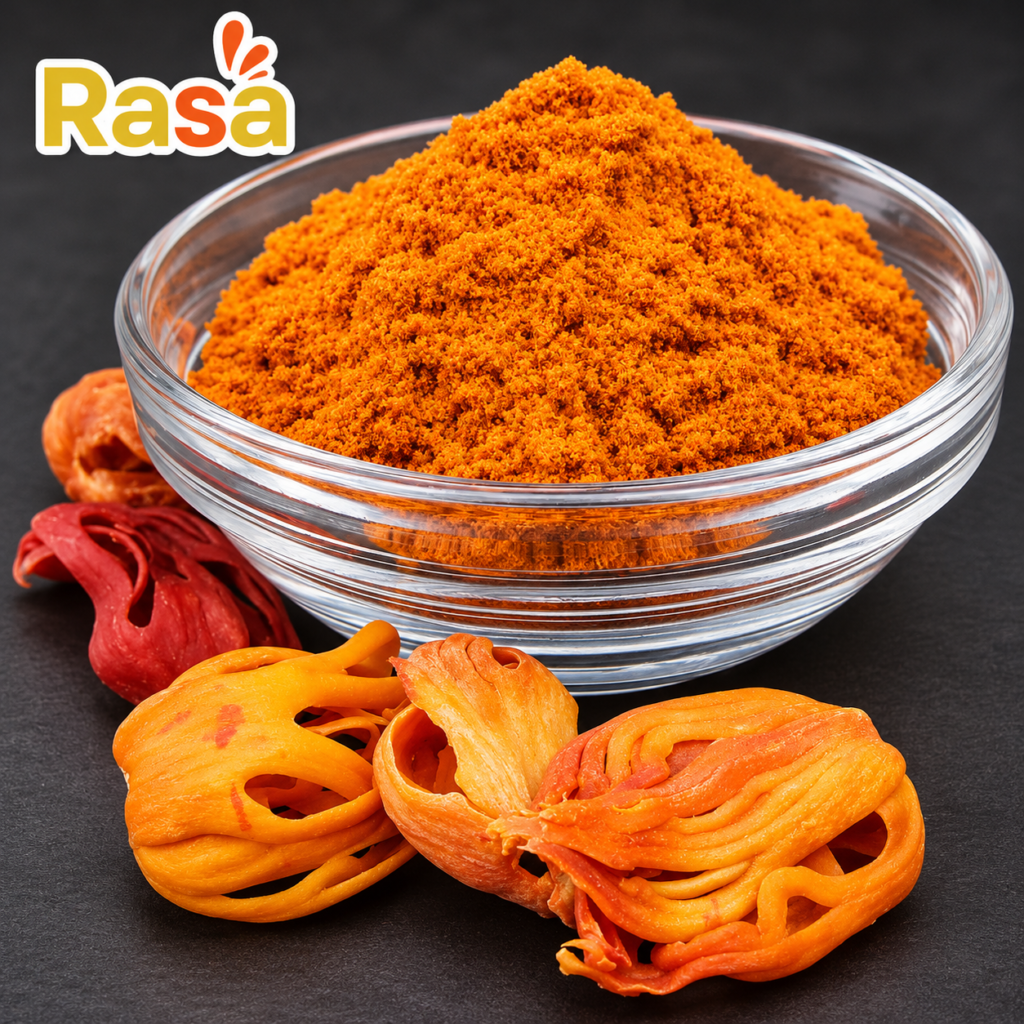
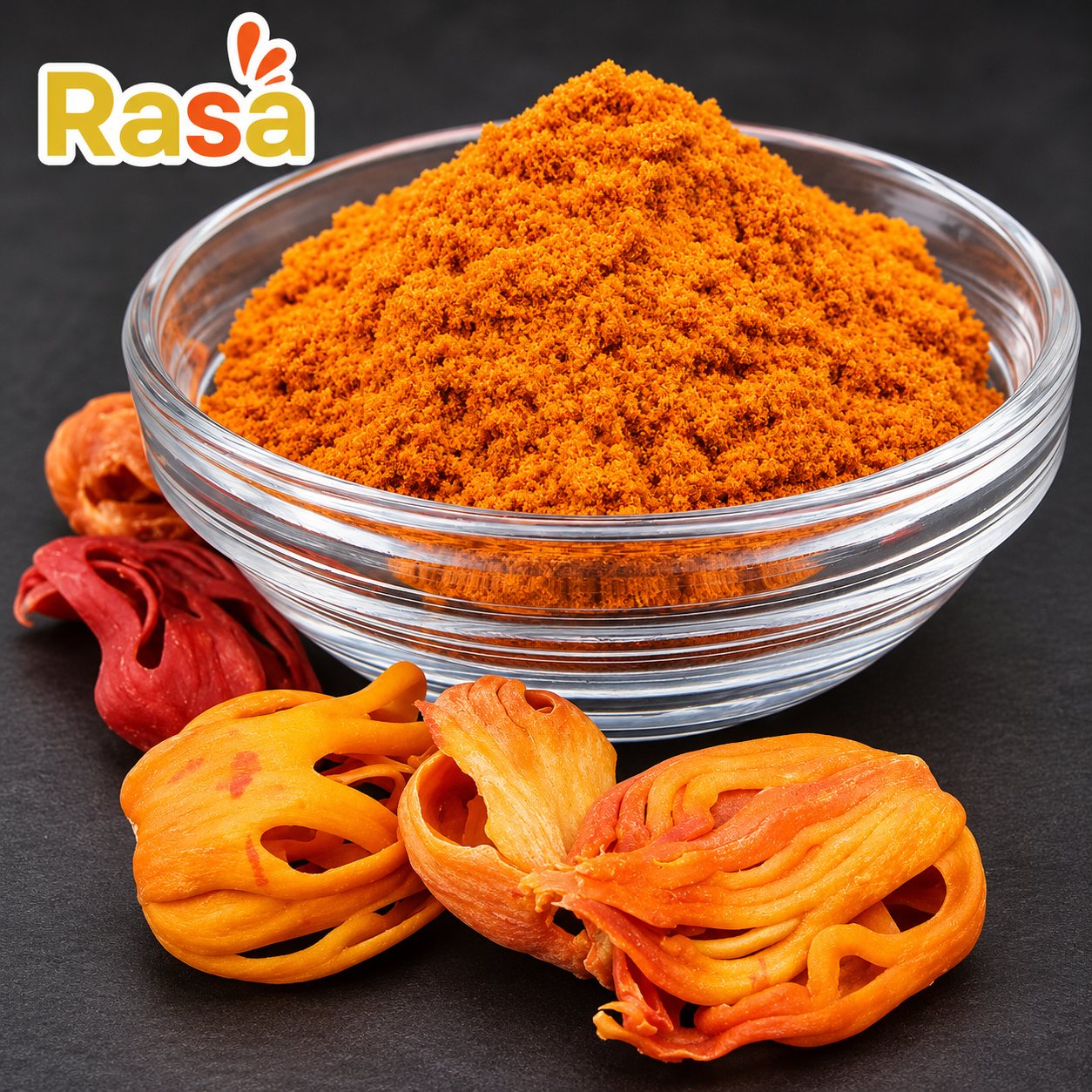
| Appearance | Delicate, lacy structure | Orange to reddish-brown powder |
| Aroma | Released when crushed or heated | Ready to use |
| Texture | Thin, brittle and layered | Fine and powdery |
| Culinary Use | Biryani, pulao, curries and spice blends | Baking, sauces, desserts and seasoning |
| Storage | Convenient when kept dry and sealed | Requires excellent moisture protection |
| Preparation | Can be crushed or ground | Ready for direct use |
Rasa.pk Recommendation: Whole mace is an excellent choice for customers who appreciate traditional whole spices and prefer to grind or crush their spices freshly before cooking.
⭐ Quality Characteristics – How to Identify Premium Mace
| Quality Parameter | Desirable Characteristics |
|---|
| Appearance | Naturally lacy, delicate and layered arils |
| Colour | Reddish-orange, orange or golden-orange |
| Aroma | Warm, sweet, distinctive and aromatic |
| Texture | Dry, brittle and lightweight |
| Structure | Recognisable lace-like outer covering |
| Cleanliness | Free from visible foreign matter and insects |
| Condition | No visible mould or excessive moisture |
| Packaging | Properly sealed food-grade packaging |
Colour and fragrance alone cannot establish purity, confirm the absence of adulteration or verify organic certification. Appropriate testing and supplier documentation are important for commercial quality assurance.
⚠️ Cautions & Important Safety Information
Mace is a culinary spice that should be used in small food quantities. It contains naturally occurring aromatic compounds, including myristicin, which is also found in nutmeg.
Excessive consumption of mace or concentrated mace preparations may cause adverse effects, including nausea, vomiting, dizziness, agitation, confusion, rapid heartbeat and other symptoms of toxicity.
Please observe the following precautions:
- Use mace only in small culinary quantities appropriate for food preparation.
- Do not consume large quantities of whole mace directly.
- Avoid eating spoonfuls of ground mace.
- Do not prepare concentrated mace extracts, oils or medicinal drinks at home.
- Never follow unverified dosage recommendations.
- Avoid excessive intake because concentrated consumption can cause toxicity.
- Individuals with known mace or nutmeg sensitivity should avoid the product.
- Pregnant or breastfeeding individuals should seek professional advice before using concentrated preparations.
- People taking medication or managing a health condition should consult a qualified healthcare professional before using mace outside ordinary culinary quantities.
- Keep away from children and store in a safe place.
- Do not confuse culinary mace with concentrated essential oils or extracts.
For non-culinary use, concentrated preparations or any proposed dosage, consult a qualified herbalist or licensed healthcare professional before use.
If someone accidentally consumes a large quantity, seek urgent medical advice, particularly if symptoms develop. Do not wait for symptoms before seeking help.
Important: This product is a culinary spice intended for food preparation. It is not a medicine and is not intended to diagnose, treat, cure or prevent any disease.
📦 Storage & Handling Instructions
Proper storage helps maintain the characteristic fragrance, colour and culinary quality of mace.
- Store in a cool and dry place.
- Protect from direct sunlight and excessive heat.
- Keep away from moisture and humidity.
- Store in a tightly sealed food-grade container.
- Use a clean and dry spoon or utensil.
- Avoid storing near strong-smelling products.
- Protect from insects and other contamination.
- Do not use if the product develops visible mould, unusual moisture or an abnormal smell.
Shelf Life: Follow the best-before date printed on the packaging. Actual shelf life depends on drying quality, packaging integrity and storage conditions.
❓ Frequently Asked Questions
Q1. What is mace called in Urdu?
Mace is commonly called Javitri (جاوتری) in Urdu.
Q2. What is the botanical name of mace?
Its botanical source is Myristica fragrans, belonging to the Myristicaceae family.
Q3. Which part of the plant is used to make mace?
Mace is the dried, reddish outer covering (aril) surrounding the nutmeg seed.
Q4. Is mace the same as nutmeg?
No. Both come from the same fruit, but mace is the outer aril and nutmeg is the inner seed kernel.
Q5. What does mace taste like?
Mace has a warm, sweet-spicy, slightly woody and delicate flavour with a distinctive aromatic fragrance.
Q6. Can mace be used in Pakistani biryani?
Yes. Whole mace is commonly used in aromatic spice combinations for biryani, pulao and selected traditional rice dishes.
Q7. Can mace be used in garam masala?
Yes. It is an aromatic ingredient in some premium garam masala formulations.
Q8. Can mace be used in desserts?
Yes. A tiny culinary quantity can be used in kheer, halwa, custards, cakes and selected traditional sweets.
Q9. Can whole mace be ground at home?
Yes. Whole dried mace can be broken into small pieces and ground using a clean, dry spice grinder.
Q10. How should mace be stored?
Store it in an airtight food-grade container in a cool, dry place away from direct sunlight and moisture.
Q11. Is mace very strong in flavour?
Mace has a distinctive aromatic profile, so a small culinary quantity is generally sufficient for most recipes.
Q12. Is mace suitable for everyday cooking?
It can be used in small culinary quantities as part of suitable recipes. Excessive consumption should be avoided.
🌟 Experience the Exquisite Aroma of Premium Mace with Rasa.pk
Bring the distinctive fragrance, delicate texture and authentic flavour of Rasa.pk Premium Organic Mace (Javitri) into your kitchen.
Whether you are preparing traditional Pakistani biryani, aromatic pulao, premium garam masala, korma, kheer, cakes or homemade spice blends, mace adds a refined touch to your favourite recipes.
Carefully selected for its natural aromatic character and culinary versatility, it is an excellent addition to a premium spice collection.
Choose Rasa.pk – Pure • Natural • Authentic
Exquisite aroma. Refined flavour. Authentic culinary quality.

















Jahan –
good
Sohail –
good