✨ Discover the Authentic Aroma of Premium Coriander Seeds
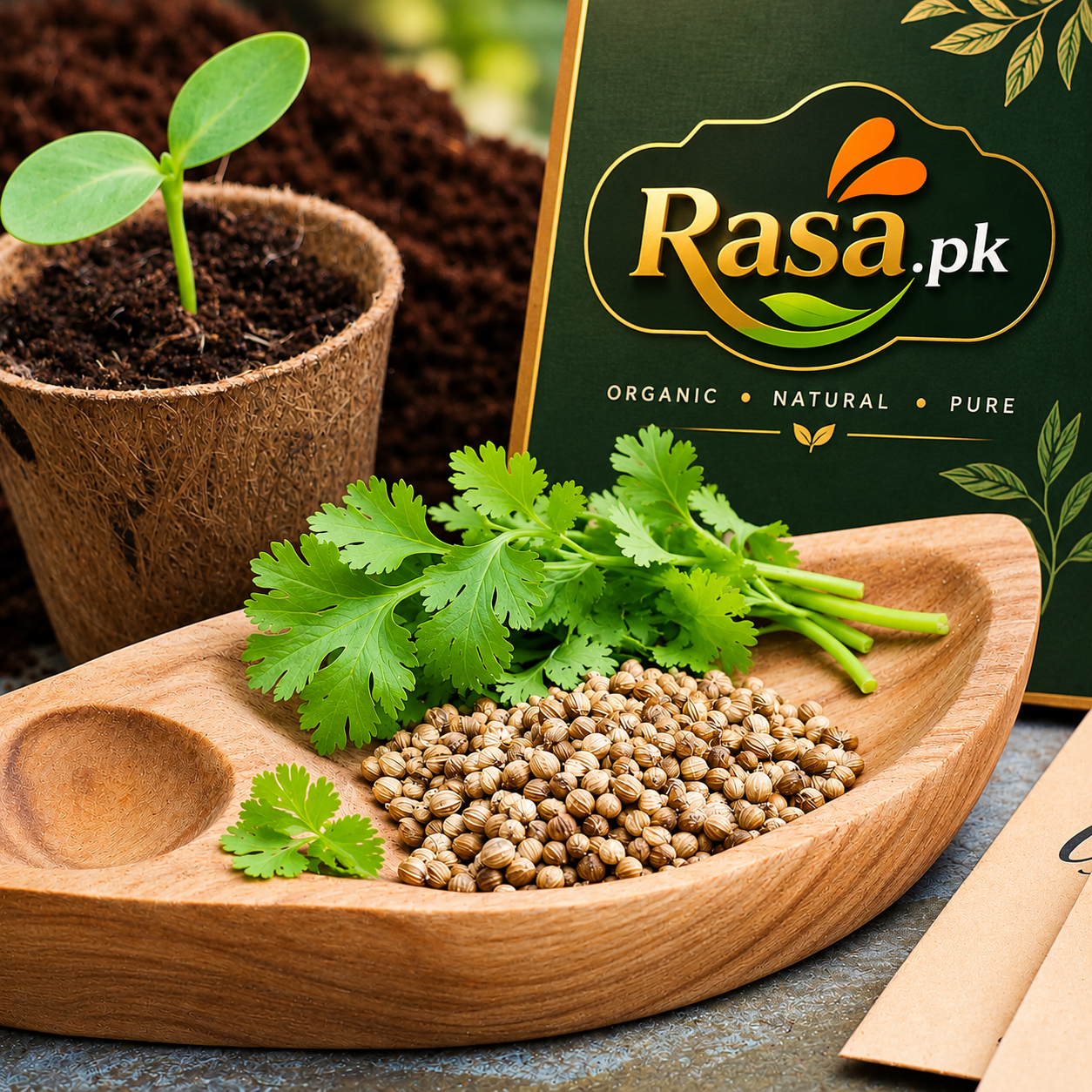
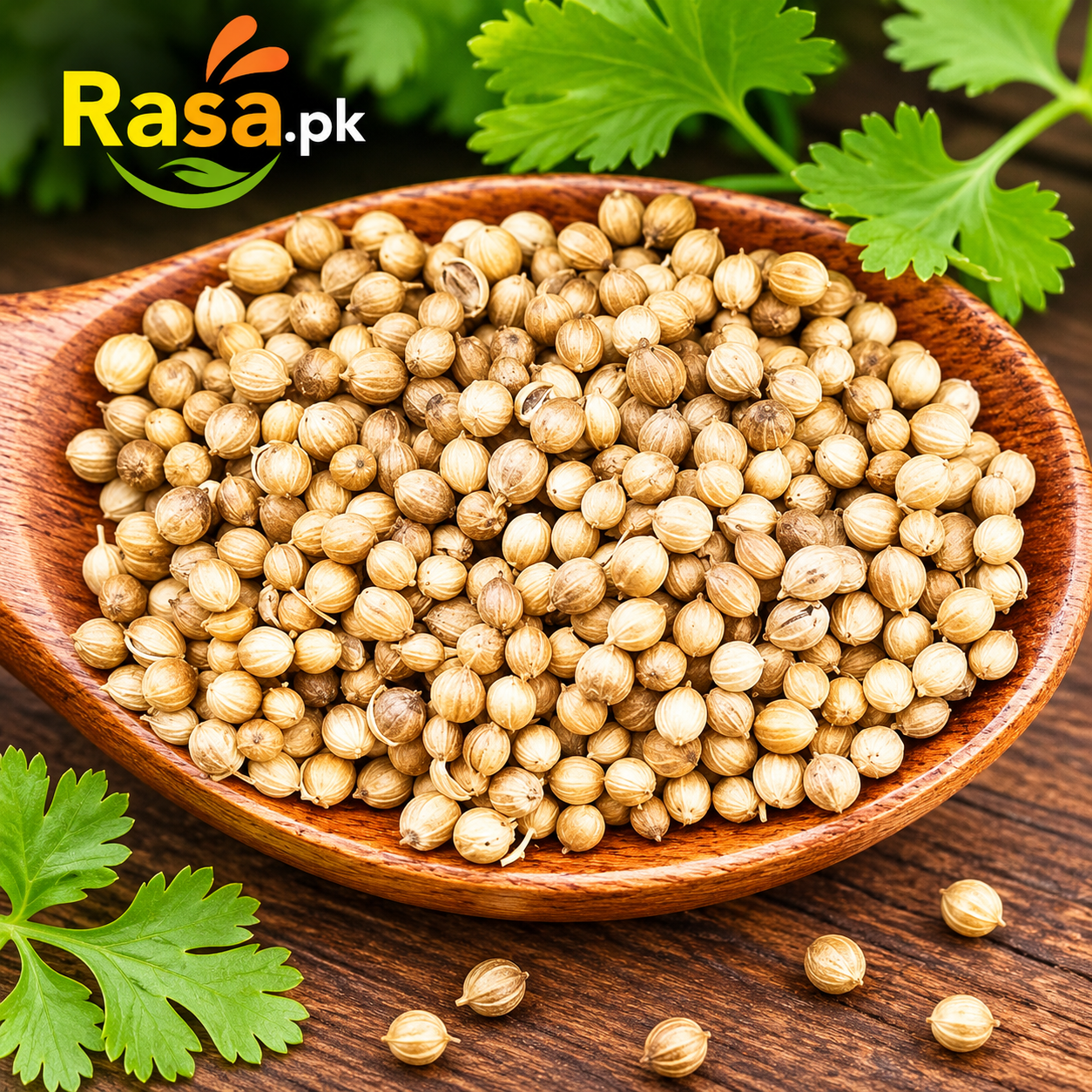
Bring the timeless fragrance of traditional spices into your kitchen with Rasa.pk Organic Coriander Seeds (Sabut Dhania) – a versatile culinary ingredient appreciated for its warm, mildly citrusy aroma, delicate earthy flavour and distinctive natural character.
Known as Sabut Dhania (ثابت دھنیا) in Pakistan, coriander seeds are the dried fruits of the coriander plant, botanically known as Coriandrum sativum. They are an essential ingredient in Pakistani, Indian, Middle Eastern and international cuisines.
Our coriander seeds are presented as a carefully selected spice for customers who appreciate freshness, natural aroma and authentic culinary ingredients. Their characteristic round shape, subtle ridges and warm fragrance make them an excellent choice for everyday cooking and homemade spice preparations.
Whether you are preparing traditional chicken curry, qorma, biryani, daal, achar, homemade garam masala or freshly ground dhania powder, coriander seeds add a distinctive flavour and aromatic depth to your recipes.
🌱 Fresh Aroma | Authentic Flavour | Traditional Culinary Excellence
At Rasa.pk, we believe that great cooking begins with carefully selected ingredients.
⭐ Product Highlights
| Feature | Description |
|---|
| Product Name | Organic Coriander Seeds |
| Common Name | Coriander Seeds |
| Local Name | Sabut Dhania |
| Urdu Name | ثابت دھنیا |
| Botanical Name | Coriandrum sativum |
| Plant Family | Apiaceae |
| Product Part | Dried Fruits (Commonly Called Seeds) |
| Product Form | Whole Coriander Seeds |
| Appearance | Small, round, naturally ridged seeds |
| Colour | Light greenish, yellowish-brown to pale brown |
| Aroma | Fresh, warm, mildly citrusy and aromatic |
| Flavour | Earthy, slightly sweet and gently citrus-like |
| Main Ingredient | Whole Coriander Seeds |
| Added Ingredients | None intentionally added, unless declared |
| Artificial Colours | None intentionally added, if verified |
| Artificial Flavours | None intentionally added, if verified |
| Preservatives | None intentionally added, if verified |
| Culinary Uses | Curries, rice, spice blends, pickles and marinades |
| Storage | Cool, dry and airtight |
🌿 What Are Coriander Seeds?
Coriander is an aromatic annual herb belonging to the Apiaceae family, which also includes cumin, fennel, parsley and carrots.
Its botanical name is Coriandrum sativum. The plant produces delicate green leaves and small white or pale pink flowers, followed by round fruits that are harvested and dried for use as coriander seeds.
Although commonly called seeds in cooking and trade, these round structures are botanically dried fruits containing the seeds.
Coriander has a long culinary history across South Asia, the Middle East, Europe and other regions. It is particularly important in Pakistani kitchens, where whole and ground coriander are used in everyday spice preparations.
🔬 Botanical Profile
| Botanical Feature | Description |
|---|
| Botanical Name | Coriandrum sativum |
| Common Name | Coriander |
| Urdu Name | دھنیا |
| Local Name | Sabut Dhania |
| Hindi Name | Dhaniya |
| Plant Family | Apiaceae |
| Plant Type | Annual aromatic herb |
| Product Part | Dried fruits |
| Harvesting Stage | Mature fruits |
| Product Form | Whole dried coriander |
| Shape | Round or nearly spherical |
| Surface | Naturally ridged |
| Colour | Greenish-yellow to light brown |
| Aroma | Warm, fresh and citrus-like |
| Flavour | Mildly sweet, earthy and aromatic |
🌱 Premium Quality and Natural Characteristics
Good-quality coriander seeds are valued for their freshness, aroma, cleanliness and characteristic appearance.
| Quality Characteristic | Description |
|---|
| Appearance | Whole, round and naturally ridged |
| Colour | Natural pale greenish to yellowish-brown shades |
| Aroma | Pleasant, fresh and distinctive |
| Texture | Dry and firm |
| Cleanliness | Should be free from excessive dust and foreign matter |
| Condition | Properly dried and free from visible mould |
| Seed Integrity | Minimal broken or crushed material |
| Freshness | Retains its characteristic natural fragrance |
Quality Tip: Whole coriander seeds generally retain their aromatic character better than ground coriander when stored correctly. For the freshest flavour, grind only the quantity required for your recipe.
🌸 Natural Aroma and Flavour Profile
Coriander seeds are appreciated for their balanced fragrance. Unlike some intensely pungent spices, coriander has a comparatively gentle, warm and rounded flavour.
Its flavour profile can be described through the following characteristics:
| Sensory Characteristic | Description |
|---|
| Primary Aroma | Fresh and warm |
| Secondary Aroma | Mildly citrus-like |
| Flavour | Earthy and slightly sweet |
| Aftertaste | Gentle and aromatic |
| Texture | Firm when whole; fine when ground |
| Cooking Character | Develops a deeper aroma when lightly toasted |
Coriander contains naturally occurring aromatic compounds, including linalool, which contributes to its characteristic fragrance.
🧪 Naturally Occurring Constituents
| Natural Constituent | General Description |
|---|
| Linalool | An important aromatic constituent associated with coriander’s characteristic fragrance |
| Terpenes | Naturally occurring compounds contributing to the aroma |
| Other Volatile Compounds | Contribute to its overall sensory profile |
| Natural Plant Oils | Present in the dried fruits |
| Dietary Fibre | Naturally present in the whole spice |
The precise composition varies according to variety, growing conditions, harvesting, drying and storage. Exact concentrations require laboratory analysis.
🍽️ Culinary Uses of Organic Coriander Seeds
Coriander seeds are among the most versatile spices in traditional cooking. They can be used whole, lightly roasted, crushed or freshly ground.
| Food Category | Culinary Application |
|---|
| Chicken Curry | Adds warm, balanced spice flavour |
| Beef and Mutton Curry | Complements rich traditional gravies |
| Biryani | Adds aromatic depth to whole-spice combinations |
| Pulao | Suitable for fragrant rice preparations |
| Qorma | A classic ingredient in traditional spice blends |
| Daal | Enhances the flavour of lentil dishes |
| Vegetables | Suitable for potato, cauliflower and mixed vegetable recipes |
| Nihari | Used in selected traditional spice formulations |
| Yakhni | Can be included in aromatic stock preparations |
| Garam Masala | An important ingredient in many formulations |
| Achar | Used in traditional pickle spice mixtures |
| Chutneys | Adds a distinctive aromatic flavour |
| Marinades | Suitable for chicken, meat and vegetable marinades |
| Soups | Adds a mild, warm spice note |
| Baking | Can be used in selected savoury breads and crackers |
| Homemade Masala | Ideal for freshly prepared spice blends |
👩🍳 Delicious Recipes with Rasa.pk Coriander Seeds
1. 🍗 Traditional Pakistani Chicken Curry
Ingredients
| Ingredient | Quantity |
|---|
| Chicken | 500 g |
| Coriander Seeds | 1 tablespoon, ground |
| Cumin Seeds | 1 teaspoon |
| Onion | 2 medium |
| Tomatoes | 2 medium |
| Ginger-Garlic Paste | 1 tablespoon |
| Red Chilli Powder | To taste |
| Turmeric Powder | ½ teaspoon |
| Yoghurt | ½ cup |
| Cooking Oil | As required |
| Fresh Coriander Leaves | For garnish |
| Salt | To taste |
Preparation
- Lightly roast the coriander seeds in a dry pan until fragrant.
- Allow them to cool and grind into a coarse or fine powder.
- Heat oil in a cooking pot and add sliced onions.
- Cook until golden.
- Add ginger-garlic paste and chicken.
- Add tomatoes, yoghurt, turmeric, chilli powder and salt.
- Mix thoroughly and cook until the chicken is tender.
- Add freshly ground coriander.
- Simmer until the gravy reaches your preferred consistency.
- Garnish with fresh coriander leaves and serve with roti or rice.
2. 🍚 Aromatic Pakistani Pulao
Ingredients
| Ingredient | Quantity |
|---|
| Basmati Rice | 2 cups |
| Chicken | 400–500 g |
| Whole Coriander Seeds | 1 teaspoon |
| Cumin Seeds | 1 teaspoon |
| Black Peppercorns | ½ teaspoon |
| Green Cardamom | 3 pods |
| Cinnamon | 1 small piece |
| Bay Leaf | 1 |
| Onion | 1 medium |
| Ginger-Garlic Paste | 1 tablespoon |
| Water or Stock | As required |
| Salt | To taste |
Preparation
- Wash and soak the rice for approximately 20 minutes.
- Heat oil or ghee in a pot.
- Add coriander seeds, cumin, peppercorns, cardamom, cinnamon and bay leaf.
- Stir gently until fragrant.
- Add onions and cook until golden.
- Add chicken and ginger-garlic paste.
- Cook briefly before adding water or stock.
- Add salt and cook until the chicken is nearly tender.
- Add the soaked rice.
- Cook until the rice is tender and the liquid has been absorbed.
- Serve hot with salad and raita.
3. 🌶️ Homemade Coriander Powder (Dhania Powder)
Ingredients
| Ingredient | Quantity |
|---|
| Whole Coriander Seeds | 1 cup |
Preparation
- Carefully inspect the coriander seeds and remove any foreign matter.
- Place the seeds in a dry pan.
- Roast gently over low heat, stirring continuously.
- Remove from heat once the aroma becomes noticeable.
- Allow the seeds to cool completely.
- Grind into a fine powder.
- Store in a clean, airtight container.
Tip: Avoid excessive roasting, as overheating may affect the natural aroma and flavour.
4. 🥒 Traditional Homemade Pickle Spice Mix
Ingredients
| Ingredient | Quantity |
|---|
| Coriander Seeds | 2 tablespoons |
| Fennel Seeds | 2 tablespoons |
| Mustard Seeds | 1 tablespoon |
| Nigella Seeds | 1 teaspoon |
| Fenugreek Seeds | 1 teaspoon |
| Cumin Seeds | 1 teaspoon |
| Red Chilli Powder | To taste |
| Turmeric Powder | ½ teaspoon |
| Salt | To taste |
Preparation
- Lightly roast coriander and fennel seeds separately.
- Allow them to cool.
- Coarsely crush the seeds.
- Combine with the remaining spices.
- Mix thoroughly.
- Use in your preferred tested pickle recipe.
Food Safety Note: Follow a reliable food-preservation recipe with appropriate acidity, hygiene and storage conditions.
5. 🍵 Aromatic Coriander and Fennel Infusion
Ingredients
| Ingredient | Quantity |
|---|
| Water | 2 cups |
| Whole Coriander Seeds | ½ teaspoon |
| Fennel Seeds | ½ teaspoon |
| Cinnamon | 1 small piece |
| Fresh Ginger | 1–2 thin slices |
| Honey | Optional |
Preparation
- Add water to a saucepan.
- Add coriander seeds, fennel seeds, cinnamon and ginger.
- Bring to a gentle boil.
- Simmer for approximately 5 minutes.
- Strain into a cup.
- Add honey if desired.
- Serve warm.
Serving Note: This is a culinary infusion recipe, not a therapeutic preparation or medicinal dosage recommendation.
6. 🥔 Traditional Coriander Potato Masala
Ingredients
| Ingredient | Quantity |
|---|
| Potatoes | 3 medium |
| Coriander Seeds | 1 tablespoon, coarsely ground |
| Cumin Seeds | ½ teaspoon |
| Turmeric Powder | ¼ teaspoon |
| Red Chilli Powder | To taste |
| Green Chillies | 2 |
| Fresh Coriander Leaves | For garnish |
| Cooking Oil | As required |
| Salt | To taste |
Preparation
- Boil and cut the potatoes into pieces.
- Heat oil in a pan.
- Add cumin seeds.
- Add the ground coriander and remaining spices.
- Add the potatoes and mix gently.
- Cook until the potatoes are coated with the spice mixture.
- Garnish with fresh coriander leaves.
- Serve with roti or paratha.
7. 🌿 Homemade Garam Masala
Ingredients
| Ingredient | Quantity |
|---|
| Coriander Seeds | ½ cup |
| Cumin Seeds | 2 tablespoons |
| Black Peppercorns | 1 tablespoon |
| Green Cardamom | 1 tablespoon |
| Black Cardamom | 2 pods |
| Cinnamon | 2 small pieces |
| Cloves | 1 teaspoon |
| Bay Leaves | 2 |
| Fennel Seeds | 1 tablespoon |
| Nutmeg | A small piece |
Preparation
- Clean and inspect all the spices.
- Dry-roast suitable whole spices separately over low heat.
- Allow them to cool completely.
- Grind into a fine or medium powder.
- Sieve if a smoother consistency is preferred.
- Store in an airtight jar.
- Use in qorma, curries, biryani and other traditional dishes.
📊 Nutritional Profile of Coriander Seeds
Whole coriander seeds contain naturally occurring carbohydrates, dietary fibre, protein, fats and various minerals.
The following figures are approximate general food-composition reference values for dried coriander seeds per 100 g. They are not laboratory-tested results for the specific Rasa.pk product batch.
| Nutritional Component | Approximate Value per 100 g |
|---|
| Energy | 298 kcal |
| Protein | 12.4 g |
| Total Carbohydrates | 54.99 g |
| Total Fat | 17.77 g |
| Dietary Fibre | 41.9 g |
| Calcium | 709 mg |
| Iron | 16.3 mg |
| Magnesium | 330 mg |
| Phosphorus | 409 mg |
| Potassium | 1,267 mg |
| Sodium | 35 mg |
| Zinc | 4.7 mg |
Nutrition Disclaimer: Values are approximate reference figures for dried coriander seeds and may differ between food-composition databases and actual samples. They should not be treated as verified nutrition values for this particular product. A laboratory analysis is required for a product-specific nutrition declaration.
📌 Nutritional Components – General Food Information
| Component | General Food Description |
|---|
| Dietary Fibre | Naturally present in whole coriander seeds |
| Protein | Contributes to the overall nutritional composition |
| Carbohydrates | Form part of the seed’s natural food composition |
| Natural Oils | Contribute to the seed’s characteristic flavour and aroma |
| Calcium | A naturally occurring mineral |
| Iron | A naturally occurring mineral |
| Magnesium | A naturally occurring mineral |
| Potassium | A naturally occurring mineral |
| Zinc | A naturally occurring mineral |
These are nutritional composition descriptions, not claims that this product prevents, treats or cures any health condition.
🌿 Ingredient and Product Composition
| Ingredient / Attribute | Details |
|---|
| Main Ingredient | Whole coriander seeds |
| Botanical Source | Coriandrum sativum |
| Additional Ingredients | None intentionally added, unless declared |
| Added Sugar | None intentionally added, unless declared |
| Artificial Colours | None intentionally added, if verified |
| Artificial Flavours | None intentionally added, if verified |
| Preservatives | None intentionally added, if verified |
| Product Form | Whole dried coriander fruits |
| Processing | Cleaning and drying, as applicable |
| Packaging | Food-grade sealed packaging |
🌱 Whole Coriander Seeds vs Ground Coriander
| Feature | Whole Coriander | Ground Coriander |
|---|
| Appearance | Small round dried fruits | Fine or coarse powder |
| Aroma | Released when crushed or heated | Immediately noticeable |
| Flavour | Develops during cooking | Distributes easily through food |
| Best Uses | Rice, curries, pickles and infusions | Gravies, marinades and spice blends |
| Storage | Generally retains aroma longer | Aroma may fade more quickly |
| Convenience | Requires grinding or crushing | Ready to use |
| Recommendation | Ideal for fresh grinding | Ideal for everyday quick cooking |
Our Recommendation: Keep coriander seeds whole and grind them shortly before cooking for a fresh, aromatic spice experience.
🌾 Fresh Coriander Leaves vs Coriander Seeds
Both come from the same plant, but they have different culinary characteristics.
| Feature | Coriander Leaves | Coriander Seeds |
|---|
| Urdu Name | Hara Dhania | Sabut Dhania |
| Product Part | Fresh leaves and stems | Dried fruits |
| Colour | Green | Greenish-yellow to brown |
| Aroma | Fresh, leafy and citrus-like | Warm, sweet and aromatic |
| Flavour | Fresh and herbaceous | Earthy, warm and mildly citrusy |
| Main Uses | Garnishing, chutneys and salads | Curries, spice blends and pickles |
| Storage | Refrigerated and used fresh | Airtight, cool and dry storage |
⚠️ Important Cautions and Responsible Use
Coriander seeds are commonly used as a culinary spice. However, concentrated extracts and specialised herbal preparations are different from ordinary food use.
Please observe the following precautions:
- Culinary Use: Use coriander seeds in normal recipe quantities.
- Herbal Preparations: Do not use coriander seeds as a specialised herbal preparation without consulting a qualified herbalist or appropriately licensed healthcare professional.
- Dosage: No medicinal dosage is recommended for this food product. Any specialised use should be assessed by a qualified professional.
- Pregnancy: Consult your healthcare professional before using concentrated coriander preparations or supplements. Ordinary culinary use is a different exposure.
- Breastfeeding: Seek professional advice before using concentrated preparations.
- Children: Avoid giving concentrated herbal preparations to children without professional guidance.
- Allergies: Avoid coriander if you have a known allergy or sensitivity to coriander or related plants.
- Prescription Medicines: Consult your doctor or pharmacist before combining concentrated herbal preparations with medicines.
- Sensitive Digestion: Excessive quantities may cause discomfort in some individuals.
- Product Quality: Do not consume seeds showing mould, dampness, insect infestation or unusual odour.
- Unexpected Reactions: Stop use and seek appropriate medical advice if an unexpected reaction occurs.
- Medical Treatment: Do not replace prescribed medical treatment with spices or herbal preparations.
Important: Rasa.pk presents coriander seeds as a culinary spice and food ingredient, not as a medicine or treatment for any health condition.
📦 Storage Instructions
Proper storage helps maintain the natural fragrance, texture and quality of coriander seeds.
- Store in a clean, dry and airtight container.
- Keep away from direct sunlight.
- Protect from moisture and humidity.
- Avoid exposure to steam and water.
- Always use a clean, dry spoon.
- Reseal the packaging after every use.
- Keep away from insects, dust and contaminants.
- Avoid placing the container near a stove or other heat source.
- Grind only the quantity required for immediate use.
Storage Tip: Whole coriander seeds generally retain their characteristic aroma longer than ground coriander when protected from air, heat and moisture.
❓ Frequently Asked Questions
Q1. What is coriander called in Urdu?
Coriander seeds are called Sabut Dhania (ثابت دھنیا) in Urdu.
Q2. What is the botanical name of coriander?
The botanical name is Coriandrum sativum.
Q3. Are coriander seeds and dhania powder the same?
They come from the same plant. Dhania powder is produced by grinding dried coriander fruits.
Q4. What do coriander seeds taste like?
They have a warm, mildly sweet, earthy and slightly citrus-like flavour.
Q5. Can coriander seeds be used in biryani?
Yes. Whole coriander seeds can be used in selected whole-spice combinations for biryani and pulao.
Q6. Can I make coriander powder at home?
Yes. Lightly roast the seeds, allow them to cool and grind them using a clean spice grinder.
Q7. Why should coriander seeds be stored whole?
Whole seeds generally retain their characteristic aroma longer than ground coriander when stored correctly.
Q8. Can coriander seeds be used in pickles?
Yes. They are a traditional ingredient in many homemade pickle spice mixtures.
Q9. Can coriander seeds be added to tea?
Yes. A small quantity can be used in culinary infusions with fennel, cinnamon or ginger.
Q10. What is the difference between greenish and brown coriander seeds?
Natural colour can vary according to variety, maturity, harvesting and drying. Colour alone does not establish freshness, purity or quality.
Q11. Are coriander seeds used in garam masala?
Yes. Coriander is an important ingredient in many traditional garam masala formulations.
Q12. Are coriander seeds the same as fresh coriander leaves?
No. Both come from the same plant, but seeds and leaves have different aromas, flavours and culinary applications.
Q13. Is this product certified organic?
Please refer to the product packaging and applicable certification or supplier documentation. Organic status should only be claimed when supported by appropriate evidence.
💚 Why Choose Rasa.pk Organic Coriander Seeds?
At Rasa.pk, we believe that authentic ingredients and thoughtful selection make everyday cooking more enjoyable.
🌿 Carefully Selected Spice: A versatile ingredient for everyday kitchens.
🌸 Natural Aromatic Character: Warm, fresh and mildly citrus-like fragrance.
🍽️ Versatile Culinary Ingredient: Suitable for curries, biryani, pulao, qorma, daal and pickles.
✨ Traditional Culinary Heritage: An essential spice in Pakistani and international cuisines.
🌱 Whole Spice Format: Ideal for roasting, crushing and freshly grinding.
📦 Quality-Focused Presentation: Attention to product cleanliness, packaging and storage.
❤️ Our Philosophy: Pure, natural and authentic ingredients for everyday living.
Bring the distinctive aroma of traditional coriander into your kitchen with Rasa.pk.
🌐 Website: www.rasa.pk
📲 WhatsApp Orders: https://wa.me/923284752936
🎥 TikTok: https://www.tiktok.com/@rasa.pk
📘 Facebook: Rasa.pk
📸 Instagram: @rasapkofficial
Rasa.pk – Pure • Natural • Authentic
Healthy sweetness starts with Rasa.pk.
📋 Complete Product Specifications
| Specification | Details |
|---|
| Product Title | Organic Coriander Seeds |
| Common Name | Coriander |
| Local Name | Sabut Dhania |
| Urdu Name | ثابت دھنیا |
| Botanical Name | Coriandrum sativum |
| Plant Family | Apiaceae |
| Product Part | Dried Fruits |
| Product Form | Whole Coriander |
| Appearance | Round, naturally ridged |
| Colour | Greenish-yellow to pale brown |
| Aroma | Fresh, warm and mildly citrusy |
| Flavour | Earthy, mildly sweet and aromatic |
| Main Ingredient | Whole Coriander Seeds |
| Added Ingredients | None intentionally added, unless declared |
| Organic Status | Subject to supporting documentation |
| Processing | Cleaning and drying, as applicable |
| Country of Origin | Add verified supplier information |
| Available Weights | Add confirmed product variations |
| Storage | Cool, dry and airtight |
| Best Before | As stated on packaging |















Reviews
Clear filtersThere are no reviews yet.